Sense as Mechanical Pressure
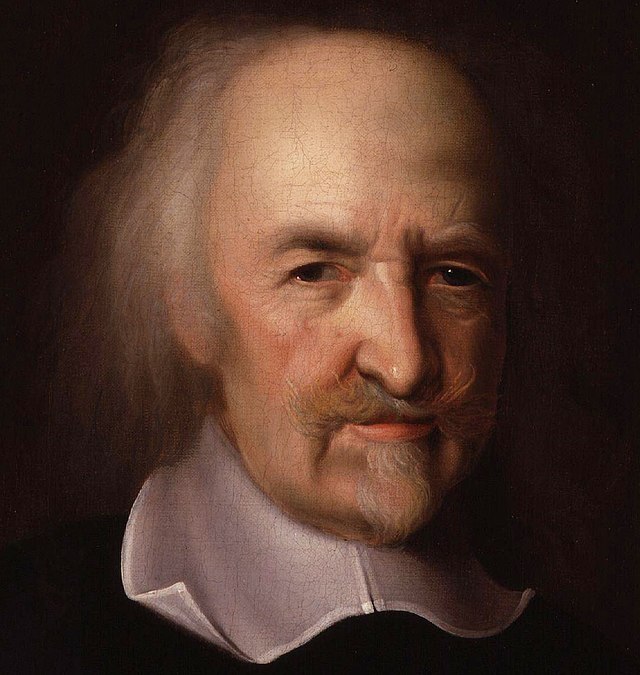
All knowledge begins with sense. This much Hobbes shares with earlier empiricists. But his account of sensation is distinctively mechanical: the external object presses on the sense organ, which transmits pressure through the nerves to the brain, which produces a counter-pressure — and this counter-pressure, appearing outward, is what we call sensation. There is no mysterious transfer of form from object to mind, no Aristotelian intelligible species. There is only matter pressing on matter.
there is no conception in a mans mind, which hath not at first, totally, or by parts, been begotten upon the organs of Sense.
What we call the qualities of things — colour, sound, heat, cold — are not in the objects themselves. They are the results of the motion that objects produce in our sense organs, which appears to be outside us but is entirely within. The world as we experience it is, in an important sense, a construction: we project onto external reality appearances that are really internal responses to mechanical stimulation.
Imagination and Names
Imagination, for Hobbes, is nothing but decaying sense — the persistence of motion in the organs after the external object is removed. Dreams are the imagination operating without the constraint of waking sense. Memory is the imagination with the awareness that it is decaying. All mental life is a process of motions gradually subsiding. There is nothing in the mind that was not first in the senses; and the senses themselves are mechanical events in a mechanical body.
So that Sense in all cases, is nothing els but originall fancy, caused (as I have said) by the pressure, that is, by the motion, of externall things upon our Eyes, Eares, and other organs thereunto ordained.
Nominalism and the Power of Names
When Hobbes turns to language and thought, he maintains his materialism with a further thesis: universals are nothing but names. The word "man" does not refer to a universal essence or Platonic form — it is a sound we have agreed to use as a name for a collection of similar individuals. Nothing in the world is universal but names; everything that exists is particular. This nominalism has profound consequences for political philosophy: it means that abstract ideals like justice, legitimacy, and right have no existence apart from the conventions and laws that define them — and those conventions are made by the sovereign.
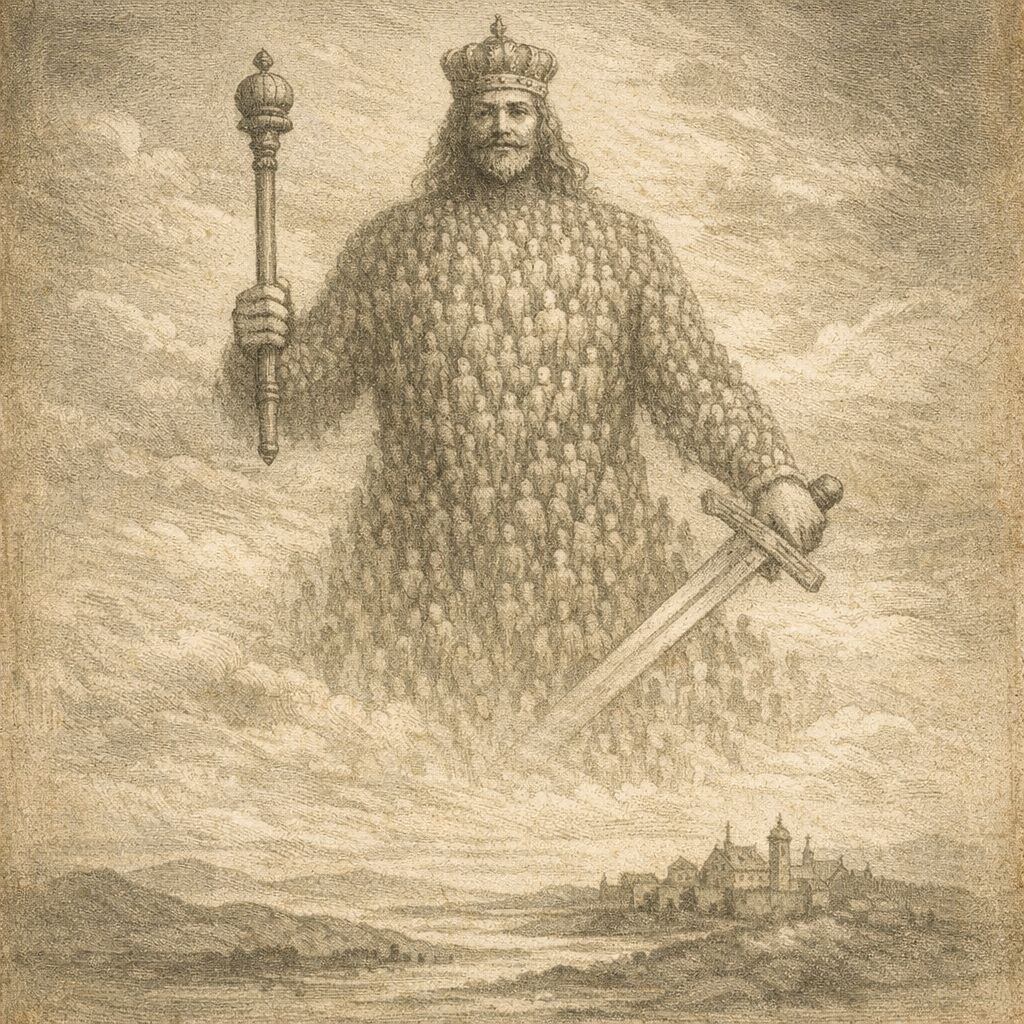
Hobbes's account of sense and imagination occupies Chapters I and II of Part I. His nominalism is set out in Chapter IV. The connection between his philosophy of mind and his political philosophy is not incidental — the mechanical account of human nature is the foundation on which the argument for the Leviathan rests.
Related Concepts