The Original Unity
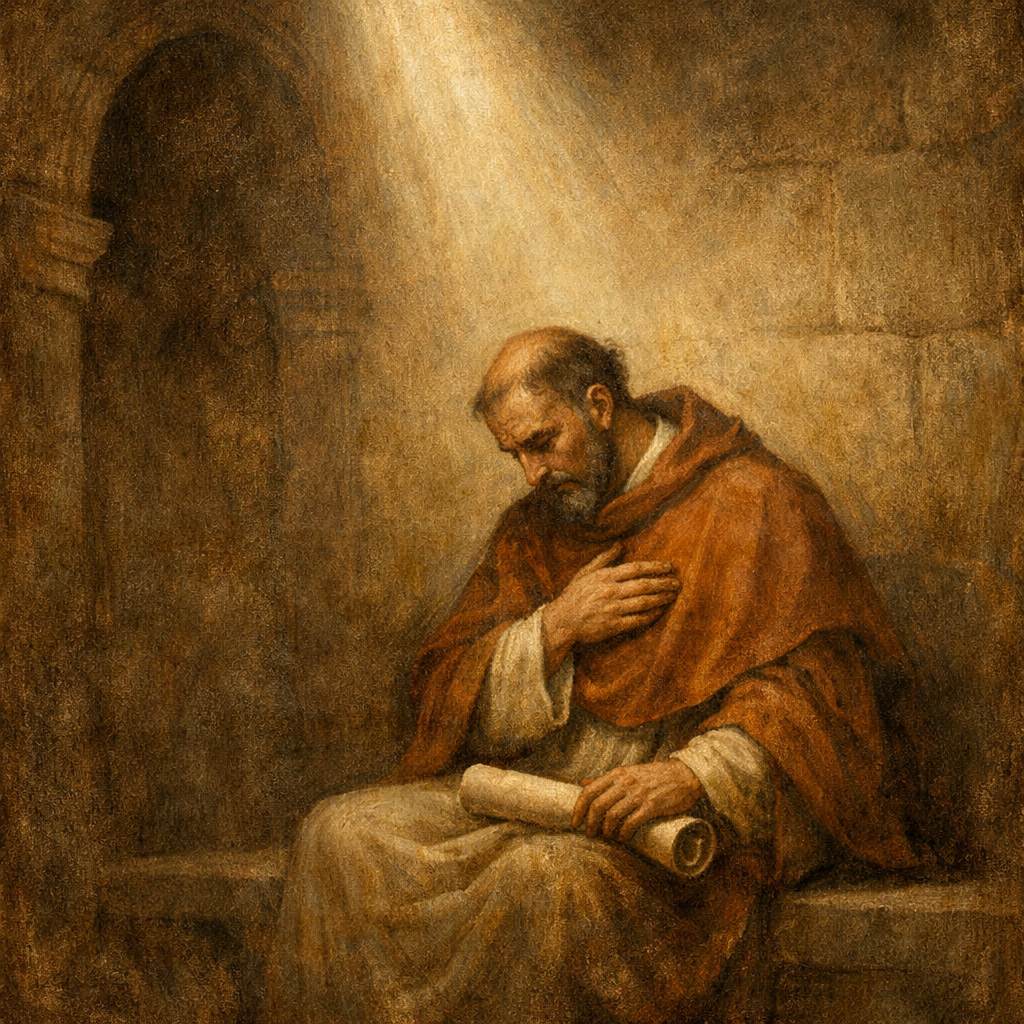
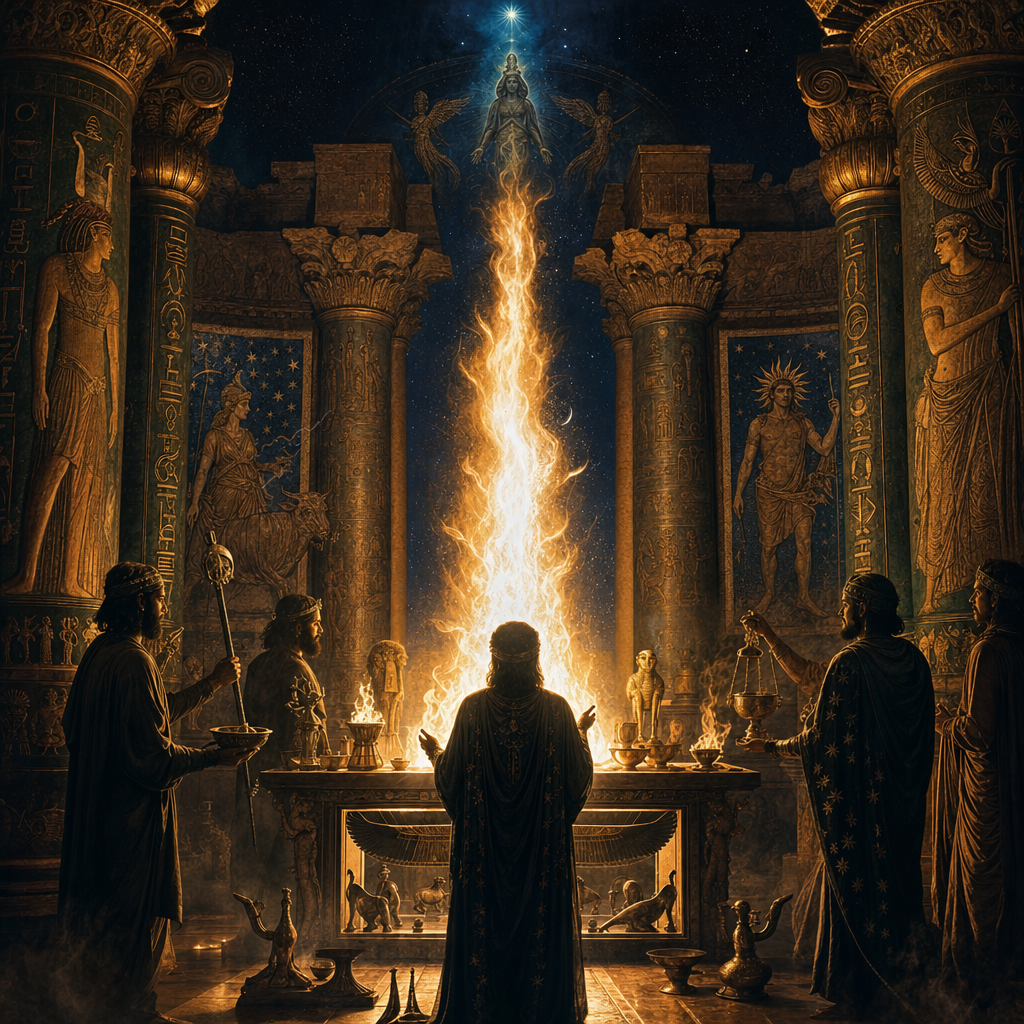
Origen postulates an original state in which all rational natures existed in perfect union with the divine Logos — contemplating God, warmed by divine love, undifferentiated in their closeness to the source. This state is not the fall of a human being from an Edenic paradise but the pre-cosmic condition of all minds before any material creation. The diversity of material creation has its explanation in this pre-cosmic history: each creature's current situation reflects the degree to which its pre-existent soul turned away from God.
The Cooling of Love
The fall is, for Origen, a cooling — a decrease in the ardour of the rational soul's love for God. The Greek word for soul, psyche, is related by Origen (perhaps speculatively) to the word for cold, psychros: the soul became soul — became a psychic rather than purely spiritual reality — by cooling from the fire of pure spirit. This cooling is a function of freedom: the rational creature that is capable of love is capable of turning away; the capacity for the highest good carries within it the capacity for the deepest fall. The diversity of creation — the entire range from seraphim to demons — reflects the entire range of this cooling.
The Body as School
Material embodiment, on Origen's account, is not a punishment but a pedagogy. The soul that has fallen from its original unity with God is placed in a body — in a specific material condition suited to its degree of fall — and given the opportunity, through the disciplines of embodied life, to be restored. The body is the school of the soul, and history is the curriculum of this cosmic education. Origen therefore reads Providence not as the arbitrary distribution of divine favour but as the perfectly just adaptation of each soul's circumstances to its needs and its history. Every earthly condition — suffering included — is educationally purposive.
The doctrine of the pre-existence of souls is developed primarily in Book I of On First Principles, chapters 3–8, and Book II, chapters 8–9. It was condemned by the Fifth Council of Constantinople (553 CE) along with apokatastasis. The influence of Platonic psychology — particularly the Phaedrus's myth of the soul's fall — on Origen's account is explicit and acknowledged.
Related Concepts