Longing as a Metaphysical Category
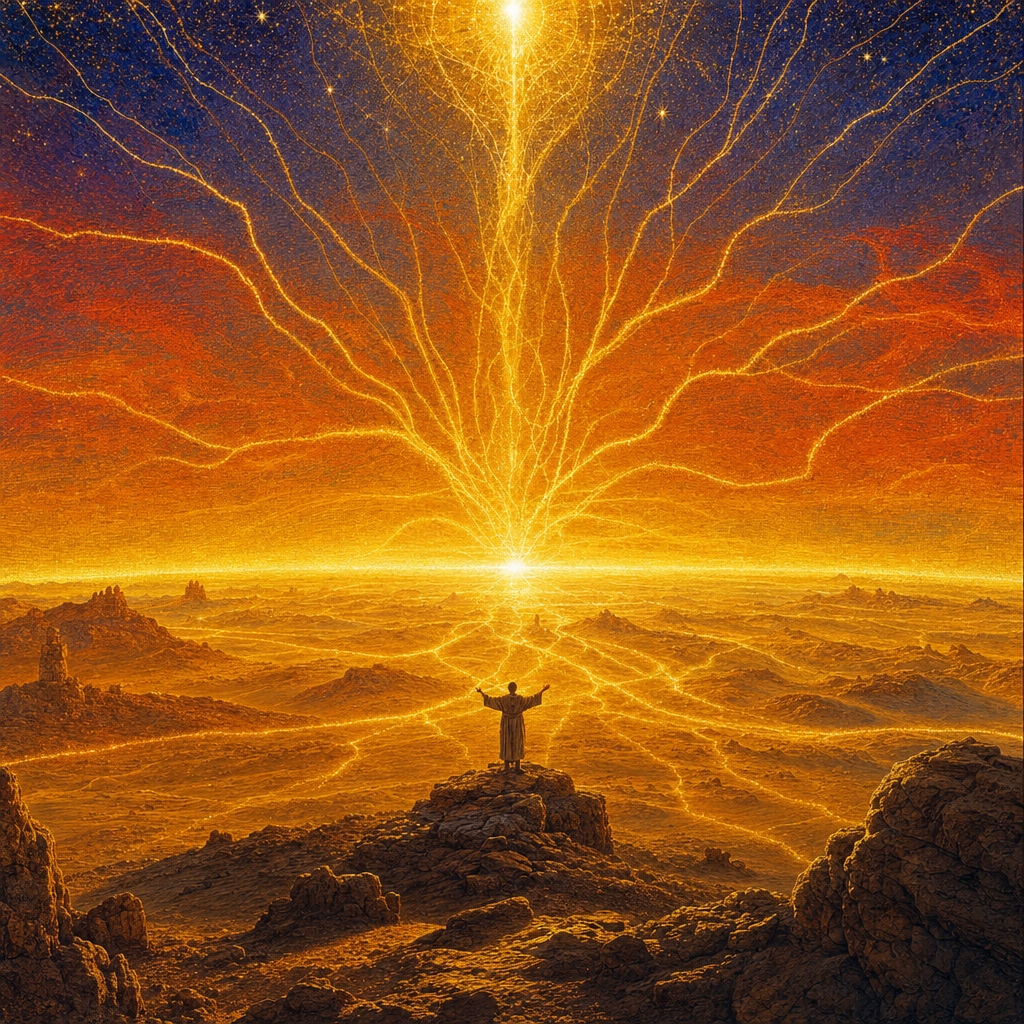
The introduction of longing (Sehnsucht) into the structure of the Absolute is one of Schelling's most audacious moves. Classical theology had banished desire from the divine life as a mark of imperfection: the perfect being lacks nothing and therefore desires nothing. Schelling proposes instead that the dark ground of God is characterised by a kind of longing — not a lack but an internal tension, a self-referential striving, an incipient movement toward self-disclosure. This longing is not a flaw in the divine nature; it is the dynamic principle without which there would be no divine life and no created world.
Creation as Love's Overflow
Out of this internal tension, the logos — the word, the principle of understanding and love — breaks through the dark ground and confronts it. The created world arises from this confrontation: the logos's separation from and return to the ground is the structure within which finite things can appear and develop. Creation is not a rational decision, not a mechanical emanation, but a dramatic event within the divine life — the overflow of a love that can be itself only by going out of itself.
Why Philosophy Must Use Myth
The narrative structure of the Ages of the World is not accidental. Schelling believed that the origin of the world cannot be captured in a purely logical demonstration — it requires a kind of telling, a recounting of what happened, that is closer to myth than to argument. This is the root of his later turn to mythology and revelation as philosophical sources: not a retreat from reason but an acknowledgment that reason alone cannot reach the absolute beginning, which is always already presupposed by any argument that tries to reach it.
The concept of divine Sehnsucht as the motor of creation appears across the three drafts of the Ages of the World and connects to the mystical theology of Böhme, whom Schelling read carefully throughout this period.
Related Concepts