Offering the World
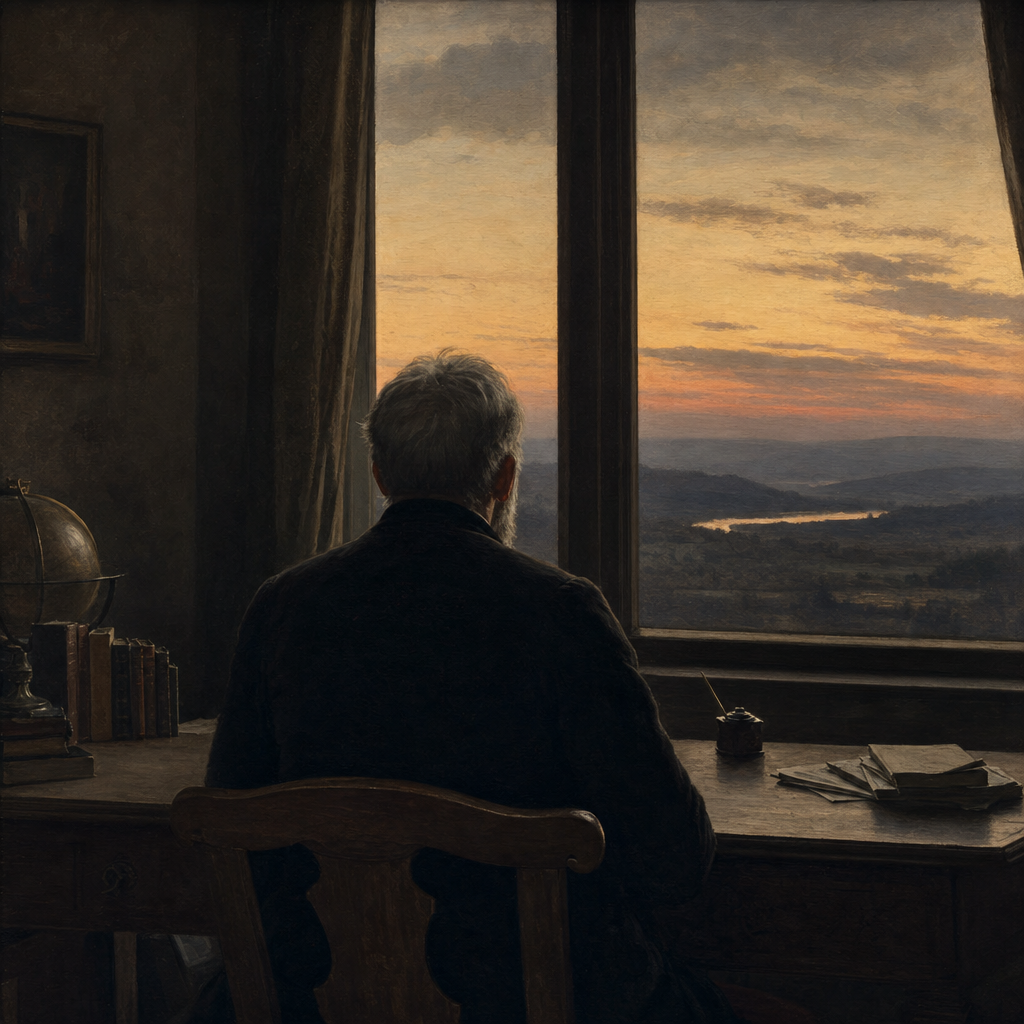
Unable to celebrate the Eucharist in the conventional form, Teilhard discovers that he has a wider altar. He takes up all the world's sorrows and joys, all its labour and suffering, all its scientific discovery and human love, and places them on the altar of the horizon. The offering is the entire day's work of humanity across the Earth — not bread and wine as symbols but the actual substance of human toil and love as the matter of the sacrifice.
Fire Over the World
The Consecration that follows is not of bread and wine but of the whole of matter. Teilhard calls for the divine fire to descend not on a wafer but on the entirety of creation — to transfigure not individual substances but the whole material process, to make the whole of evolution Eucharistic. This is not liturgical metaphor but the expression of a genuine mystical conviction: that the fire of God is already present in matter, that evolution is already a Eucharistic process, that what the priest does at the altar is a making-explicit of what God is always already doing in the world.
The Sacramental Universe
The Mass on the World articulates a sacramental universe: a cosmos in which matter is not the opposite of spirit but its vehicle, not the prison of the soul but the medium through which the soul approaches God. Every material thing is a potential sacrament; every genuine act of human love or knowledge is a kind of priestly action. Teilhard does not dissolve the sacraments into metaphor — he expands the category of sacrament to include the universe itself.
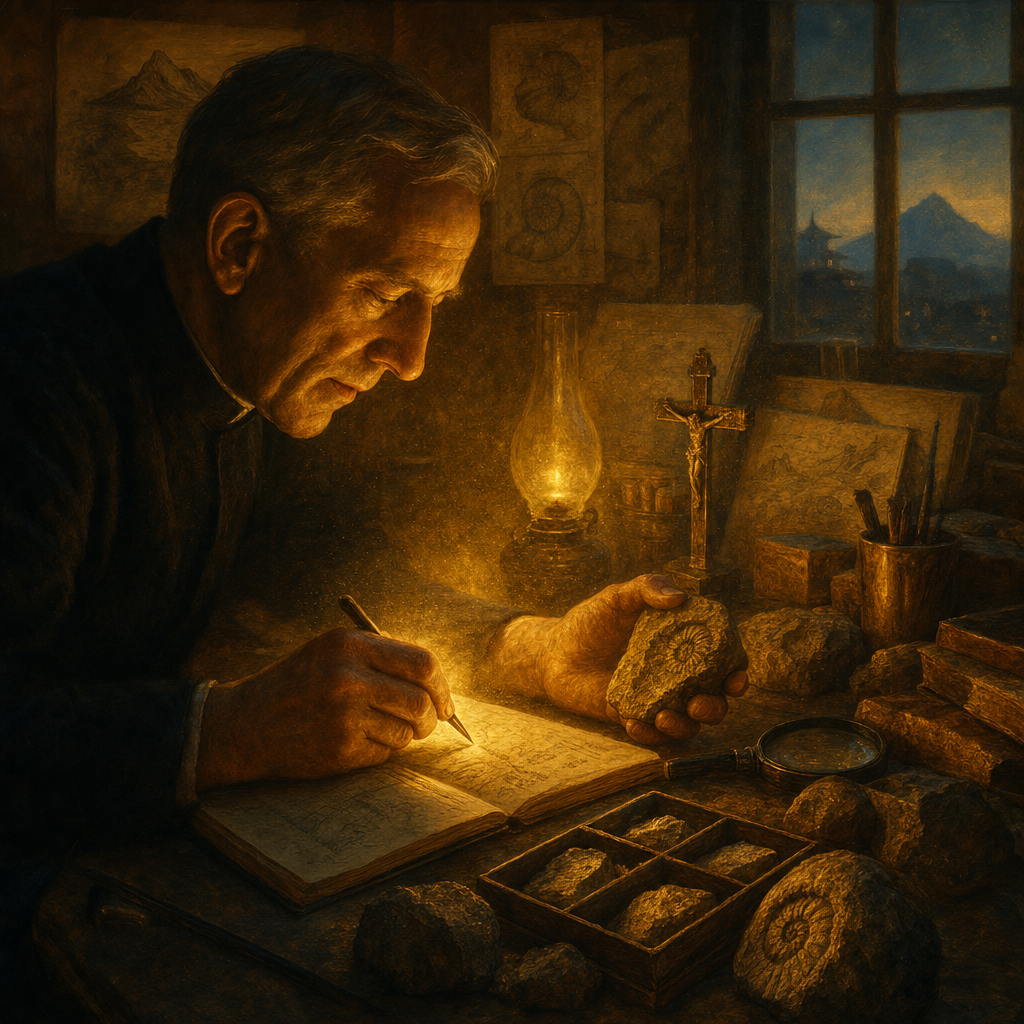
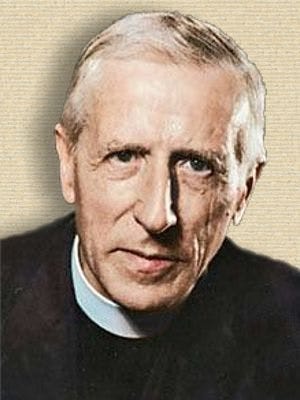
"The Mass on the World" was written in 1923 in the Ordos Desert, Inner Mongolia, during a palaeontological expedition. It was first published in the posthumous collection Hymn of the Universe (1961).
Related Concepts