Three Philosophical World-Views
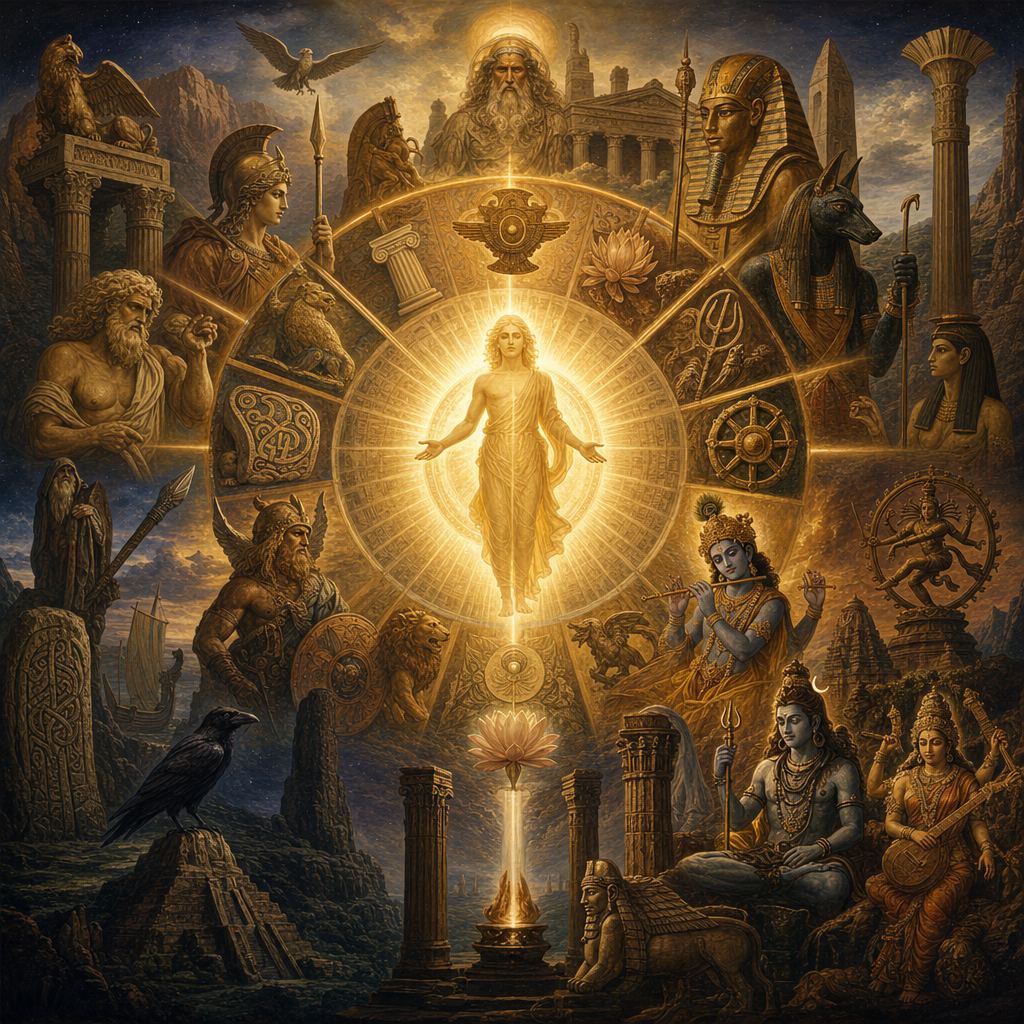
Naturalism — represented by Democritus, Epicurus, Hobbes, and the modern materialists — takes nature as the ultimate reality and explains everything, including human consciousness and value, in terms of natural causes. The idealism of freedom — Plato, Kant, Fichte, Maine de Biran — takes the free, self-determining subject as the ultimate foundation and interprets nature as the domain in which freedom is exercised or impeded. Objective idealism — Heraclitus, Spinoza, Hegel, Schleiermacher — sees mind and nature as two expressions of a single underlying rational or spiritual whole, in which the individual and the cosmos are ultimately at one. Each of these world-views has been held by great thinkers across centuries; none has succeeded in definitively defeating the others.
Why No Final Philosophy
Dilthey's explanation for this plurality is not sceptical — he does not conclude that philosophical inquiry is futile — but historical and psychological. The three world-views correspond to three fundamental orientations of the human will towards life: the naturalist orientation emphasises the causal structure of the world in which human beings must act; the freedom orientation emphasises the irreducibility of the self-determining subject; the objective idealist orientation emphasises the meaning and wholeness of a reality that includes both nature and spirit. These orientations are not merely intellectual positions but expressions of different ways of experiencing the weight and direction of human life — and because life itself is irreducibly plural, no single philosophical articulation of it can be final.
Historical Self-Consciousness as Liberation
The practical upshot of Dilthey's philosophy of world-views is a form of philosophical freedom through historical self-consciousness. Once we understand that every great philosophical system is the expression of a fundamental orientation rather than the discovery of a final truth, we are freed from the compulsion to choose between them absolutely. We can inhabit each world-view in turn, learn what it illuminates, recognise its limitations, and move between perspectives with a flexibility that no single philosophy permits from within itself. This historical freedom is not relativism — Dilthey maintains that some articulations of each world-view are better than others — but it is the philosophical analogue of the hermeneutic circle: an open, responsive engagement with the plurality of ways in which human life has understood itself.
The typology of philosophical world-views is developed in The Essence of Philosophy (1907) and the lecture notes on the types of world-view, published posthumously. It is one of Dilthey's most influential contributions to twentieth-century philosophy of culture and inspired Karl Jaspers's typology of world-views in his early Psychologie der Weltanschauungen (1919).
Related Concepts