Spirit as the Subject of History
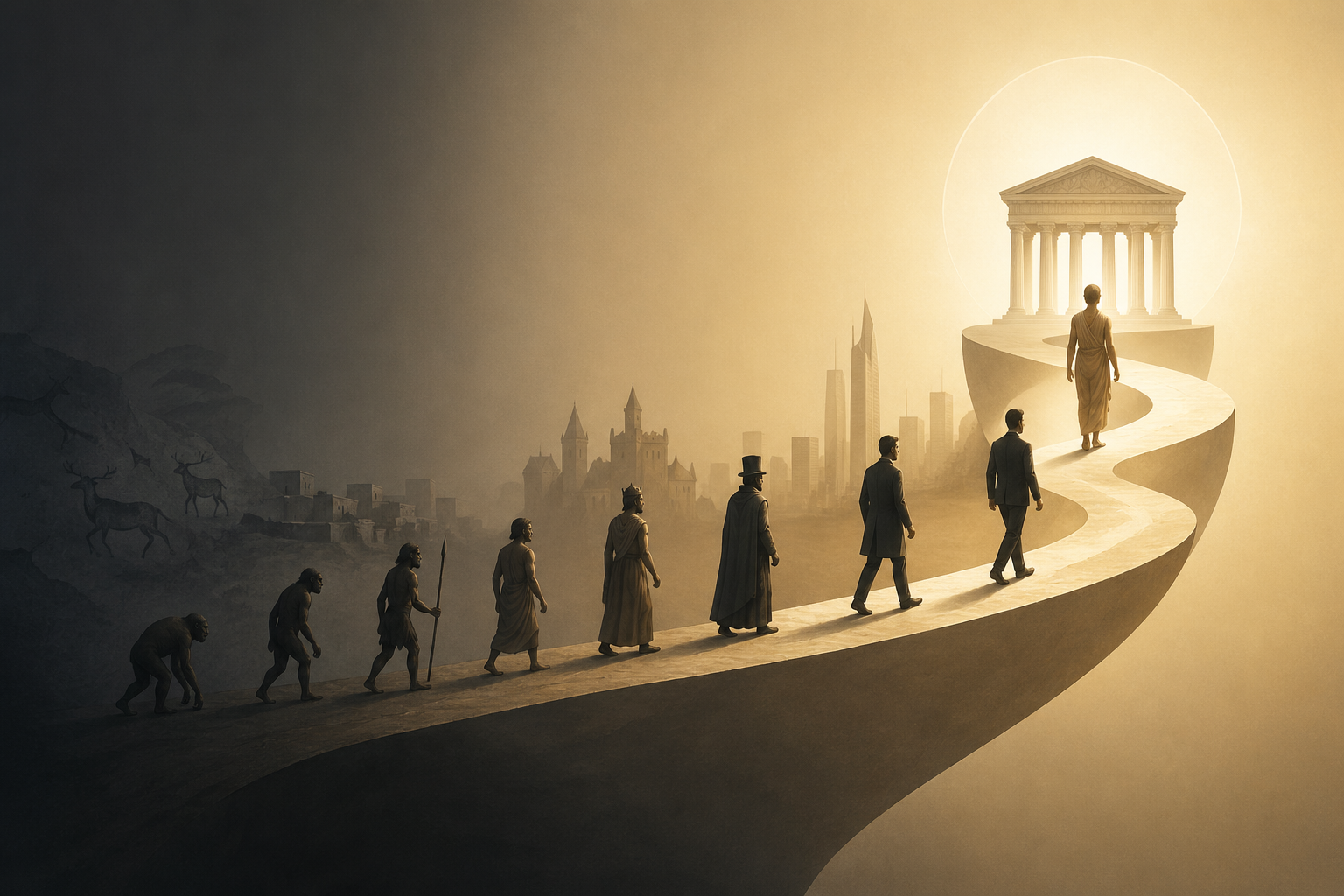
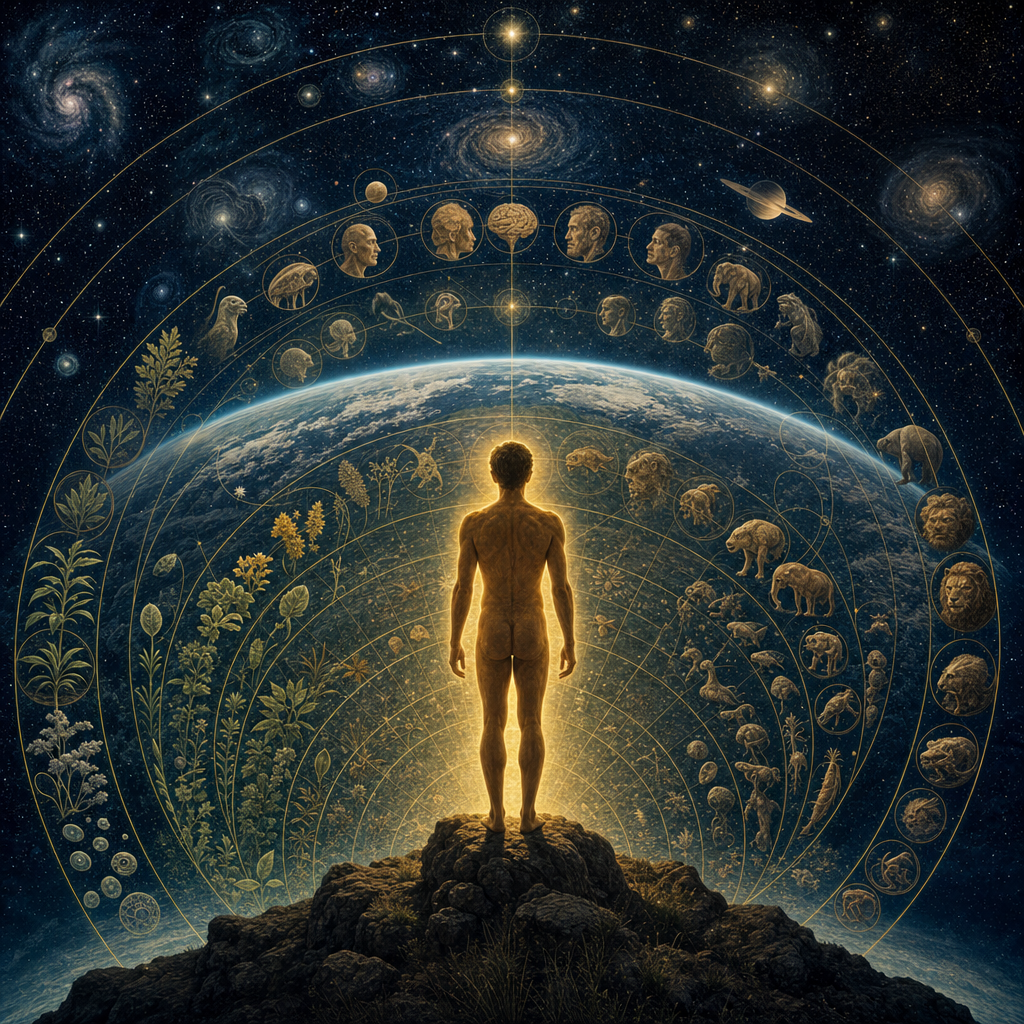
History, for Hegel, is not a sequence of events produced by human decisions, natural causes, and accidents. It is the self-development of Spirit — the process by which Spirit comes to know itself as free. Each civilisation is a moment in this development: a particular, limited expression of Spirit's self-understanding that contains within itself the contradictions that will drive it toward the next moment. The movement is not mechanical but dialectical: Spirit externalises itself, encounters itself as alien, and returns to itself enriched.
The Four World-Historical Realms
Hegel organises world history into four great realms, each corresponding to a stage of Spirit's self-consciousness. The Oriental world (China, India, Persia) knows only that one is free — the despot. The Greek world knows that some are free — the citizens of the polis. The Roman world knows that citizens in general have rights, but freedom is still external and legal rather than inward. The Germanic world, culminating in the modern Protestant state, finally knows that all are free — freedom as the universal principle of political life.
The Controversial Eurocentric Framework
Hegel's framework has been subjected to devastating critique as a rationalisation of European imperialism. His relegation of African history to "pre-historical" and his subordination of Asian civilisations to mere precursors of European modernity reflect both the ignorance and the prejudice of his era. Postcolonial thinkers from Fanon to Spivak have argued that the World Spirit is a philosophical mask for European self-assertion. This critique is valid and cannot be set aside; but it need not entail rejecting every feature of Hegel's philosophy of history.
Hegel's World Spirit should be distinguished from his more specific concept of Volksgeist — the spirit of a particular people, the particular cultural and institutional shape that Spirit takes in a given nation at a given time. World Spirit is the movement through all Volksgeister, the trajectory in which each particular spirit is aufgehoben.
Related Concepts