A Milieu, Not a Place
The word milieu is chosen with care. It means not only environment but also the middle — the centre that pervades everything, the medium in which things exist. God is not to be found by going elsewhere but by going deeper into the reality that is already present: deeper into matter, deeper into relationships, deeper into action. The divine milieu is not a supernatural addition to the natural world but its innermost ground, discovered when the natural is penetrated fully.
Transparency of the World
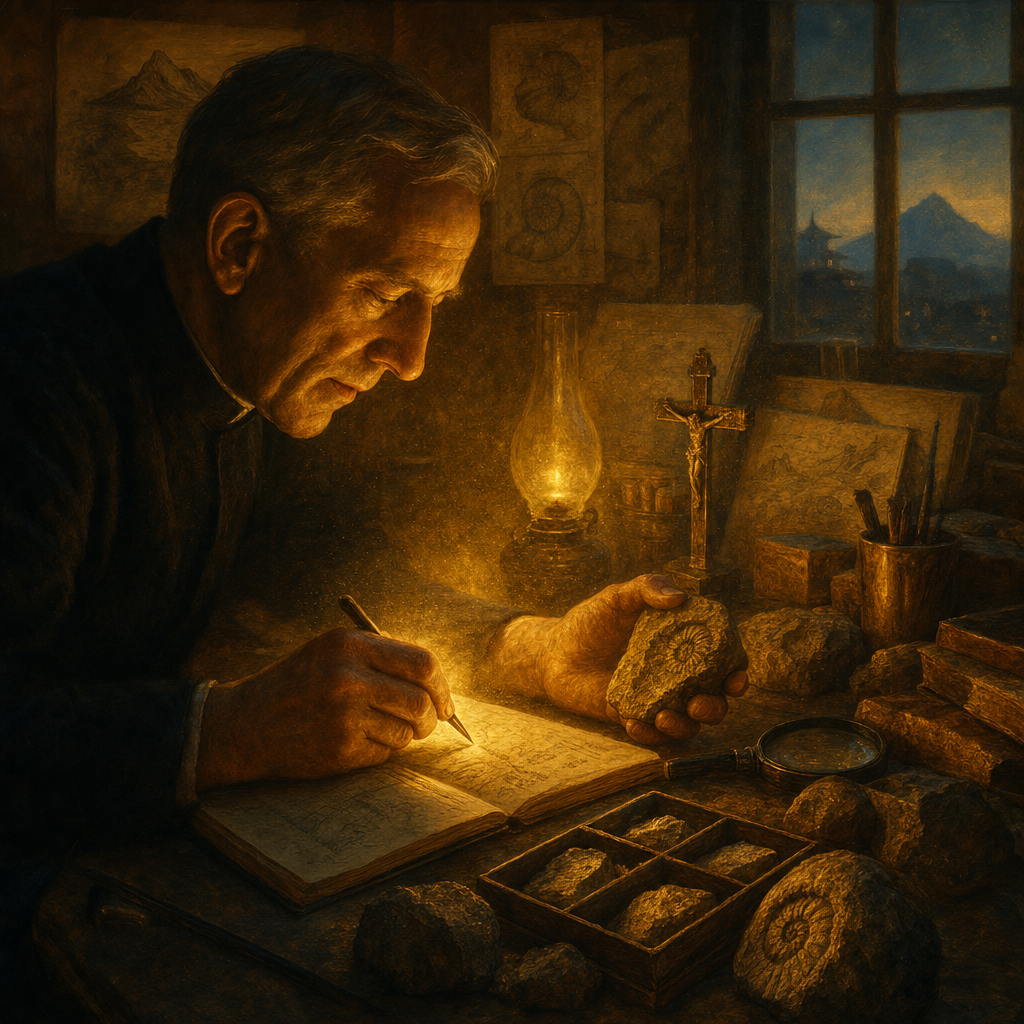
Teilhard draws on the tradition of finding God in all things — Ignatius of Loyola's "seeking and finding God in all things" — and extends it cosmologically. Not merely individual objects but the entire evolutionary process is shot through with divine presence. The world becomes transparent: every rock, every organism, every human face can be seen as a point of divine irradiation, a focus where the infinite is refracted into the finite. This transparency is not given immediately but achieved through a particular quality of attention — the loving gaze that Teilhard calls vision.
Convergence in Christ
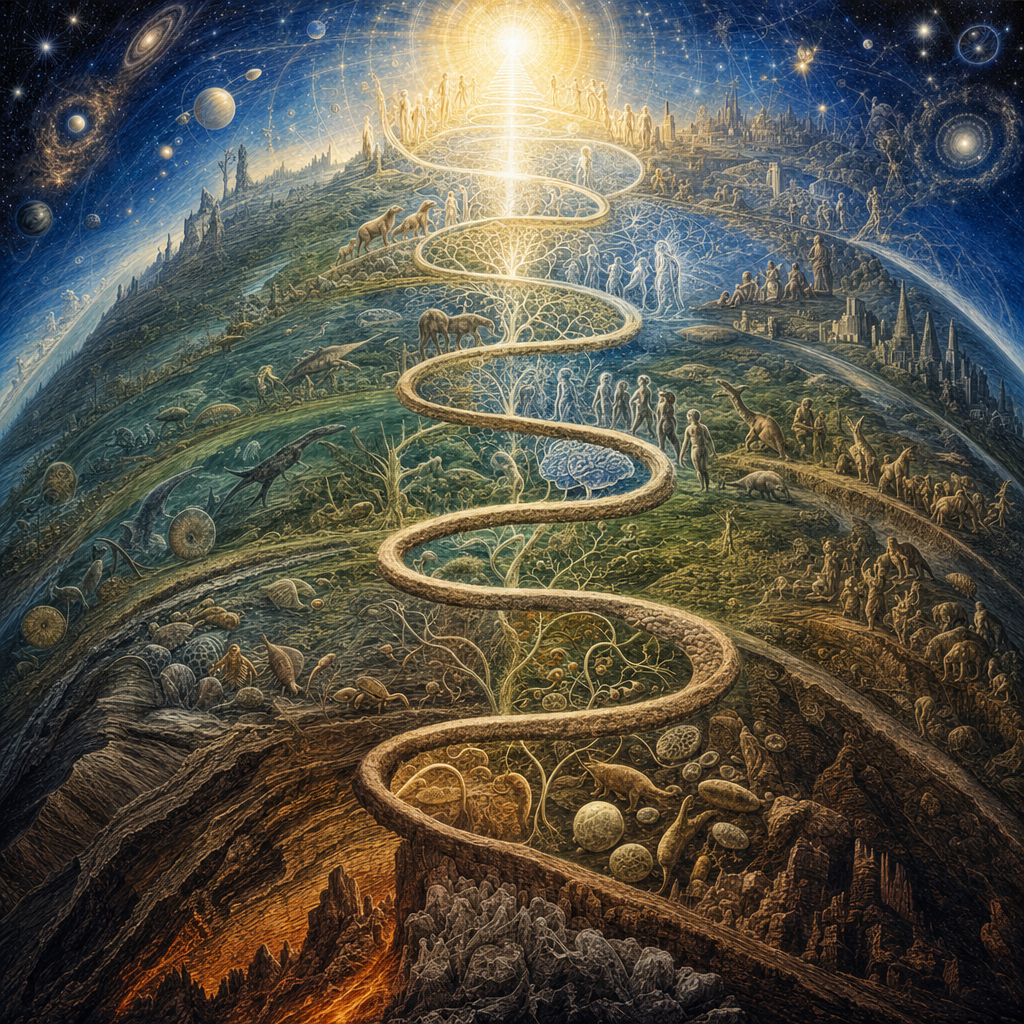
The divine milieu is not static. As the noosphere develops and human consciousness converges toward the Omega Point, the divine milieu intensifies — the fire burns brighter, the transparency becomes more luminous. At the Omega Point, the milieu achieves its full radiance: the universe in its entirety becomes the Body of Christ, and the divine fire that always pervaded it becomes fully visible to the beings it has been drawing toward itself throughout evolutionary history.
The Divine Milieu was written in 1926–27 in Tientsin, China, but not published until 1957, two years after Teilhard's death, due to the refusal of his Jesuit superiors to grant imprimatur.
Related Concepts