Learn › Peripatetic
Learning path · 9 steps
The Aristotelian Path
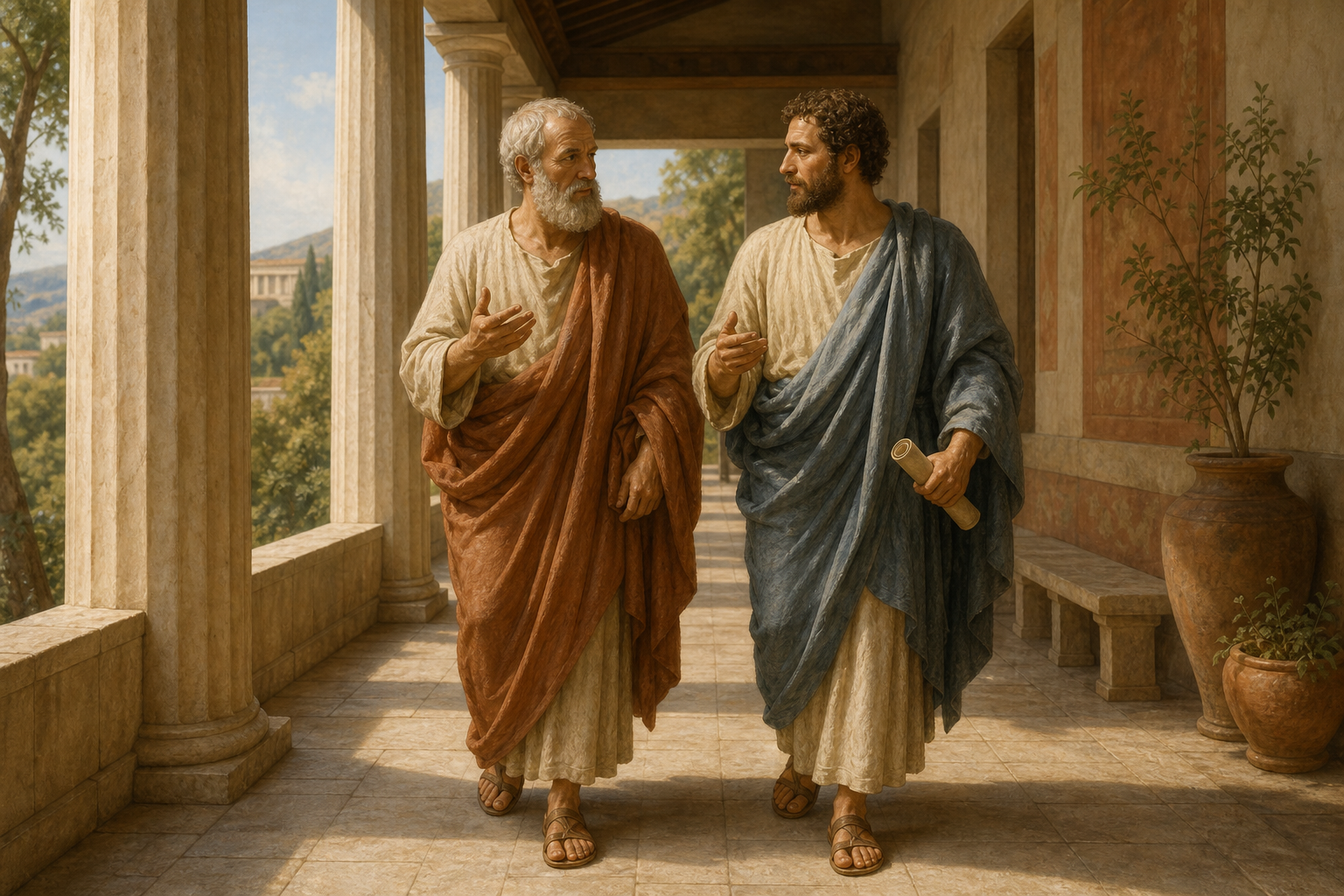
The Peripatetic school was founded by Aristotle at the Lyceum in Athens — named for the peripatos, the covered walkways where he lectured. In contrast to Plato's world of ideal Forms, the Peripatetics grounded philosophy in careful empirical observation of the natural world. Aristotle and his followers produced systematic works across logic, physics, biology, ethics, politics, rhetoric, and aesthetics. Transmitted through Averroes and Aquinas, the school's influence shaped medieval philosophy in both the Islamic and Christian worlds.
0% complete
1

Concept · 5 minUp next
Liberty and Democracy
Aristotle
2

Concept · 6 min
Eudaimonia — The Good Life
Aristotle
3
Concept · 5 min
Man as Political Animal
Aristotle
4

Concept · 4 min
Grace and Nature
Thomas Aquinas
5
Concept · 6 min
The Causes of Revolution
Aristotle
6
Concept · 5 min
The Doctrine of the Mean
Aristotle
7
Full text · 8 chapters
Politics
Aristotle
8

Full text · 6 chapters
Poetics
Aristotle
9
Full text · 10 chapters
Nicomachean Ethics
Aristotle
Further reading
More from Peripatetic, beyond the core path.