Between Virtue and Vice
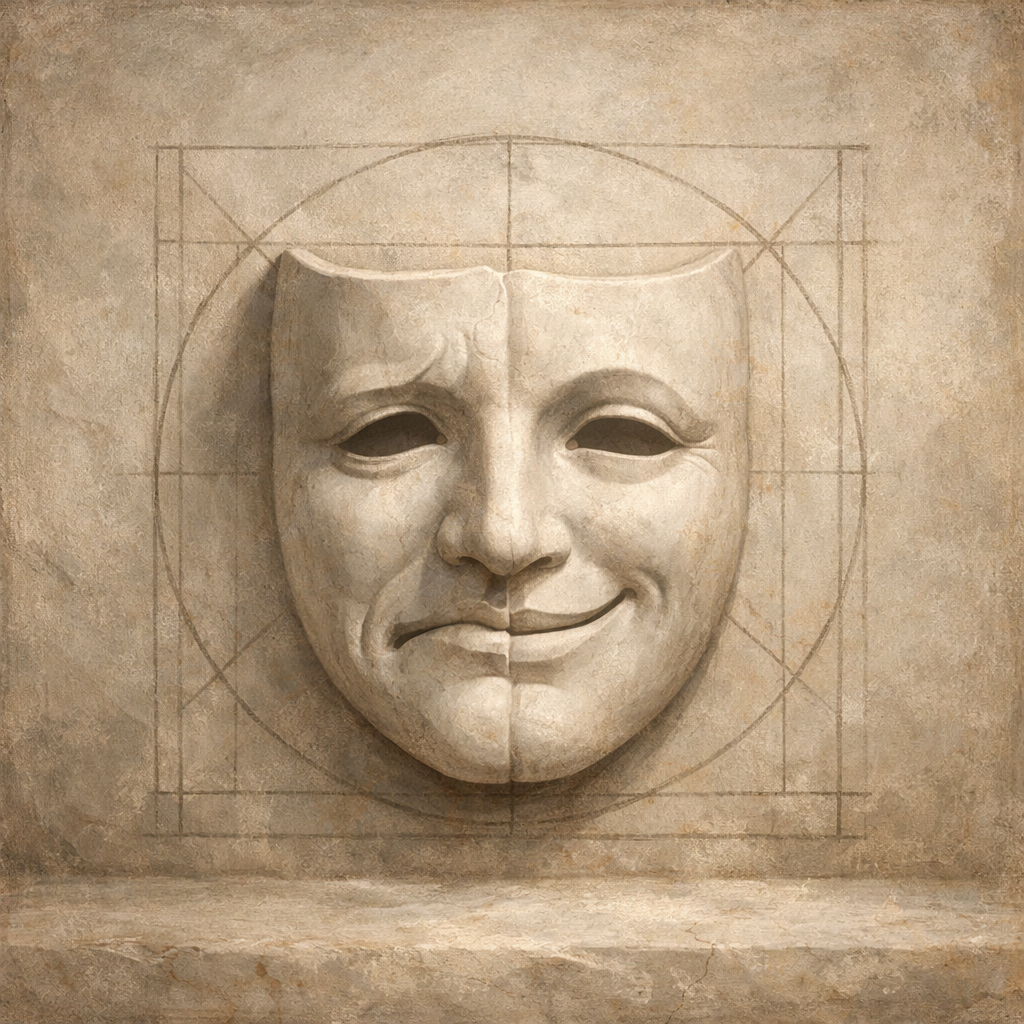
Aristotle arrives at hamartia by elimination. A perfectly virtuous person falling into misfortune is merely shocking — it offends our sense of justice without producing pity or fear. A villain prospering produces moral outrage. A complete villain falling produces satisfaction, not tragic emotion. The tragic figure must occupy a middle ground: someone highly renowned and prosperous, neither eminently good nor depraved, whose ruin comes about through some error or frailty.
pity is aroused by unmerited misfortune, fear by the misfortune of a man like ourselves
Error, Not Flaw
The word hamartia is often translated as 'tragic flaw,' but this is misleading. It does not mean a permanent character defect. Oedipus's undoing is not hot-headedness but the specific error of unknowingly killing his father and marrying his mother. Hamartia is closer to a mistake: a particular action, judgment, or misapprehension that sets the tragic sequence in motion. The hero is undone not by who they are but by what they do — and what they fail to know.
Pity, Fear, and Likeness
The criterion of likeness is crucial. We feel fear at the downfall of the tragic hero because we recognise ourselves in them. They are not gods and not monsters — they are people of our general kind, elevated in status but humanly fallible. Pity follows from unmerited suffering; fear follows from the recognition that we too are vulnerable to error. Tragedy works on us because the hero's hamartia is not alien to us.
Hamartia and the character of the ideal tragic hero are discussed in section XIII (Chapter 3 of this edition).
Related Concepts