Signs Without Resemblance
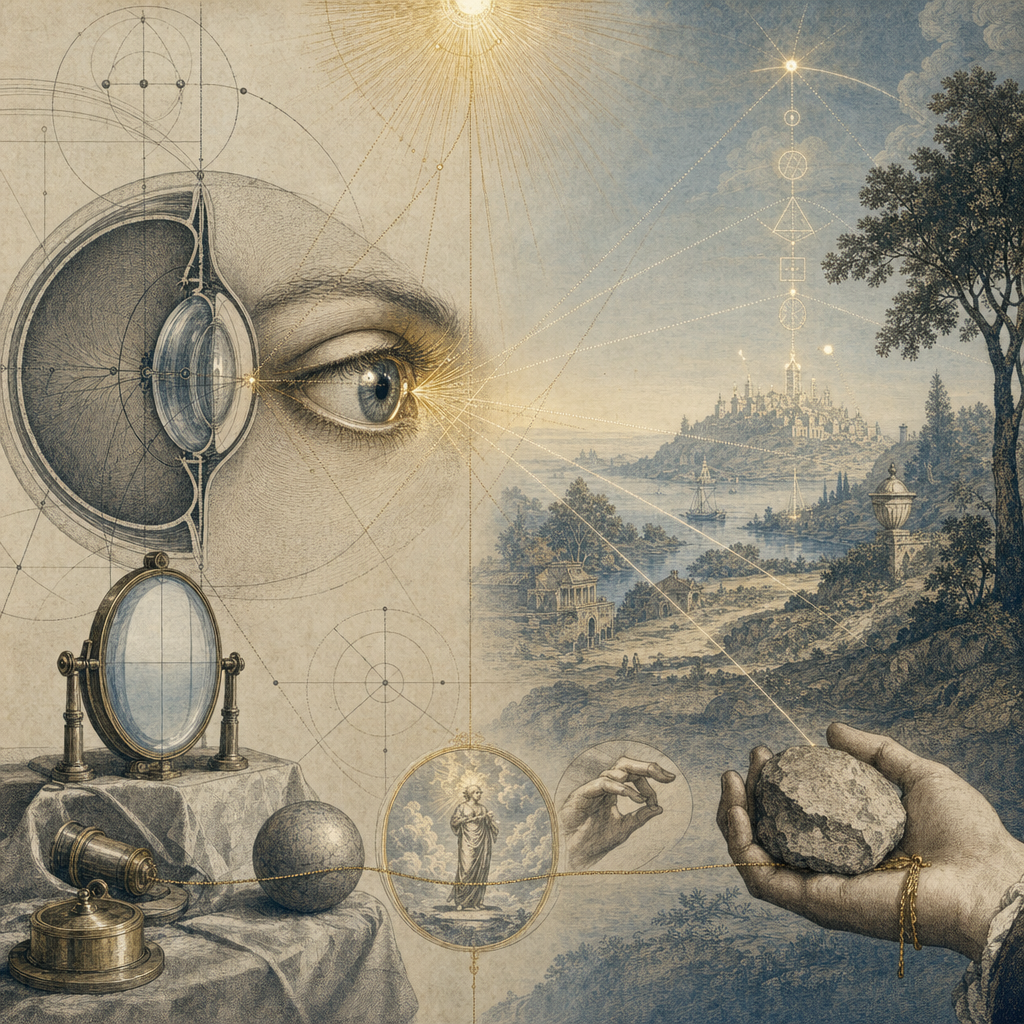
The visible world guides us through the tangible one — colours and light warn us of what is far or near, hard or soft, safe or hurtful. But the visible sign need not look like the thing it signifies, any more than the word "danger" looks dangerous. The tie is habitual, learned by experience, not natural or necessary.
we may fairly conclude that the proper objects of vision constitute an universal language of the Author of Nature, whereby we are instructed how to regulate our actions in order to attain those things that are necessary to the preservation and well-being of our bodies
Why We Miss It
We overlook the language because we have spoken it since infancy. Berkeley suggests that if there were one universal spoken tongue that everyone was born able to use, people would swear they heard meanings directly in sounds. So with vision: long habit fuses sign and thing until we believe we see distance and magnitude themselves, rather than reading them off their visible marks.
A Theology of Perception
The metaphor is not decorative. If seeing is reading, there is an Author, and the steadiness of the visual language is the constancy of the speaker. The New Theory of Vision thus prepares the central doctrine of Berkeley’s system: nature is divine discourse, and perception is the standing revelation of God to the minds He addresses.
The "universal language of vision" is the culminating doctrine of the New Theory of Vision (final sections).
Related Concepts