Against Mechanical Matter
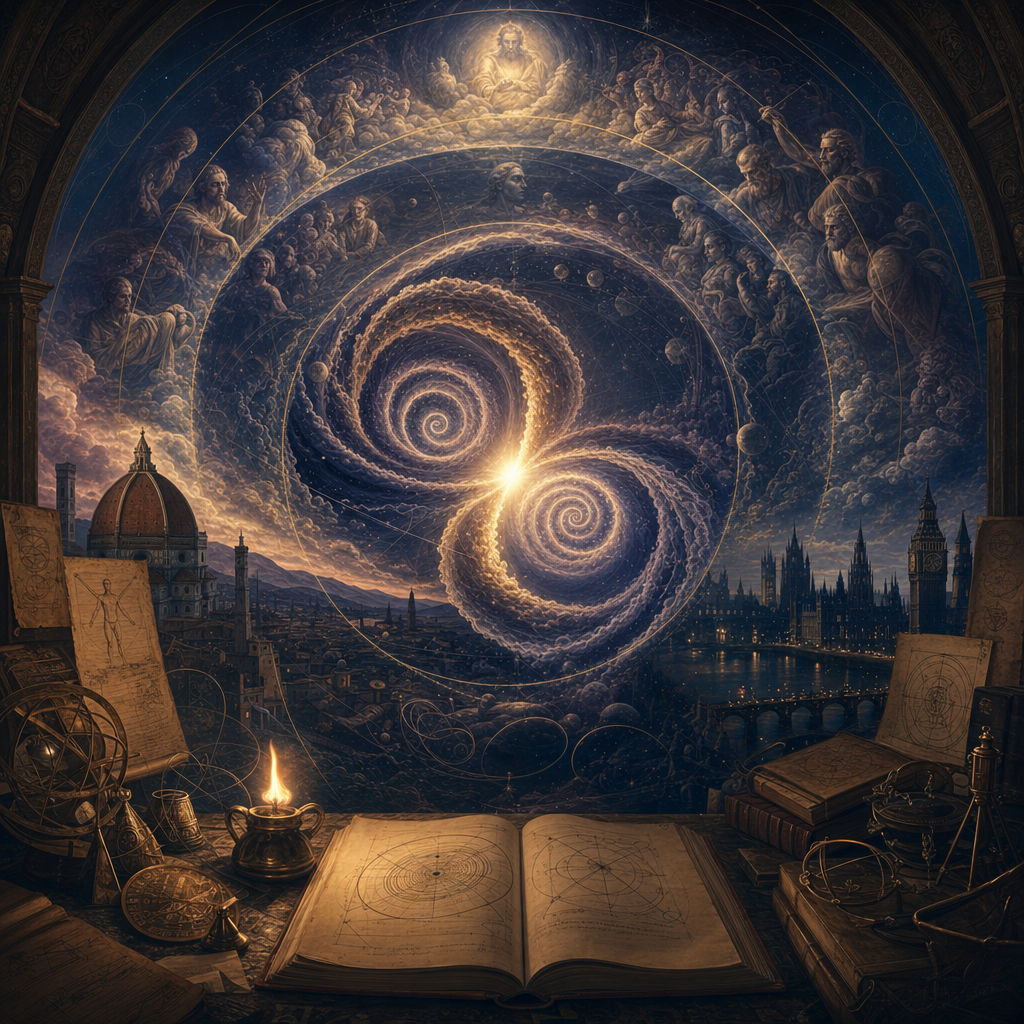
The scientific revolution that Bruno helped to precipitate also generated a picture of matter as passive, mechanical, and inert — raw material to be organised by external forces and laws. Bruno's universe is the opposite: matter is intrinsically active, living, and self-organising. The World-Soul pervades the entire universe, present in every particle of matter as the principle of its inherent striving toward form. There is no dead matter in Bruno's cosmos — only matter more or less fully awakened to the soul that is its deepest nature.
Universal Intellect as Formal Cause
Bruno distinguishes the World-Soul (which animates and moves matter) from the Universal Intellect (which is the source of the intelligible forms that matter strives toward). The Universal Intellect is the Neoplatonic Nous — the divine mind that contains all the ideal forms as its thoughts. Matter, animated by the World-Soul, strives toward these forms and successively realises them. The multiplicity of things in the natural world is the result of matter successively embodying different configurations of the eternal forms.
Panpsychism and its Consequences
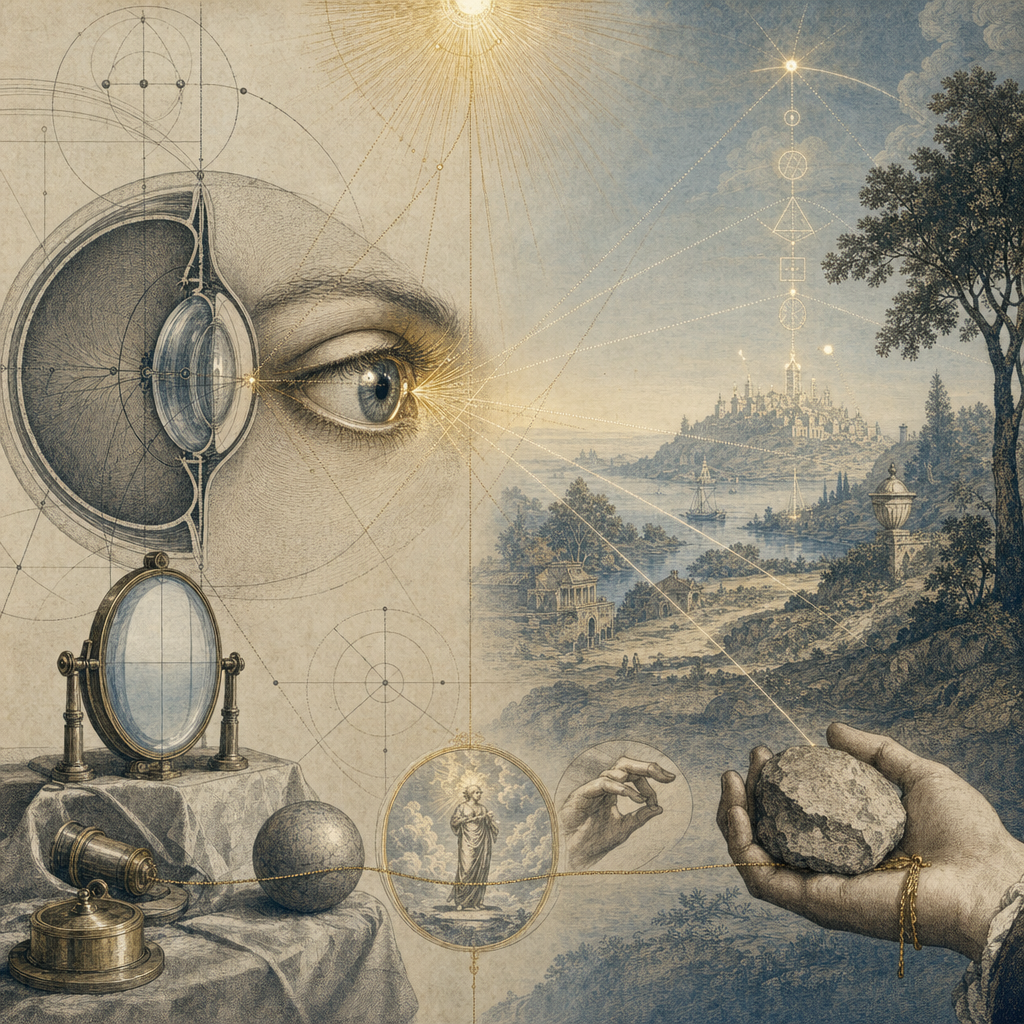
Bruno's World-Soul doctrine implies a form of panpsychism: mind or soul is present everywhere in the universe, not only in the brains of animals. Stones and plants are not conscious in the human sense, but they are animated — they have an inner principle of form-seeking that is a more minimal version of what we call mind. This has consequences for how Bruno understands the human relationship to the natural world: we are not minds in a mechanistic nature but the most developed expressions of a nature that is throughout animated and striving.
The World-Soul doctrine is central to On Cause, Principle and Unity (1584) and also pervades On the Heroic Frenzies (1585). Bruno's sources include Plotinus (Enneads IV–V), Ficino's commentary on Plato's Timaeus, and the Corpus Hermeticum.
Related Concepts