The One
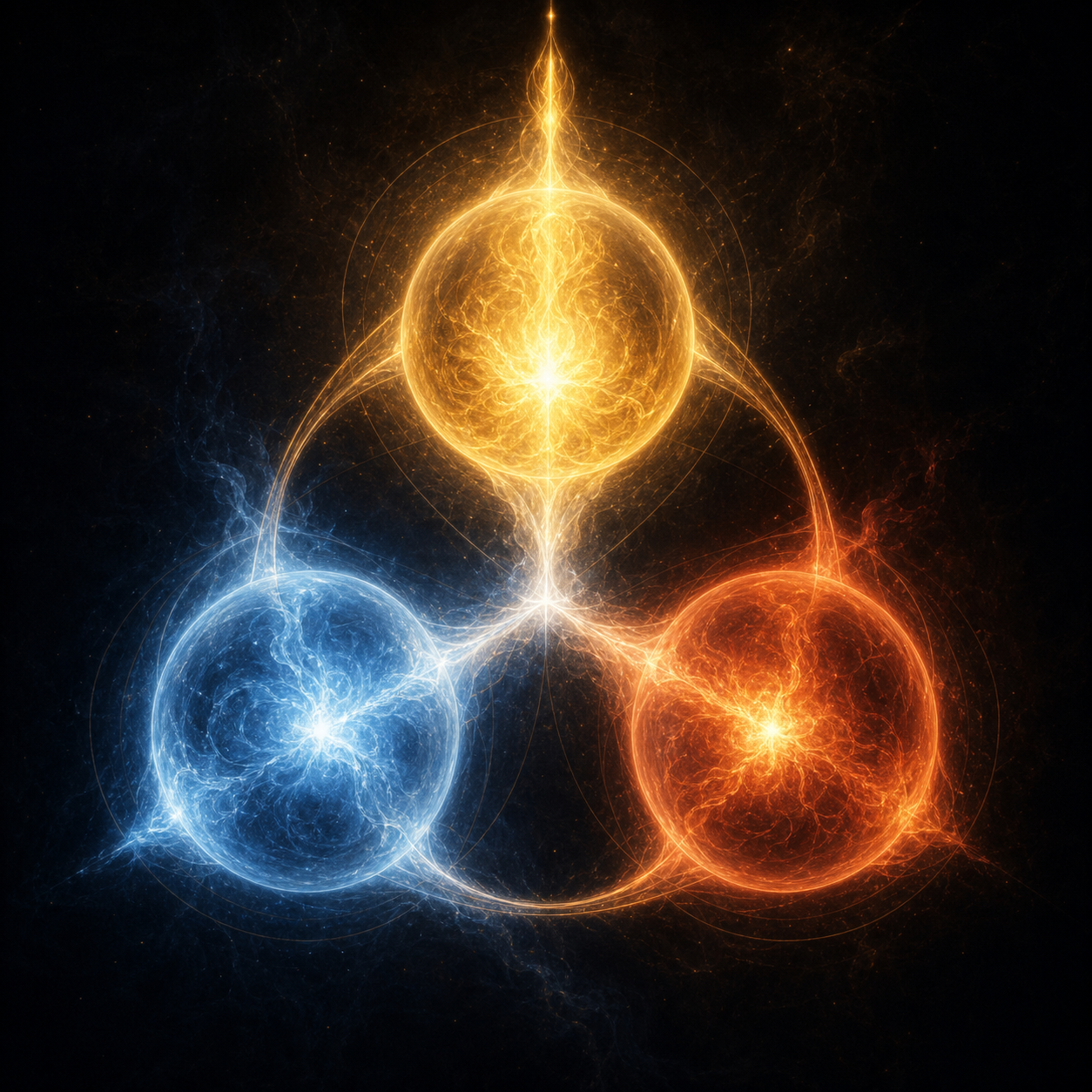
The first and highest hypostasis is the One — absolute, simple, without parts, without attributes, without even the duality of thinker and thought. It is not a being but the source of all being: the principle of unity that every existing thing participates in to the degree that it is anything at all. Because the One is beyond all limitation, it is also beyond all description. Plotinus insists that even to say "the One is" risks imposing a predicate where none can apply. It can be approached only through negation — stripping away every determination — or in the wordless intimacy of mystical union.
Intellect
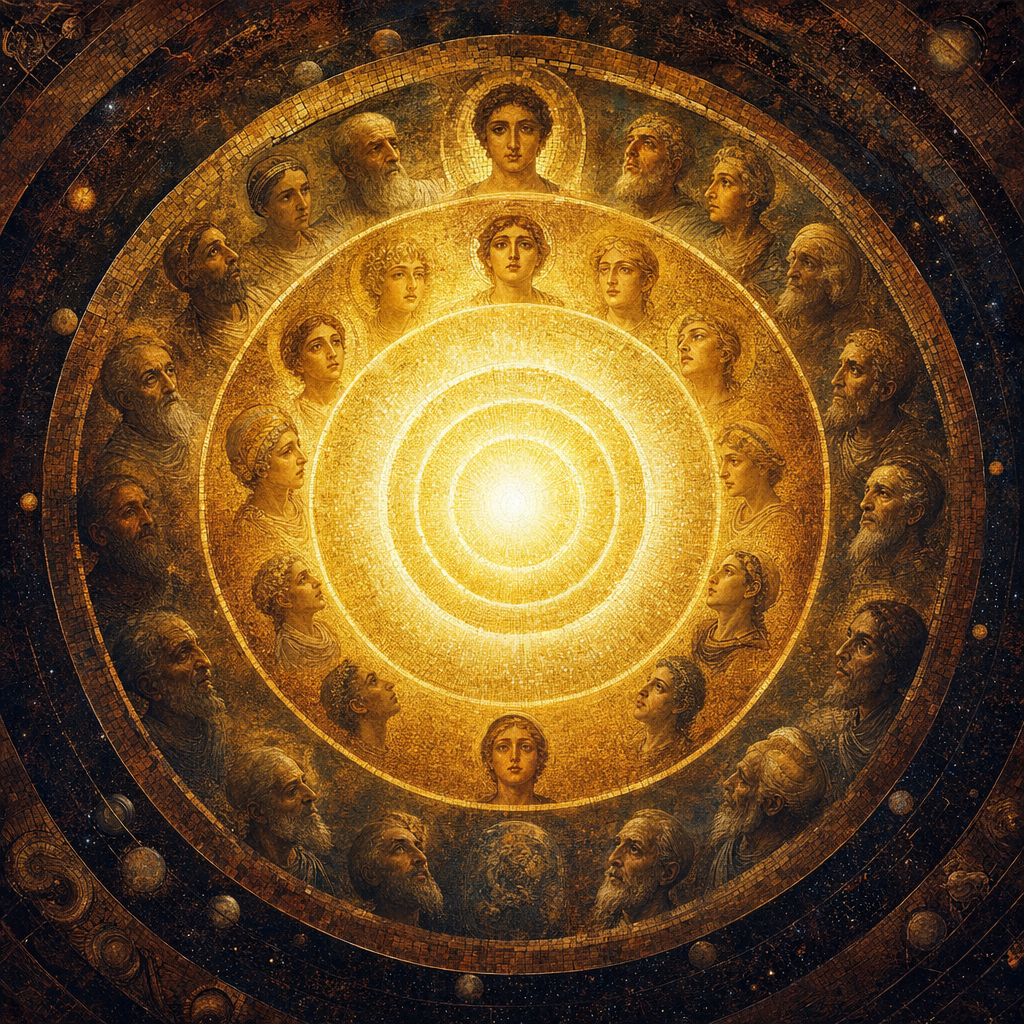
The second hypostasis is Intellect (Nous) — the realm of pure thinking-itself-thinking, where thinker and thought are identical. Intellect is the sphere of the Platonic Forms: it contains within itself all the intelligible archetypes of which material things are imperfect copies. When the soul seeks to understand the real nature of justice, beauty, or number, it is the Forms within Intellect it is trying to comprehend. Intellect is simultaneously the most knowable region of reality and, because it is purely intelligible, the furthest from the sensory world we ordinarily inhabit.
Soul
The third hypostasis is Soul — the principle of life that mediates between the intelligible and material worlds. Soul proceeds from Intellect as Intellect proceeds from the One: not by any act of will or deliberation but as a natural overflow of higher reality's excess. Soul has two faces: one turned upward toward Intellect, from which it perpetually draws nourishment, and one turned downward, generating and animating the physical cosmos. Individual human souls are portions of universal Soul, temporarily housed in bodies, capable of ascending through philosophy toward their source or further descending into matter.
The doctrine of the three hypostases is developed across multiple Enneads, most systematically in Enneads V.1 ("On the Three Primary Hypostases") and V.2. Porphyry's Life of Plotinus remains the primary source for biographical context.
Related Concepts