The Soul's Alienation
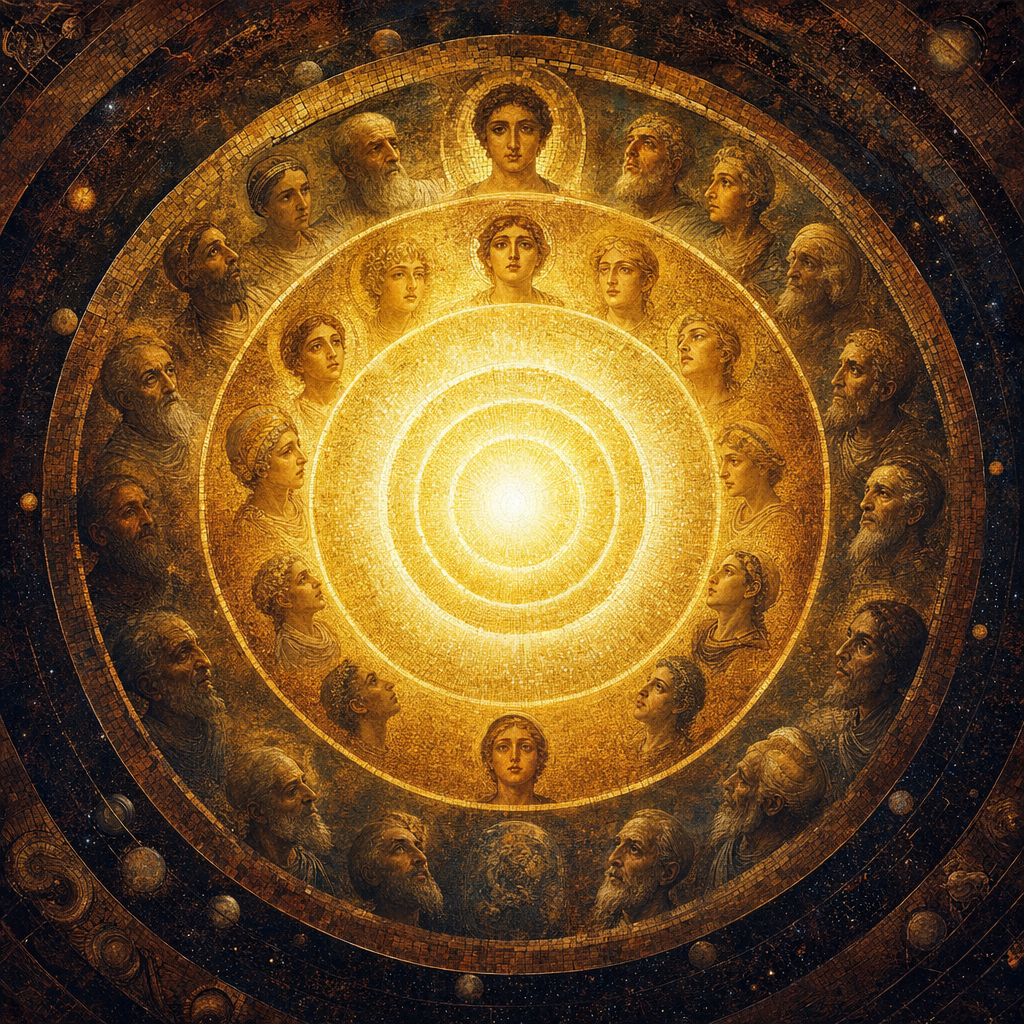
The soul's descent into a body is not a punishment but a natural consequence of emanation — a "falling" that is also a kind of necessity. Yet the embodied soul risks forgetting its true nature: absorbed in the concerns of sensation and appetite, it takes the material world for reality and loses sight of the intelligible heights from which it came. Philosophy begins with this forgetting and proceeds by way of recollection — the recognition that the Forms the soul half-remembers are more real than anything in the sensory world, and that the soul's truest home lies elsewhere.
The Ascent through Beauty
The path of return has a recognisable shape: it moves from the beauty of bodies to the beauty of souls, from the beauty of souls to the beauty of moral virtue and intellectual discipline, from there to the beauty of the Forms within Intellect, and finally to the One that is the source and ground of all beauty. Plotinus inherits this ladder from Plato's Symposium and steepens it. Each step demands not merely intellectual recognition but a corresponding transformation of the soul — a genuine re-orientation of desire away from lower toward higher objects, culminating in a detachment from all finite attachment.
Union and Its Aftermath
The summit of the ascent is union with the One — henosis — a state beyond intellection in which even the distinction between the contemplating soul and the One it contemplates dissolves. Plotinus describes having achieved this experience four times in his life, as reported by Porphyry. The union cannot be described in its occurrence, only in its approach and its aftermath: the soul returns to ordinary consciousness as if from a great height, knowing that it has touched something utterly different from anything available to discursive thought. This experience is not merely psychological — for Plotinus it is the soul's discovery of what it most truly and permanently is.
The theme of return (epistrophê) pervades the Enneads. Ennead I.6 ("On the Beautiful") presents the ascent through beauty in its most accessible form. Porphyry's Life of Plotinus §23 reports Plotinus's mystical experiences of union.
Related Concepts