Complication: All Things in God
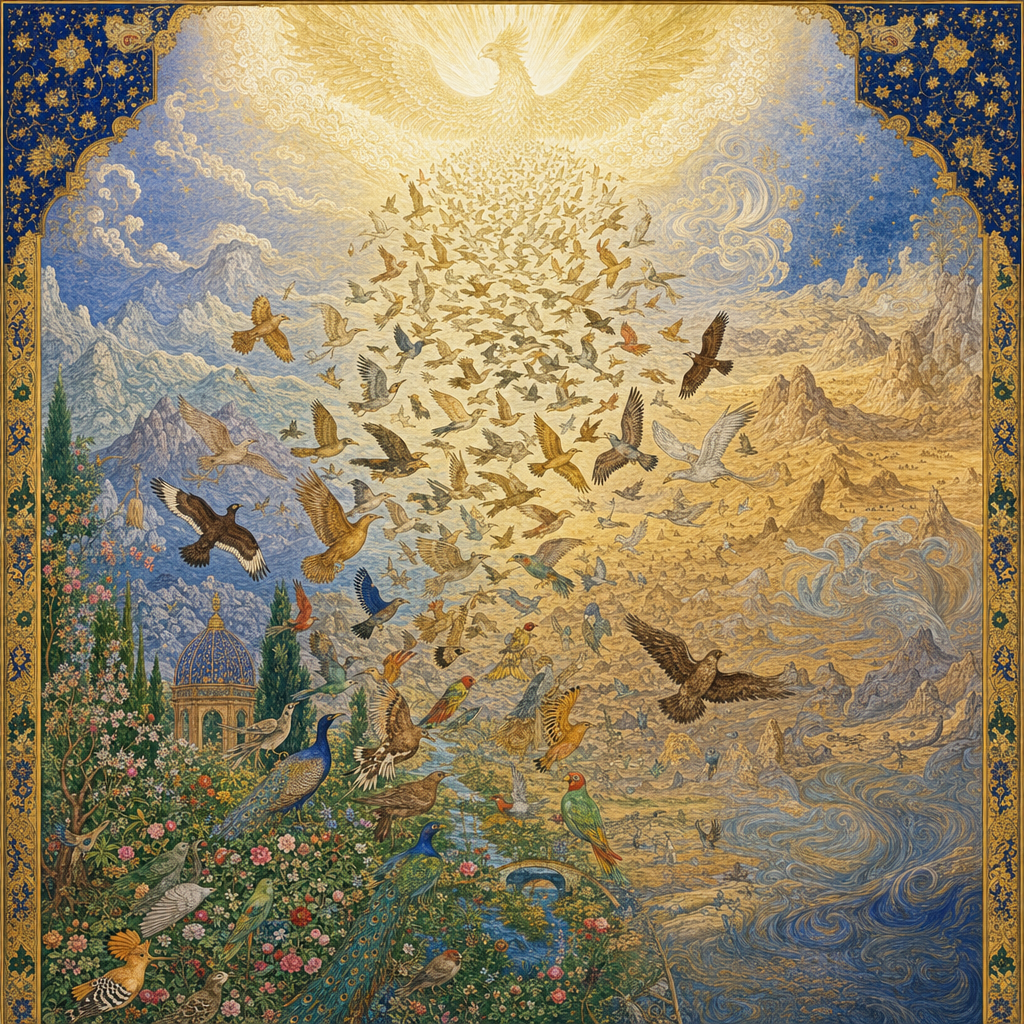
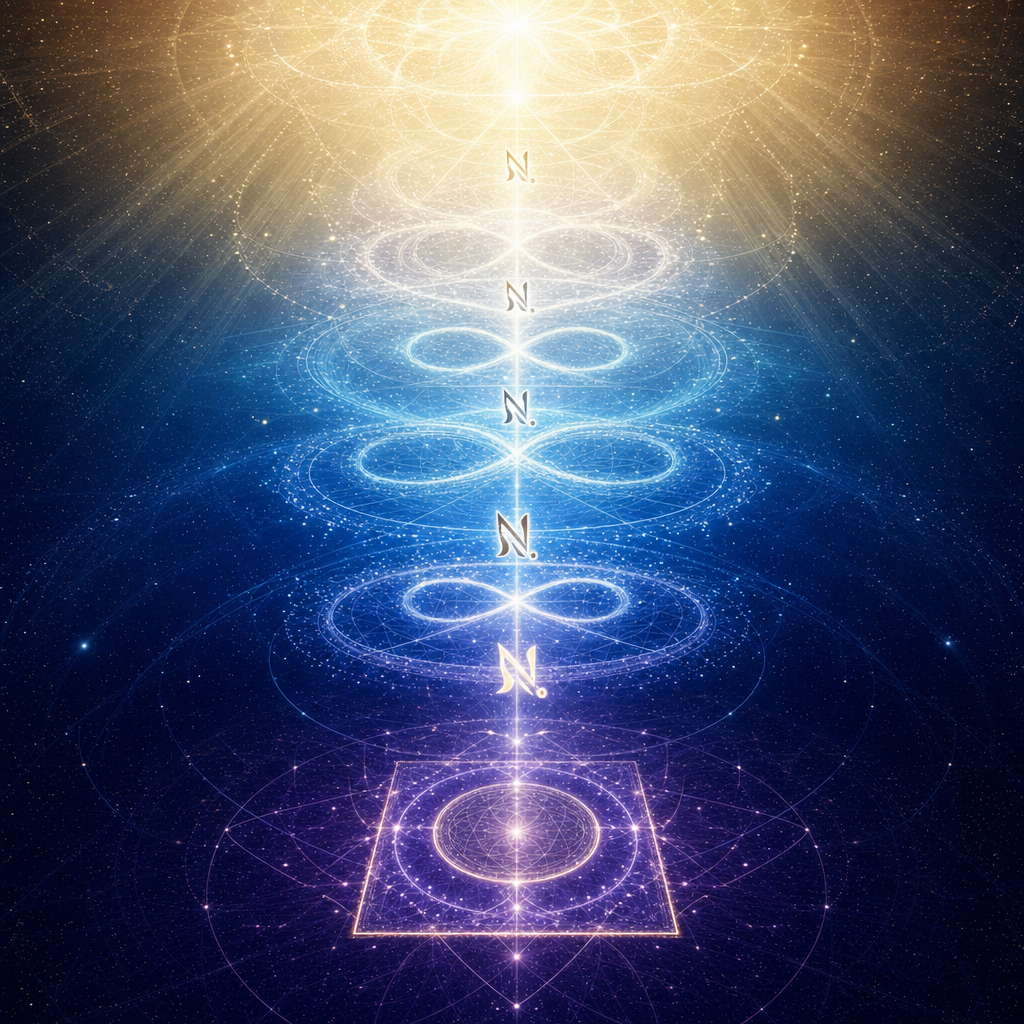
God complicates all things in the sense that the infinite unity contains within itself, as in an absolutely simple coincidence, all the distinctions and multiplicities that appear in the created world. Spatial extension, temporal succession, numerical plurality, individual differences — all of these are present in God, but not as distinct parts or properties. They are present as complicationes: enfolded together in a unity that does not yet differentiate them. This is not pantheism — Cusa is not saying that the world is God — but it is a strong claim about the ontological dependence of created things on the divine being that contains them as their principle.
Explication: God in All Things
Explication runs in the other direction: the infinite unfolds itself into the finite, and each finite thing is an expression or contraction of the infinite. This means that God is genuinely present in each thing as the principle of its being — not as a part of God that has been divided off, but as the whole of God contracted to the measure of a particular finite form. The universe as a whole is the contracted maximum — the totality of what can be explicated from the divine complication — while each individual thing is a further contraction of the universe. Cusa concludes that each thing is, in its own contracted way, all things: "each thing is in each thing."
The Significance for Cusa's Cosmology
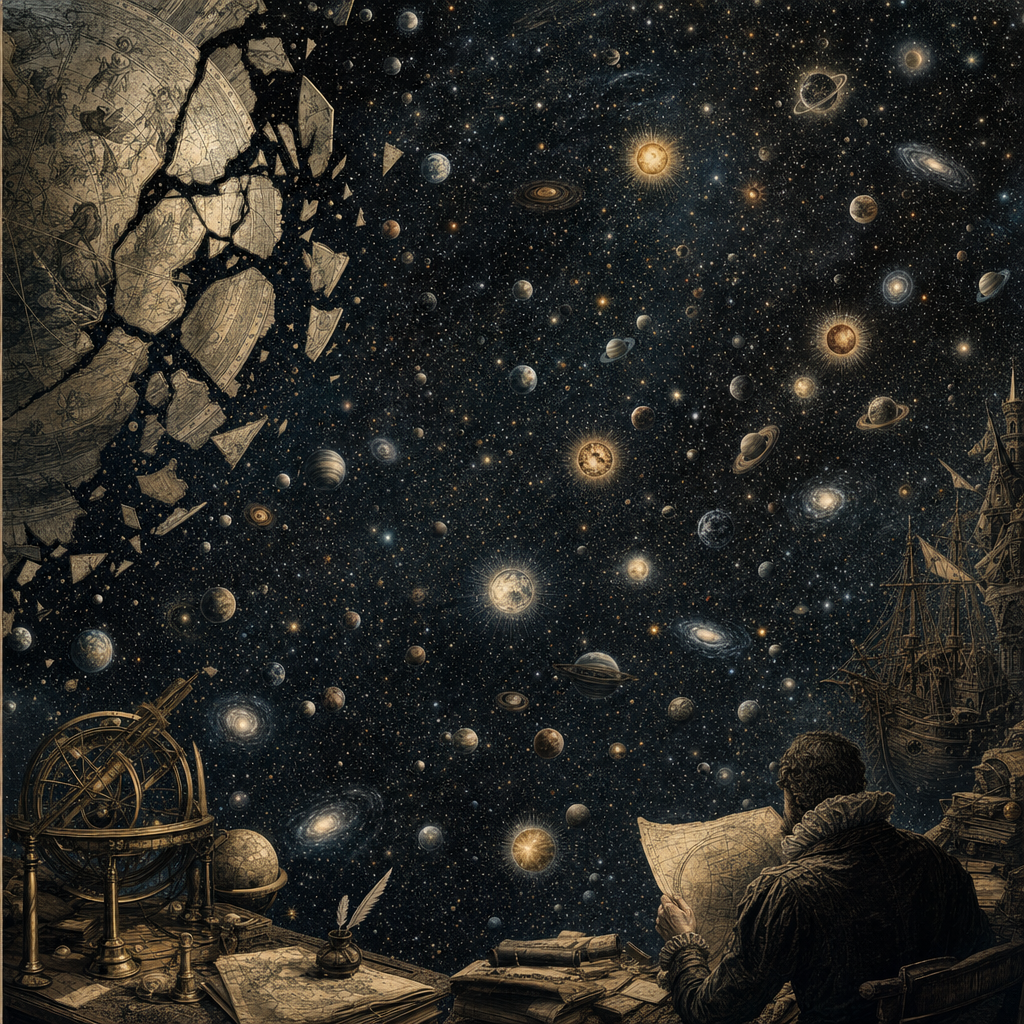
These metaphysical principles have direct consequences for Cusa's cosmology, developed in Book II of De Docta Ignorantia. The universe has no fixed centre or circumference, because its centre — God — is everywhere and its circumference nowhere. Earth is not the privileged centre of the cosmos; no point is privileged in an infinite universe whose centre is everywhere. This was a daring and historically significant claim made half a century before Copernicus, and it opened the conceptual space for the later Copernican revolution. Cusa did not arrive at heliocentrism, but he dissolved the Ptolemaic assumption of a fixed, privileged terrestrial centre — a crucial step towards modern cosmology.
The complication/explication doctrine is developed in De Docta Ignorantia II.3–4. The cosmological consequences — the de-centring of the Earth — appear in II.11–12 and anticipate the Copernican revolution. Cusa's influence on Bruno, who extended the de-centring doctrine to an actually infinite universe, was direct and acknowledged.
Related Concepts