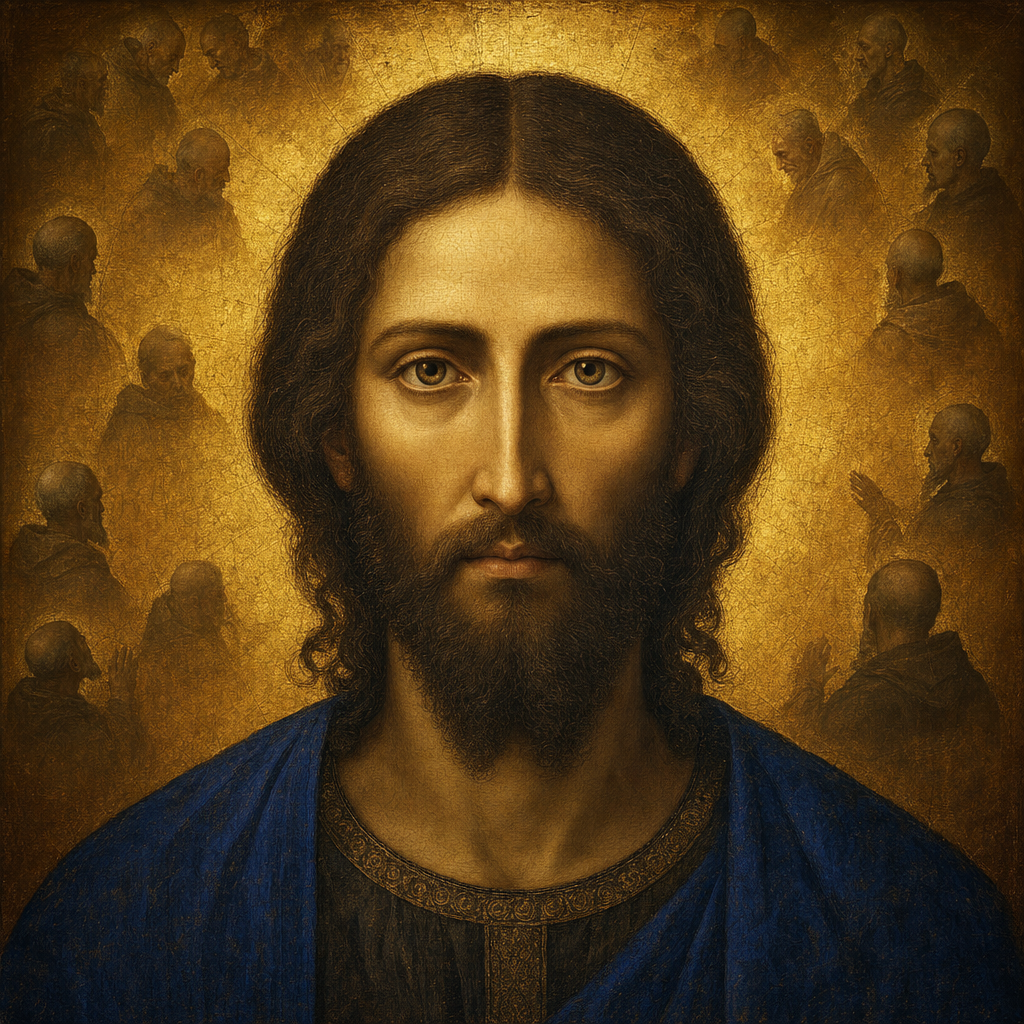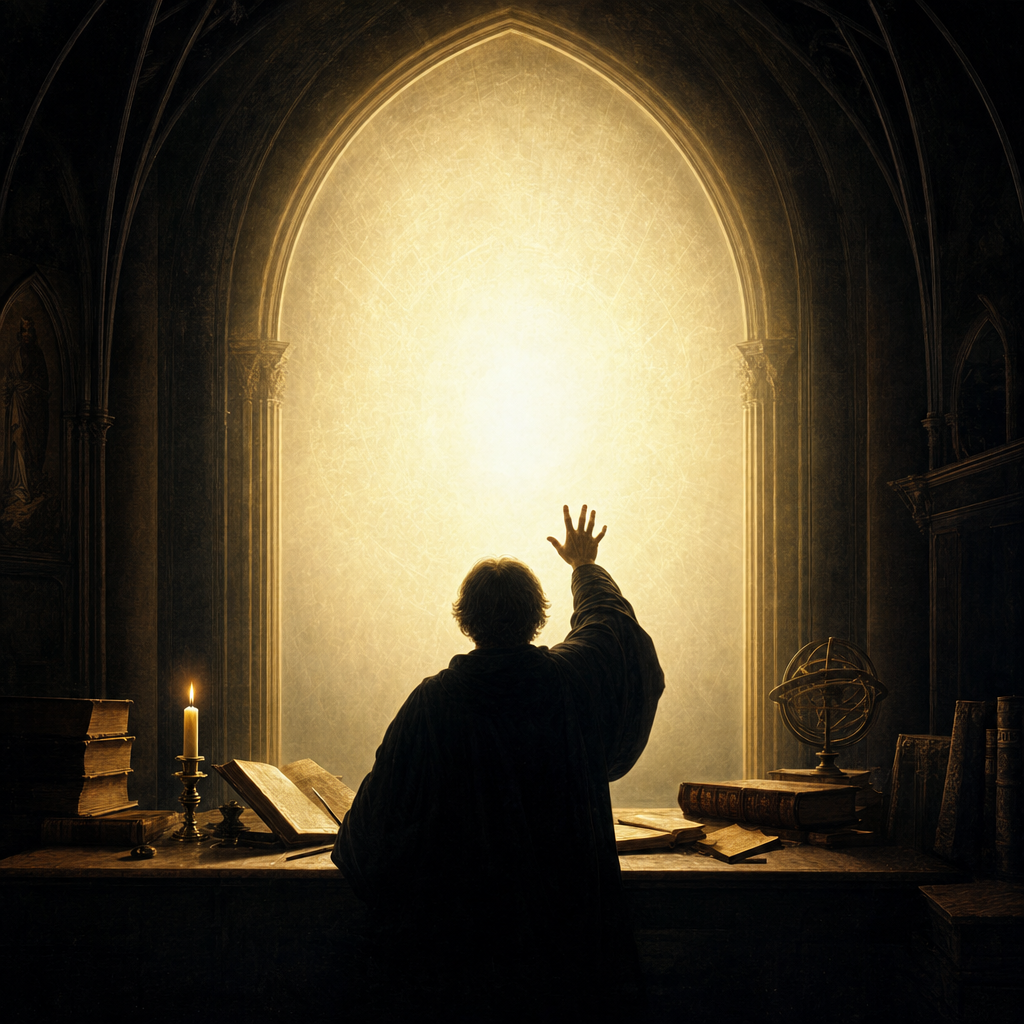
De Docta Ignorantia (On Learned Ignorance) is Nicholas of Cusa's most systematic and celebrated philosophical work, composed in 1440 after what Cusa described as a sudden illumination during a sea voyage from Constantinople. Its central argument is that the highest form of human knowledge is learned ignorance (docta ignorantia): the recognition that God — the absolute maximum, that than which nothing greater can be conceived — transcends all the categories and distinctions of finite human thought, including the distinction between maximum and minimum, between one and many, between knowing and not knowing. Because God is infinite, God cannot be comprehended by a finite intellect through the normal procedures of rational comparison and definition; the intellect can only approach God asymptotically, learning what God is not rather than what God is, and recognising that even this negative knowledge is a kind of non-knowing. The work proceeds in three books: the first treats God as the absolute maximum and develops the doctrine of learned ignorance; the second treats the universe as the contracted maximum — the whole of creation as a finite image of the infinite; the third treats Christ as the absolute and contracted maximum — the union of the infinite and the finite in a single person. De Docta Ignorantia is a foundational text of Renaissance Neoplatonism and a crucial link between medieval scholasticism and early modern philosophy.
This work isn't available here yet. In the meantime you can purchase a copy on Amazon, or check back later, as we are always adding books to our library.
As an Amazon Associate we earn from qualifying purchases.