What Makes an Act Good
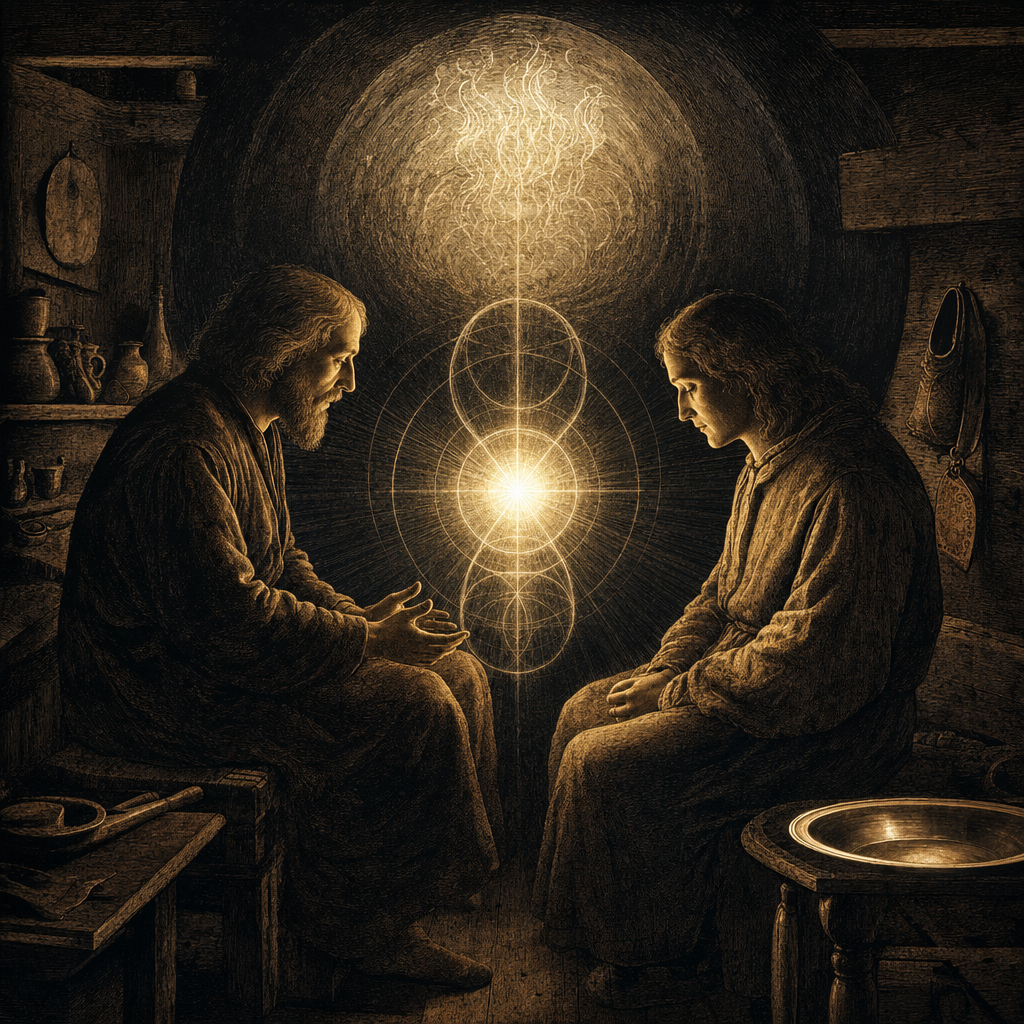
Eckhart rejects a purely external account of virtue. It is not enough to perform the right actions; what matters is the inner disposition from which the action issues. Two people may perform the same deed — visiting the sick, praying, working — and one act may be genuinely holy while the other is merely dutiful or self-regarding. The difference lies in the will: whether it acts from God or from self-interest, however disguised in spiritual dress.
Freedom from Self-Will
The obstacle to a truly detached will is not desire for worldly things but the subtler clinging to one's own preferences, one's own spiritual progress, one's own peace of mind. A person who refuses to be interrupted in prayer because they prefer contemplation to service has not yet achieved detachment — they have substituted a spiritual preference for a worldly one. True freedom of will means being equally available to God in noise and in silence, in action and in rest.
Obedience as Liberation
Eckhart's discussion of obedience is subtle. For him, obedience to a superior is valuable not because hierarchy is divine but because it is one of the most effective means of breaking self-will. A person who has truly released their own will cannot be harmed by being told what to do — the command goes to the outer man, and the inner man remains free. This is obedience as a spiritual practice, not mere compliance.
The Talks of Instruction (Reden der Unterweisung) represents Eckhart's earliest sustained prose work, dating from his period as prior of Erfurt (c. 1294–1298). Its practical and pastoral tone contrasts with the more speculative German Sermons but shares their core metaphysical commitments.
Related Concepts