What Prayer Is Not
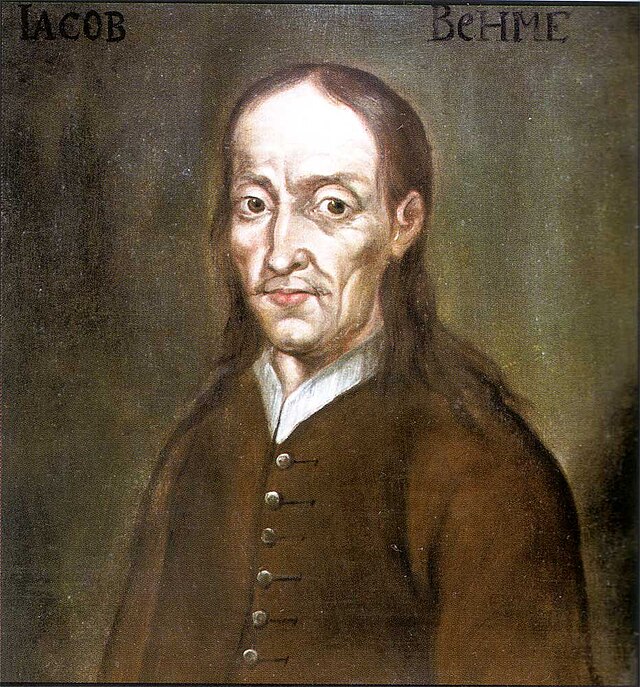
Böhme is explicitly critical of prayer understood as presenting God with requests and expecting answers. This kind of prayer remains within the horizon of the self-will: it is still the ego addressing an external authority and trying to influence it. It does not require the surrender of self-will but merely its suspension — and a suspension that ends the moment the prayer is over. Such prayer may be better than nothing, but it is not yet the real thing.
Prayer as Dying
Real prayer begins with the soul's willingness to cease to be its own centre. Böhme describes this as a sinking — a deliberate releasing of every claim, every desire, every image of what the praying self wants to receive. In this sinking, the soul does not become empty in a void sense but empty in the way a vessel is empty: ready to receive. The divine life, which cannot pour into a soul that is already full of itself, flows in as soon as the self-enclosure breaks.
The Prayer That Has No Words
Böhme's highest prayer is therefore wordless — or rather, its word is the soul's own desire turned toward God. He calls this the "ground of prayer" and distinguishes it from formal recitation, which may accompany it but cannot substitute for it. The ground of prayer is the soul's basic orientation, the direction of its forming power. When this orientation is toward God, every act of the soul participates in prayer; when it is toward the self, no amount of verbal prayer reaches the divine.
Böhme's account of prayer connects him to the Quietist tradition of Fénelon and Madame Guyon, and more distantly to the Hesychast tradition of Eastern Orthodoxy, all of which emphasise the surrender of self-will as the precondition for contemplative union.
Related Concepts