Two Men in One Body
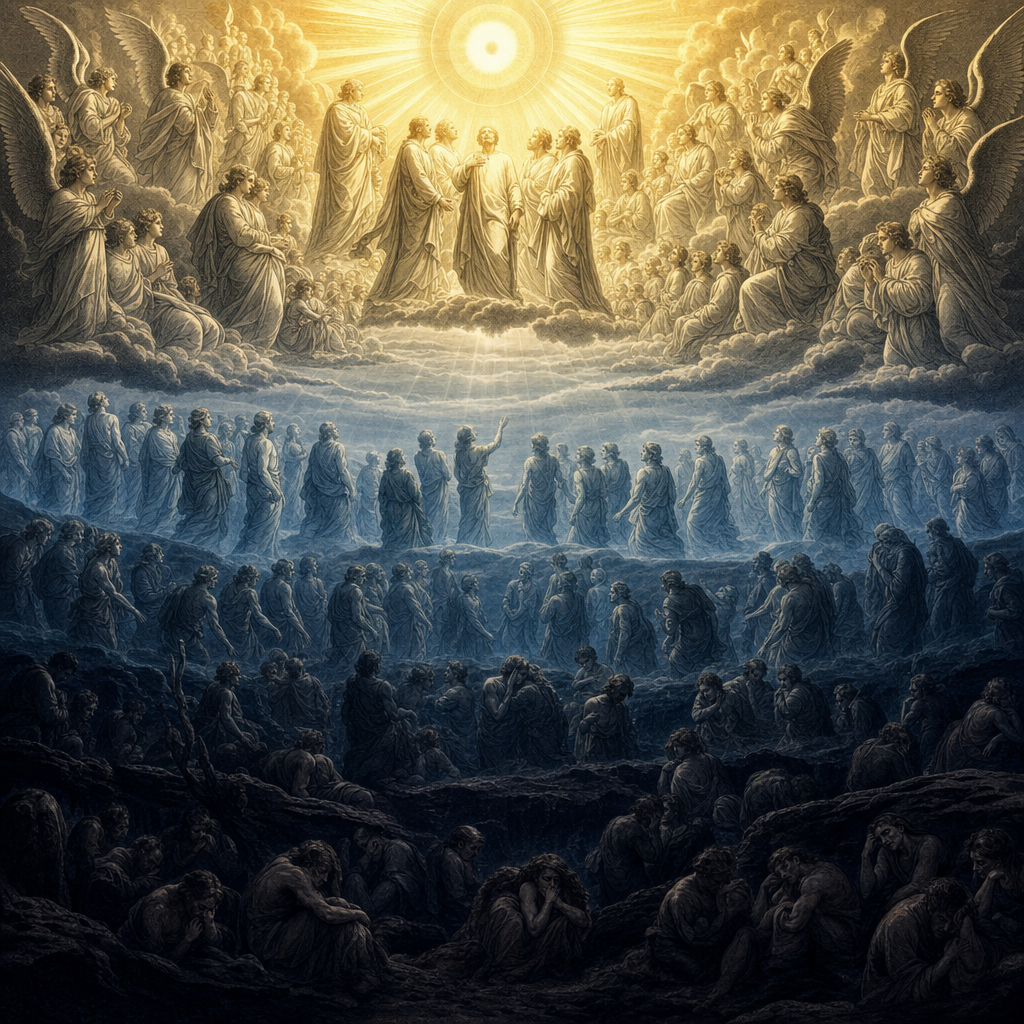
The outer man is the self that interacts with the world: it desires, grieves, succeeds, and fails. It is not wicked — Eckhart does not despise the body or ordinary life — but it is not the deepest self. Beneath it is the inner man, who participates in God's eternity and whose wellbeing no external event can alter. The purpose of spiritual life is not to destroy the outer man but to ensure that the inner man governs it rather than being governed by it.
Suffering Cannot Touch the Ground
This is Eckhart's answer to grief: the part of us that truly is cannot suffer, because it dwells in God who cannot suffer. Agnes of Hungary has lost her father; the outer man grieves, and rightly so. But the inner man — the soul in its ground — remains untouched, not because grief is trivial but because the ground is deeper than grief. To find consolation is to discover which self you primarily are.
Noble Descent
Eckhart supports this with an aristocratic metaphor: the inner man is noble by birth, not by achievement. Nobility of soul is not earned through virtue — it is original, inherited from the divine ground from which the soul came. This noble birth cannot be cancelled by fortune or sin. Recognising this is itself the beginning of consolation: you are, at your deepest, something that cannot be diminished.
The distinction between inner and outer man runs throughout The Book of Divine Comfort and surfaces also in the German Sermons. Eckhart draws on Paul (Romans 7:22) and Augustine's conception of the interior man, but radicalises both.
Related Concepts