The Completeness of Pleasure
For Epicurus, the blessed life is not an ideal to be approached asymptotically but a condition that can be fully achieved. When the body is free from pain and the mind is free from disturbance, nothing is lacking: the pleasure of this condition is complete, not a fragment of some further happiness that might in principle exist. This means the blessed life is available now — it does not require future improvements, additional resources, or the resolution of outstanding problems. The philosopher who understands this gains an immense freedom: they no longer need to wait for life to begin.
Gratitude and Memory
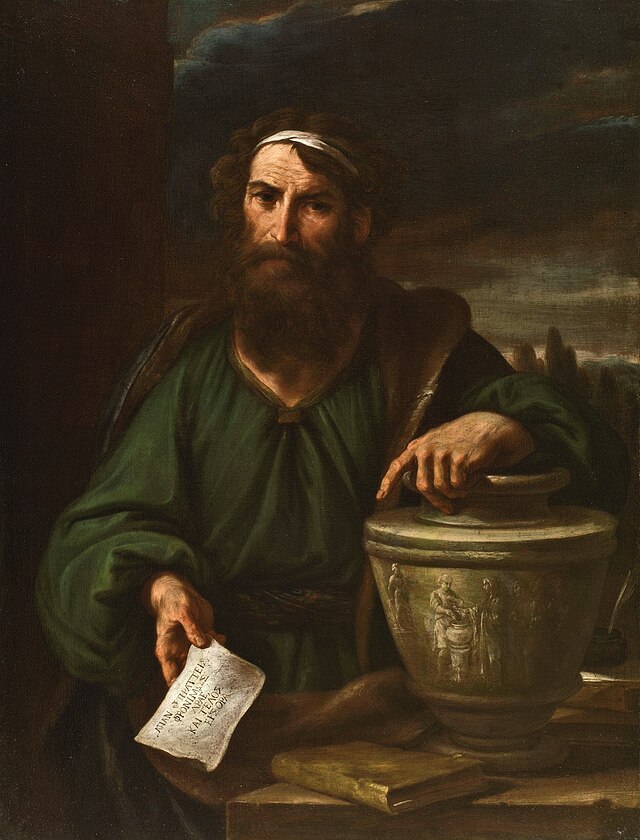
One of Epicurus's most distinctive practical recommendations concerns the role of memory and gratitude in sustaining the blessed life. Past pleasures, he argues, cannot be taken away: the pleasures of friendship, philosophical conversation, and simple enjoyment remain available to memory indefinitely, and the wise person learns to draw on this resource rather than anxiously projecting into a future that has not yet arrived. Epicurus himself, on his deathbed, wrote that his philosophical recollections brought him more joy than his bodily pain brought him suffering — a testimony to the practice he had spent his life developing.
The Philosopher's Self-Sufficiency
The blessed life is ultimately characterised by a kind of sovereign self-possession. The Epicurean philosopher knows what they need, has cultivated the conditions that supply it, and is not dependent on fortune, political favour, or the approval of others for the maintenance of their happiness. This is not the serenity of indifference — the philosopher cares deeply about friends, about understanding, about the quality of daily life — but the serenity of someone who has tested their happiness against adversity and found it capable of surviving. The blessed life is not protected from difficulty but equipped to meet it without being destroyed by it.
The concept of the blessed life runs throughout the Epicurean corpus and is summarised most concisely in Principal Doctrines 1 and 3. Epicurus's deathbed letter — quoted in Diogenes Laertius, Book X, 22 — is one of the most celebrated illustrations of his ideal in practice.
Related Concepts