The First Law of Nature
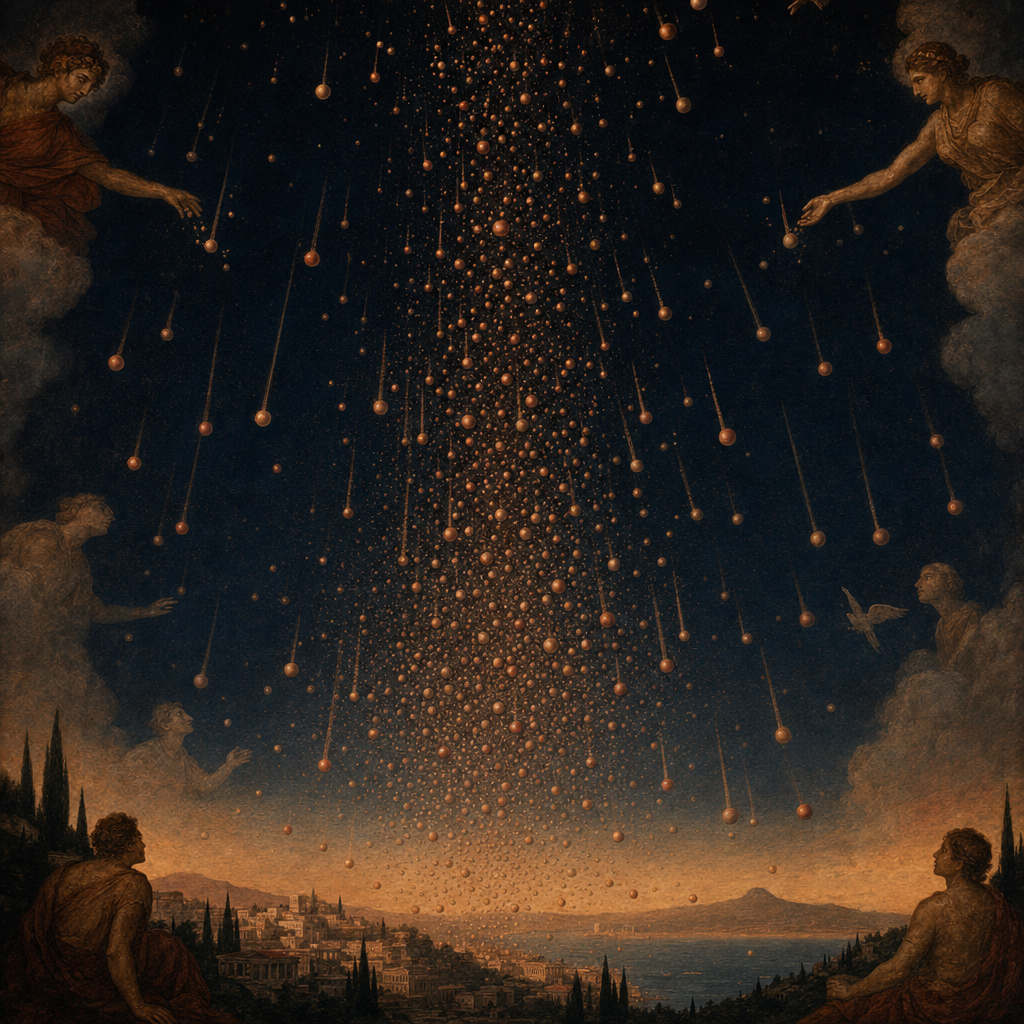
The principle ex nihilo nihil fit — nothing comes from nothing — arrives in Book I not as dry physics but as a liberation. Lucretius is addressing his patron Memmius, and the argument has an urgent personal edge: if you understand that matter is eternal and follows fixed laws, you will no longer need gods to explain the thunder, the harvest, or the stars. The darkness of the mind, he argues, is not dispelled by sunlight but by understanding nature's law.
This terror, then, this darkness of the mind, Not sunrise with its flaring spokes of light, Nor glittering arrows of morning can disperse, But only Nature's aspect and her law, Which, teaching us, hath this exordium: Nothing from nothing ever yet was born.
The Proof From Fixed Seeds
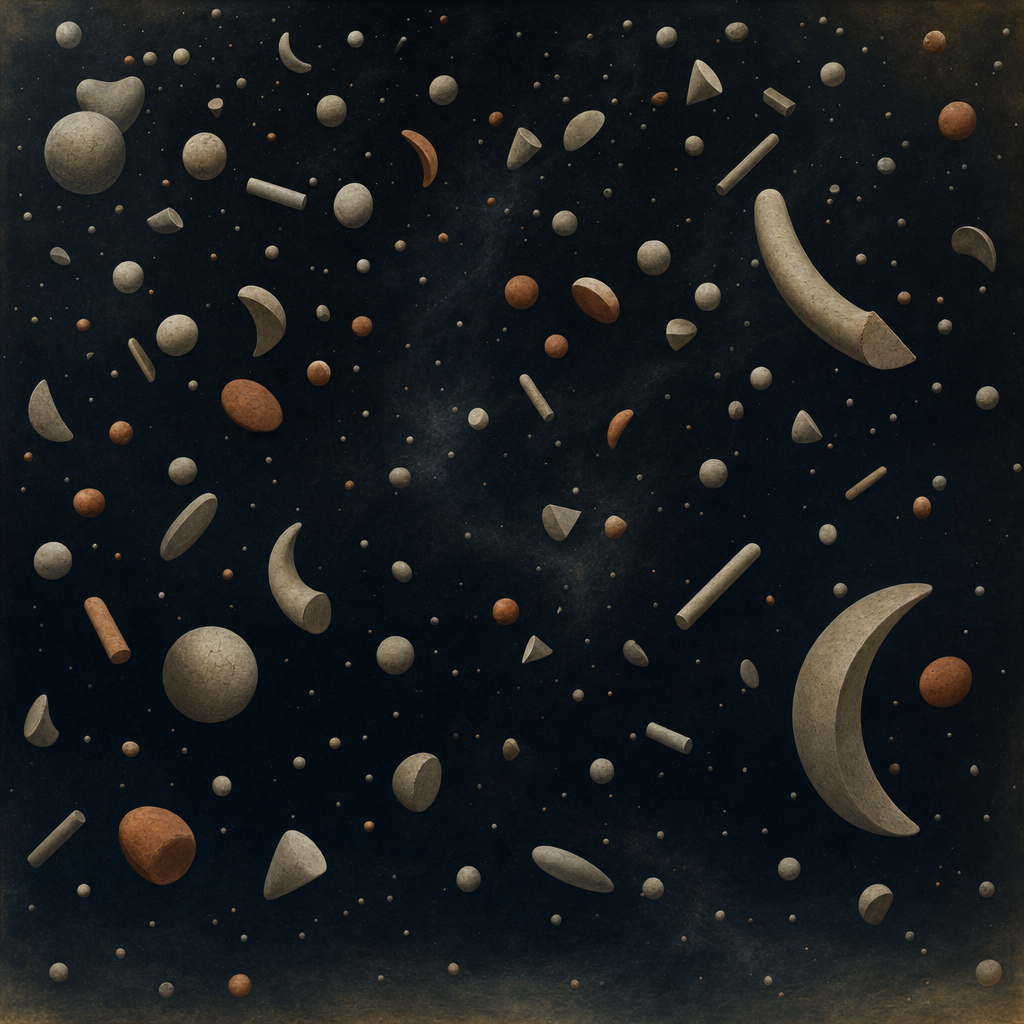
Lucretius's argument runs through a battery of evidence. If things could spring from nothing, anything might come from anything: men from the sea, fish from fields, birds from the sky at random intervals. But we observe the opposite: each spring brings roses, each summer brings grain, each organism breeds true to its kind. This regularity is only possible if each thing has its own fixed seeds, its own primordial matter, which can only generate what it is suited to generate. The regularity of the world is the proof that matter is eternal and lawful, not divine and arbitrary.
The second half of the principle — that nothing can perish into nothing — is equally important. If matter could genuinely cease to exist, time would have consumed everything long ago. The sheer age of the universe guarantees that something permanent must underlie all change. What we experience as death and decay is always a rearrangement, never an annihilation. Lucretius's atoms are eternal precisely because they are simple, solid, and without internal structure that could be further dissolved.
The principle ex nihilo nihil fit is stated in Book I of De Rerum Natura and developed through a sustained argument occupying much of the first book. It derives ultimately from Parmenides, but Lucretius gives it a thoroughly Epicurean and materialist inflection.
Related Concepts