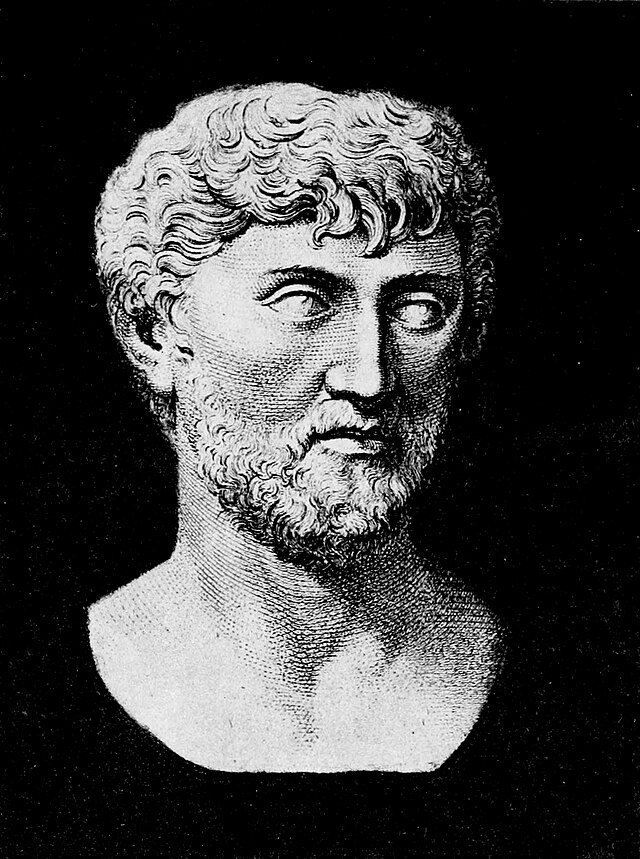
Thucydides and Lucretius
Book VI of De Rerum Natura is devoted to meteorological and geological phenomena — thunder, lightning, earthquakes, volcanoes — all explained through atomic physics, all designed to strip away the divine terror attached to them. The plague arrives as a final test case: the most extreme of all natural catastrophes, a disease that depopulates a city, overwhelms the dead with the dying, and annihilates the social order. Lucretius follows Thucydides closely but adds a specifically philosophical dimension: the plague tests whether the Epicurean understanding of nature holds under the worst possible conditions.
'Twas such a manner of disease, 'twas such Mortal miasma in Cecropian lands Whilom reduced the plains to dead men's bones, Unpeopled the highways, drained of citizens The Athenian town.
The Failure of Community
What most horrifies Lucretius is not the physical suffering but the social collapse. The plague destroys the bonds that make human life possible: the sick abandon the healthy, the healthy abandon the sick; bodies pile up in temples; the living contend over burial plots for their dead. Religion is useless — the temples become mass graves. Medicine is useless — the doctors die alongside their patients. Even grief collapses under the weight of repetition, until the living simply stop feeling.
The poem ends here, without a tying-off, without a consolation. Some scholars have argued the book is unfinished, that Lucretius died before completing it. Others read the ending as deliberate: the Epicurean philosopher does not pretend the world ends well. Understanding the atomic nature of plague does not make it less deadly. It makes it less divinely charged, less punishment, less cosmic moral verdict — just atoms spreading through bodies, indifferent to human meaning. The task of the philosopher is not to explain the plague away but to face it without adding the extra suffering of superstitious terror.
The plague passage concludes Book VI and the entire poem. Lucretius translates and adapts Thucydides' History of the Peloponnesian War II.47–54. Whether the abrupt ending is intentional or the result of incomplete revision remains contested by scholars of Latin literature.
Related Concepts