Love and Wisdom as the Divine Esse
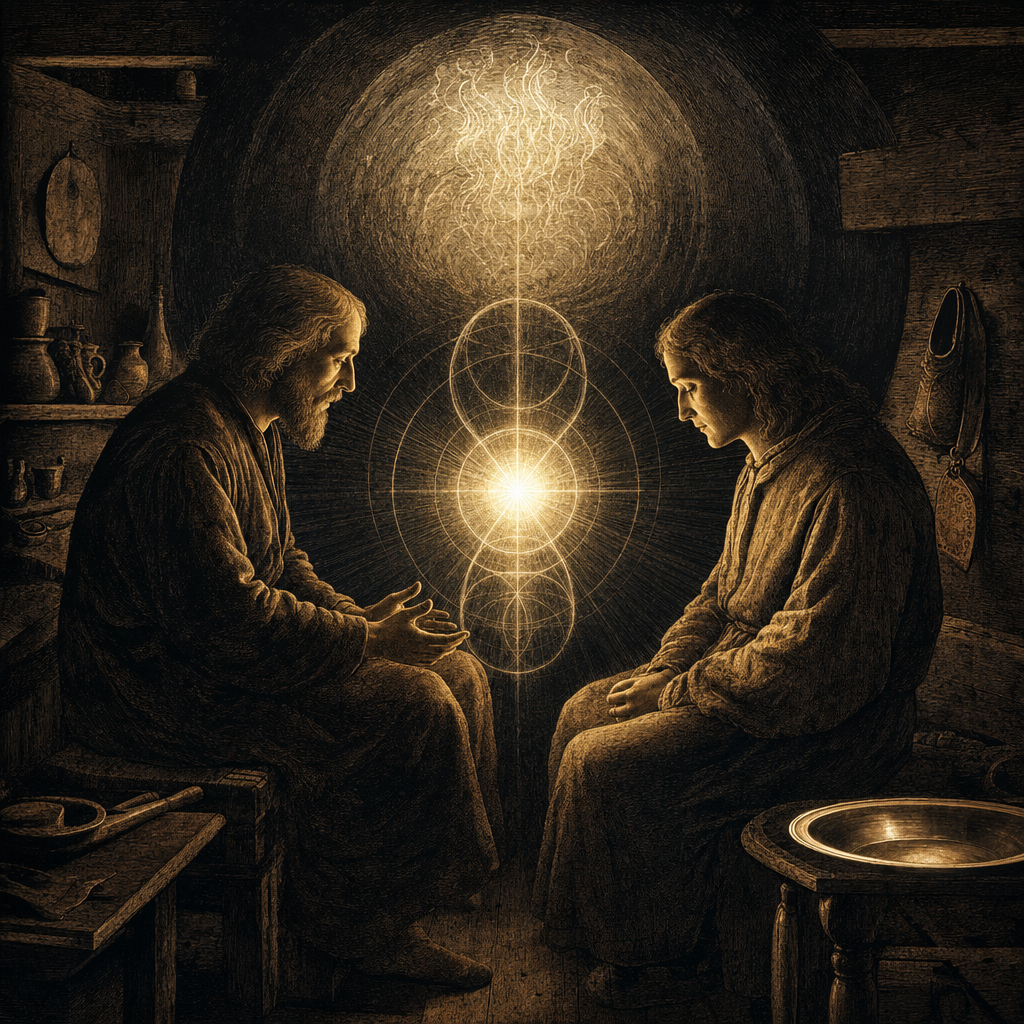
In Swedenborg's ontology, love is the esse (the being, the existence-ground) of all things, and wisdom is its forma (the form through which it operates). God is the sun of the spiritual world — a sun that radiates not light and heat but love and wisdom — and just as the natural sun sustains all natural life, the divine sun sustains all spiritual life by constant influx. Remove this influx for an instant and everything returns to nothing.
The identification of God with love rather than with power or sovereignty shifts the entire register of Swedenborg's theology. Providence, creation, and redemption are not acts of power or will imposed from outside but the natural expression of love seeking to share itself. Hell exists not because God wills it but because love cannot coerce — the divine influx reaches everywhere, but only those whose loves are oriented toward God can receive and use it as heaven.
The Sun of the Spiritual World
Swedenborg uses the metaphor of the sun with unusual precision. Just as the natural sun is not heat and light itself but the source from which heat and light flow into the natural world, God is not identical to the love and wisdom that reach creatures but is their inexhaustible source. The sun appears at a distance to the angels of heaven — closer to those in the celestial heaven, farther from those in the spiritual — and this distance is not spatial but a measure of the degree to which the angel's love corresponds to the divine love.
The opening propositions of Divine Love and Wisdom establish this framework, which Swedenborg then uses to ground his account of creation, the soul, and the degrees of reality. The sun metaphor for God is also found in Plotinus and Meister Eckhart, but Swedenborg applies it with the systematic rigour of a natural philosopher.
Related Concepts