The Puzzle of Profit
Classical political economy — Adam Smith, David Ricardo — had established that commodities exchange at their values, meaning at the quantity of labour time required to produce them. But if everything exchanges at its value, how does profit arise? If a capitalist buys cotton, pays wages, and sells the yarn, where does the surplus come from? Marx's answer is that there is one commodity whose use value is the creation of value itself: labour power. The worker sells their capacity to work for a day, and that capacity, when exercised, produces more value than the worker received as wages.
Necessary and Surplus Labour
In a working day, a portion of the time is necessary labour: the time required to produce the equivalent of the worker's own wages — the value needed to reproduce their labour power. The remaining time is surplus labour: work performed beyond what the worker receives in return. The value produced in this surplus time — surplus value — is appropriated by the capitalist. This is the secret of profit, interest, and rent: they are all forms of surplus value, claims on the unpaid labour of the working class. The exploitation is not a violation of market principles but their natural consequence.
Absolute and Relative Surplus Value
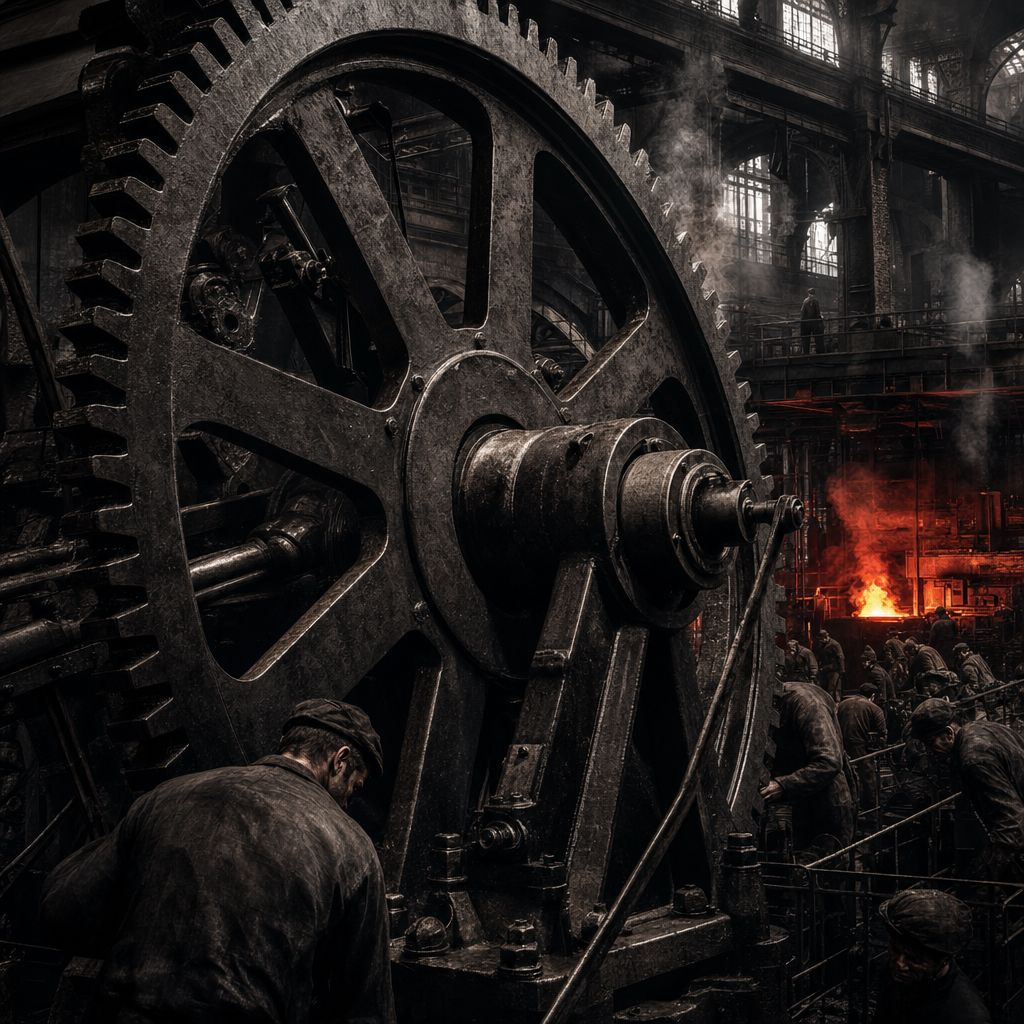
Marx distinguishes two strategies by which capital increases surplus value. Absolute surplus value is increased by lengthening the working day — extracting more hours of surplus labour. Relative surplus value is increased by reducing the time of necessary labour: improving productivity in the industries that produce wage goods (food, clothing, housing) so that the worker's subsistence costs less, freeing up more of the working day as surplus. The history of capitalism is, for Marx, largely the history of these two strategies — and of the class struggle they generate, as workers resist the lengthening of the working day and the degradation of their conditions.
The theory of surplus value is developed across Parts III–V of Capital, Volume I. Marx considered it his most significant theoretical discovery, the key that unlocked the mystery of bourgeois economics. The concept was built on and transformed the labour theory of value inherited from Ricardo.
Related Concepts