Four Dimensions of Estrangement
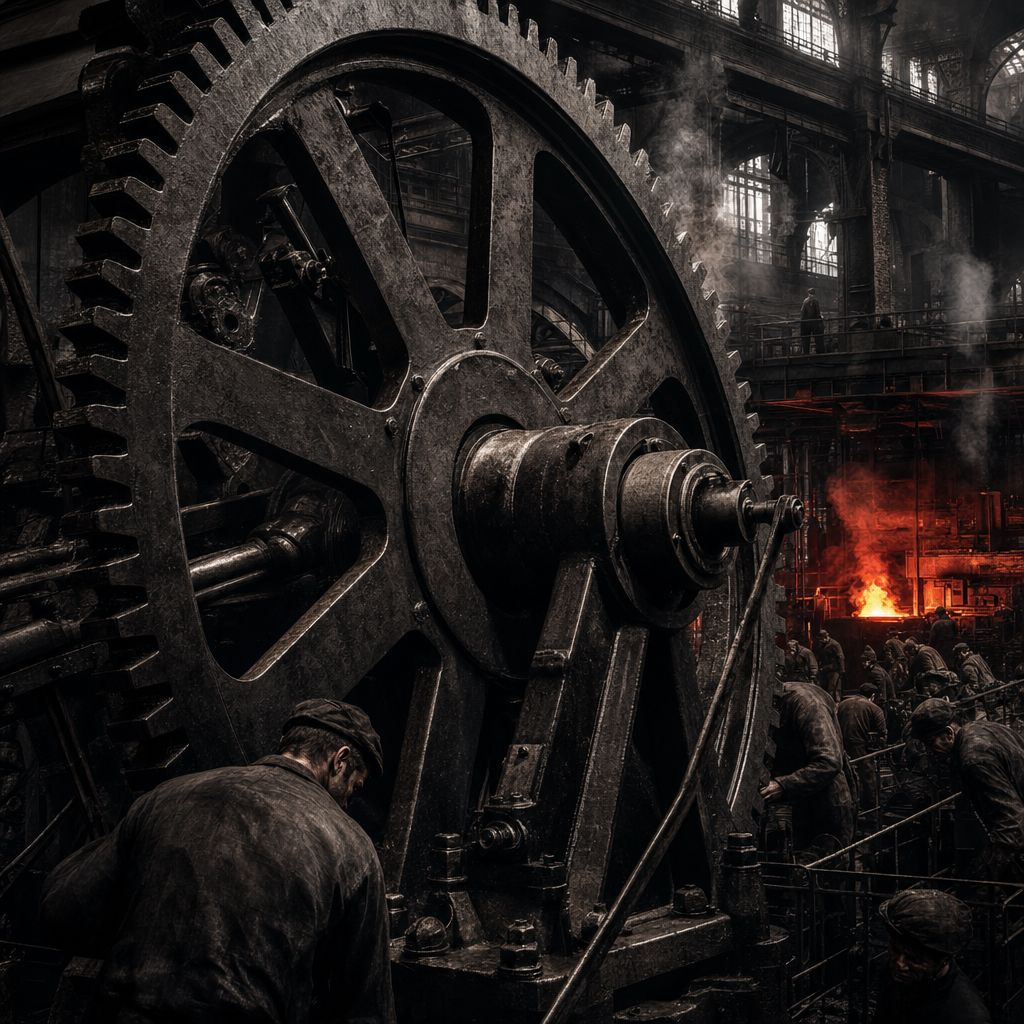
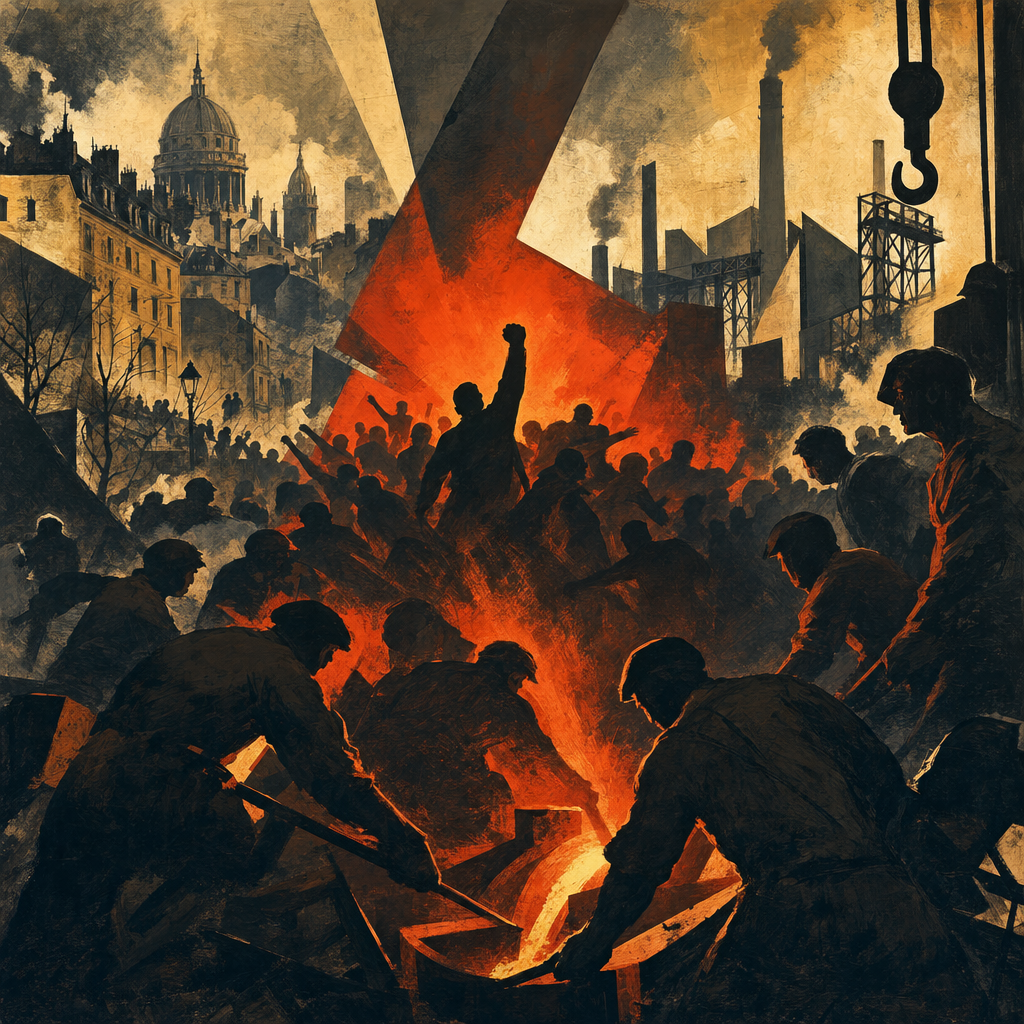
In the Economic and Philosophical Manuscripts (1844) Marx identifies four forms of alienation. Workers are alienated from the products of their labour: what they produce confronts them as an alien power, owned by the capitalist, potentially used against them. They are alienated from the act of production itself: work is not a free expression of human creative power but a means to an end, imposed by external necessity. They are alienated from their species being: the distinctively human capacity for conscious, purposive transformation of the natural world is reduced to a merely animal activity. And they are alienated from other human beings: social relations become competitive, mediated by money and the market.
Species Being and Creativity
Central to Marx's account is the concept of Gattungswesen — species being. What distinguishes humans from animals is that they can make their own life activity the object of their will and consciousness: they can consciously design and transform their world. The beaver builds its dam by instinct; the architect first builds the structure in imagination before building it in reality. This capacity for conscious, purposive, creative labour is, for Marx, the essence of human being. Capitalism does not merely make work unpleasant; it inverts the human relationship to activity — making what should be most human most inhuman, and what should be a means (animal subsistence) the only end.
Alienation and Emancipation
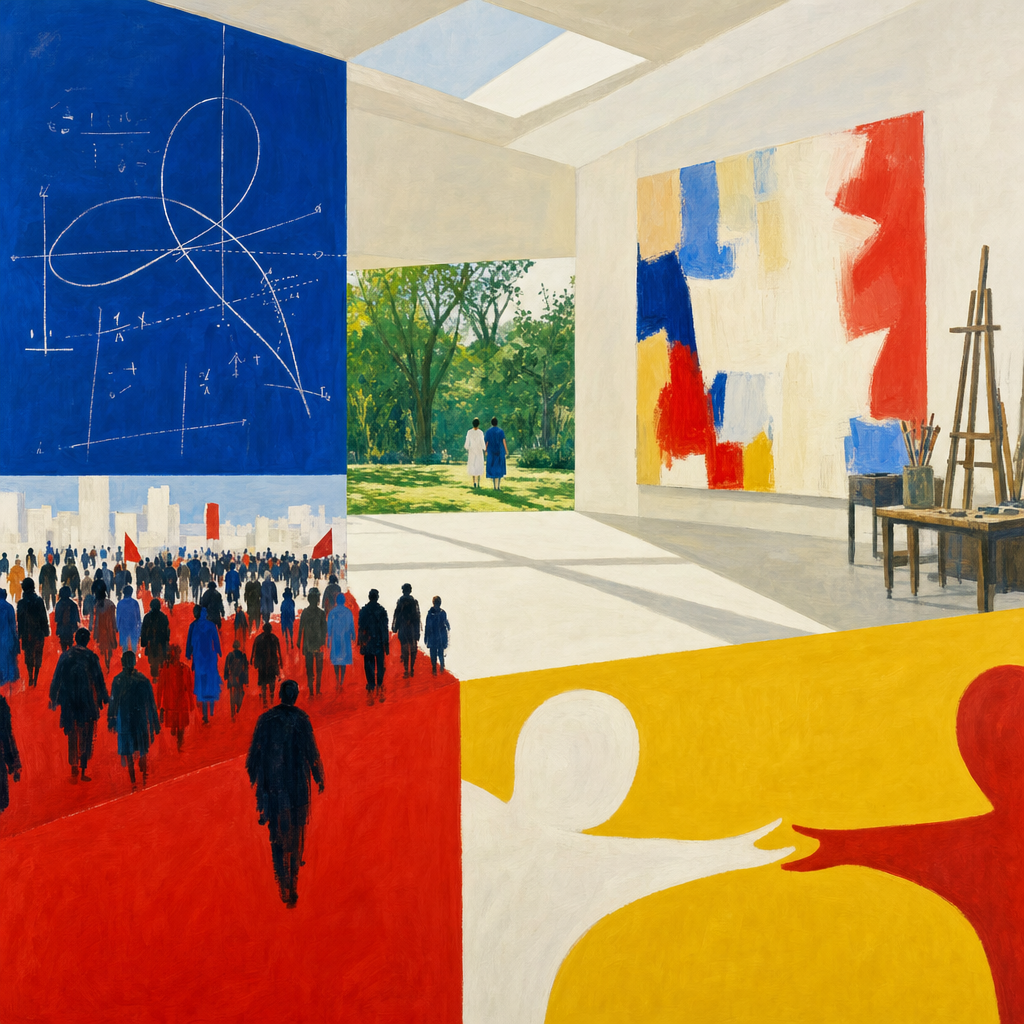
The importance of the alienation concept is that it frames the socialist project in humanist terms. Communism, for the early Marx, is not merely a more efficient or equal form of distribution; it is the positive supersession of alienation — the recovery of the full human capacity for free, conscious, creative labour that capitalism has estranged. When workers produce freely, in association, without the compulsion of the market or the command of the boss, they realise their species being. This humanist vision animates Capital as well, even if Marx later expressed it in more rigorous economic categories rather than the philosophical language of alienation.
The concept of alienated labour is most fully developed in the Economic and Philosophical Manuscripts of 1844 (unpublished in Marx's lifetime, first published 1932). It is elaborated in more concrete economic terms throughout Capital, especially in the sections on the working day, machinery, and the labour process.
Related Concepts