The Discovery
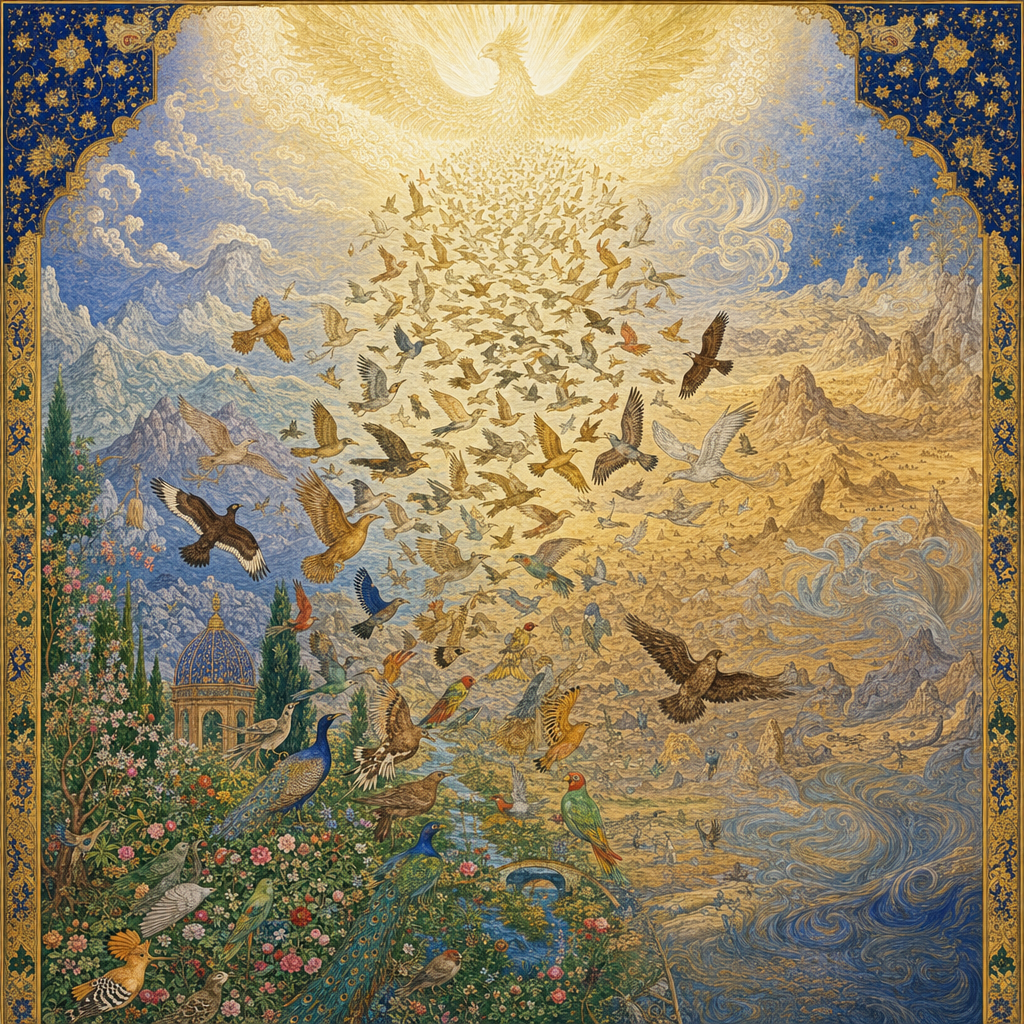
When the thirty birds finally gain admittance to the presence of the Simorgh, they look and see themselves reflected. The Simorgh they have sought is what they themselves are — purified, transformed, annihilated into the divine ground. The journey was not toward an other; it was the process by which the false self was dissolved until the true self — which is the divine — could be seen. Attar's formulation is one of the most compressed expressions of the Sufi doctrine of the unity of being: the divine is not separate from the soul but is what the soul is when the soul knows itself completely.
Si Morgh: The Double Name
The Persian wordplay — si morgh (thirty birds) / Simorgh (the mythological divine bird) — is not mere literary cleverness but doctrinal argument. The equivalence of the thirty birds and the Simorgh means that God and the perfected soul are not two things but one thing seen from different angles. The birds sought the Simorgh as an external reality; they found it as the truth of their own transformed being. This is the meaning of the Sufi notion of fana: the extinction of the ego-self is not annihilation but homecoming, the discovery that the self's ground was always the divine.
The Pedagogical Structure of the Quest
The twist of the ending is not a surprise that negates the journey but a revelation that makes sense of it. The journey was necessary because the birds could not have received the teaching directly: if told at the outset that the Simorgh was themselves, they would have misunderstood — would have confused the everyday ego with the divine ground. The journey strips away layer after layer of the false self until the truth can be received, not as information, but as recognition. The structure of the poem enacts the structure of Sufi pedagogy: truth must be arrived at through transformation, not merely communicated.
The Simorgh as a symbol of the divine appears in earlier Persian literature, particularly in Firdausi's Shahnameh. Attar transforms the mythological bird into a philosophical figure by embedding it in the allegorical journey of the Conference. The identification of si morgh (thirty birds) with Simorgh is Attar's own contribution to the tradition.
Related Concepts