Love Beyond Reason
The Valley of Love is characterised by Attar as the place where reason must be abandoned. This is not anti-intellectualism but a precise philosophical claim: the faculty of rational calculation — which weighs, measures, and seeks advantage — is constitutively unable to give itself to the object of love. The lover who calculates whether the beloved is worth the cost has already failed to love. The Valley of Love requires the seeker to burn — to allow the fire of longing to consume the prudential self that monitors its own spiritual progress and assesses its investments.
The Beloved as Mirror
A recurring figure in Attar's parables is the lover who does not know whether the beloved is divine or human, whether the love is sacred or profane. This ambiguity is not a problem to be resolved but a feature: human love, fully lived and fully surrendered, opens into divine love because the beloved was always a face of the divine. The Sufi tradition of ishq — divine love poetry in the tradition of Rumi, Hafiz, and Attar — works precisely through this ambiguity, using the language of erotic desire to describe mystical longing because the two are, at their depths, the same movement of the soul toward its source.
Love and the Dissolution of the Self
Love is the force through which fanāʾ is accomplished. The ego-self is dissolved not by philosophical argument or ascetic discipline alone but by the overwhelming force of a love that is greater than the self. The lover, consumed by longing for the beloved, loses the self in the movement toward union — and this losing is precisely what the path requires. Attar's poetry is full of figures who die in the act of loving: the moth that burns in the candle, the fish that suffocates on the shore, the lover who finds their way to the beloved only by ceasing to exist as a separate lover. Death in love is not failure but the only possible success.
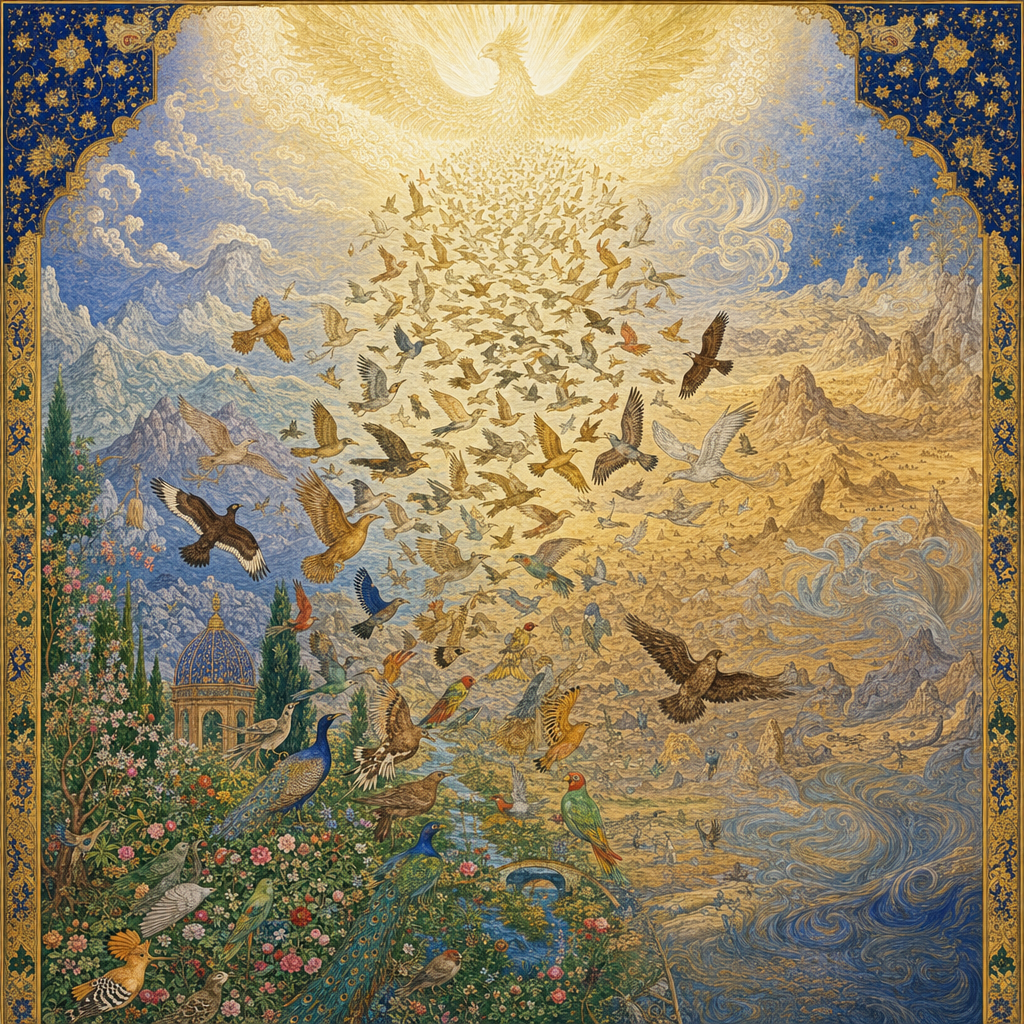
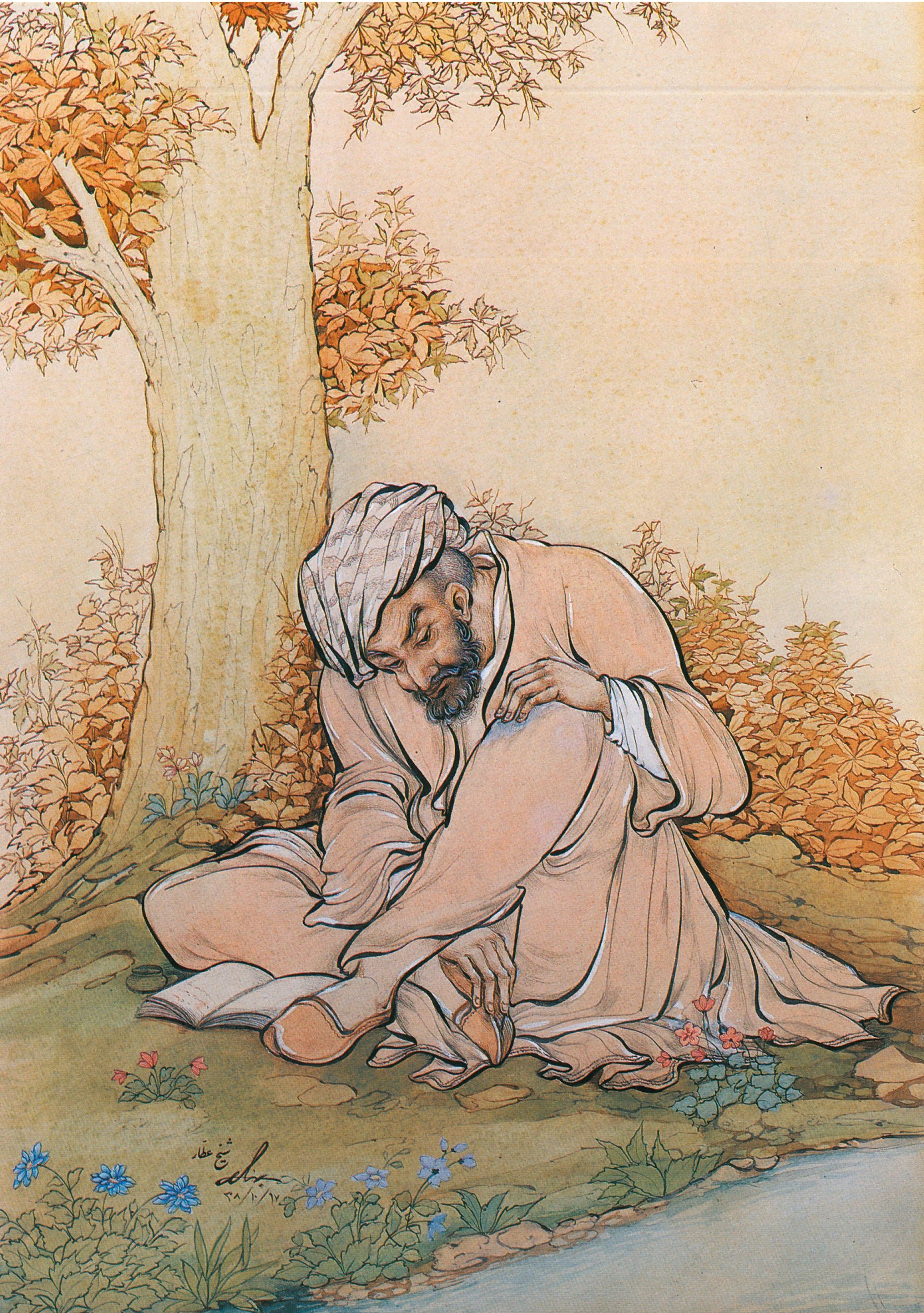
The theology of divine love in Islam draws on the Quranic verse (2:165): "Those who have faith are more intense in their love of God." Attar stands in a long tradition of Sufi love poetry that includes Rabi'a al-Adawiyya, Mansur al-Hallaj, and Ibn 'Arabi. His own Manteq al-Tayr was a major influence on Rumi's Masnavi.
Related Concepts