What Is Annihilated
What fanāʾ annihilates is not the human being but the false self — the ego constructed around separation, desire, fear, and the illusion of independent existence. The ego clings to its boundaries, its preferences, its continuity, its distinctness from what is other. The Sufi path systematically dismantles these attachments: first the gross ones (wealth, status, pleasure), then the subtle ones (spiritual attainments, the sense of progress, the desire for annihilation itself). Each valley of the journey dissolves a further layer. When nothing remains to dissolve, what is left is not nothing but the divine ground that was always the truth of the self.
Fanāʾ and Baqāʾ
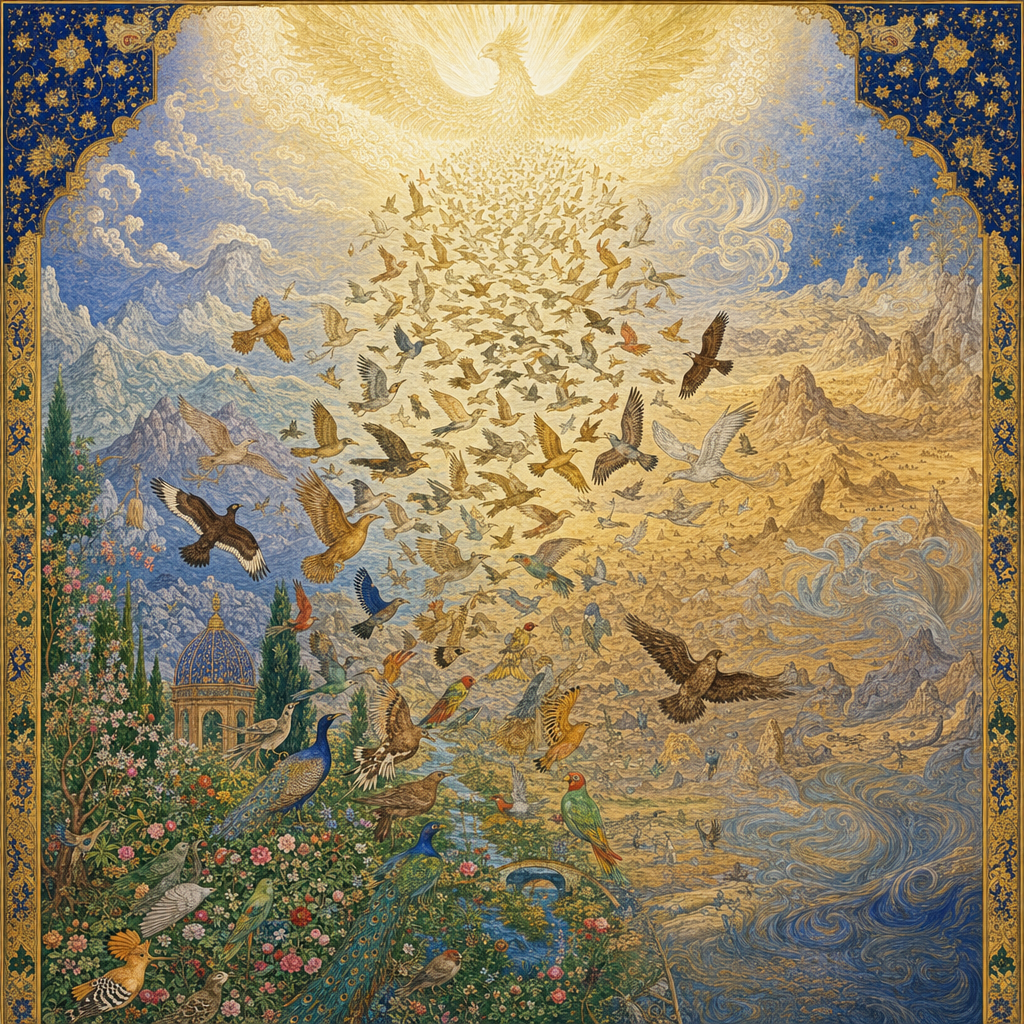
The Sufi tradition pairs fanāʾ with baqāʾ — subsistence, or remaining in God. The mystic who has passed through annihilation does not simply cease to exist; they subsist in God, act in the world from the divine ground, see with divine sight. This pairing is important: fanāʾ is not a permanent death-state but a transformation of the mode of being. The mystic returns to the world — talks, eats, acts — but the one who acts is no longer the ego-self. The instrument is the same; the player has changed. Attar's thirty birds, having discovered the Simorgh, do not stay frozen in beatific vision; they are dissolved and reconstituted, sent back to the world transformed.
The Paradox of the Path
The deepest paradox of the Sufi journey is that it cannot be undertaken by the ego-self that undertakes it. The very striving that motivates the journey is a form of ego-activity — seeking, achieving, accumulating spiritual merit — and must itself eventually be annihilated. Many birds turn back before completing the journey precisely because they cannot surrender the spiritual gains they have made; the soul that says "I have achieved detachment" has not yet achieved detachment. The journey demands the dissolution of the journey itself: the seeker must eventually give up even the seeking. This is why Attar's poem ends not with triumph but with the birds standing speechless before their own reflection.
The concept of fanāʾ was introduced into Sufi theology by Abu Yazid al-Bistami (9th century) and systematised by al-Junayd and later thinkers. Attar's Conference of the Birds is its most celebrated literary treatment. The term baqāʾ (subsistence in God after annihilation) is equally important and always paired with fanāʾ in classical Sufi theology.
Related Concepts