What the Mystic Wants
The mystic, as Russell characterises him, seeks four things: unity (the sense that all is one), timelessness (the sense that time and change are illusions), the denial of the reality of evil, and the conviction that a deeper truth is available to intuition than to discursive reason. These aspirations are not simply mistakes — they capture real features of the experience of deep mathematical or contemplative insight. The vision of the unity of all things, the sense that ordinary temporal concerns are not ultimately real, the intuition that great mathematical truths are necessary and eternal — these experiences are genuine and valuable. Russell's critique is not that the mystic has no experiences but that he draws the wrong metaphysical conclusions from them.
The Limits of Intuition
The scientific temperament accepts that most of what we know, we know imperfectly, partially, and always revisably. It demands evidence, distinguishes claims by their degree of support, and refuses to let the intensity of a conviction settle questions of truth. Mystical intuition, however vivid and transformative, cannot settle whether the world is really one, or whether time is unreal, or whether evil is an illusion — these are empirical or logical questions that demand evidence and argument, not experiences whose felt certainty is not transferable to others. The scientist, Russell argues, is more intellectually courageous than the mystic: it takes more courage to accept uncertainty than to claim a vision that resolves all doubt.
The Best of Both
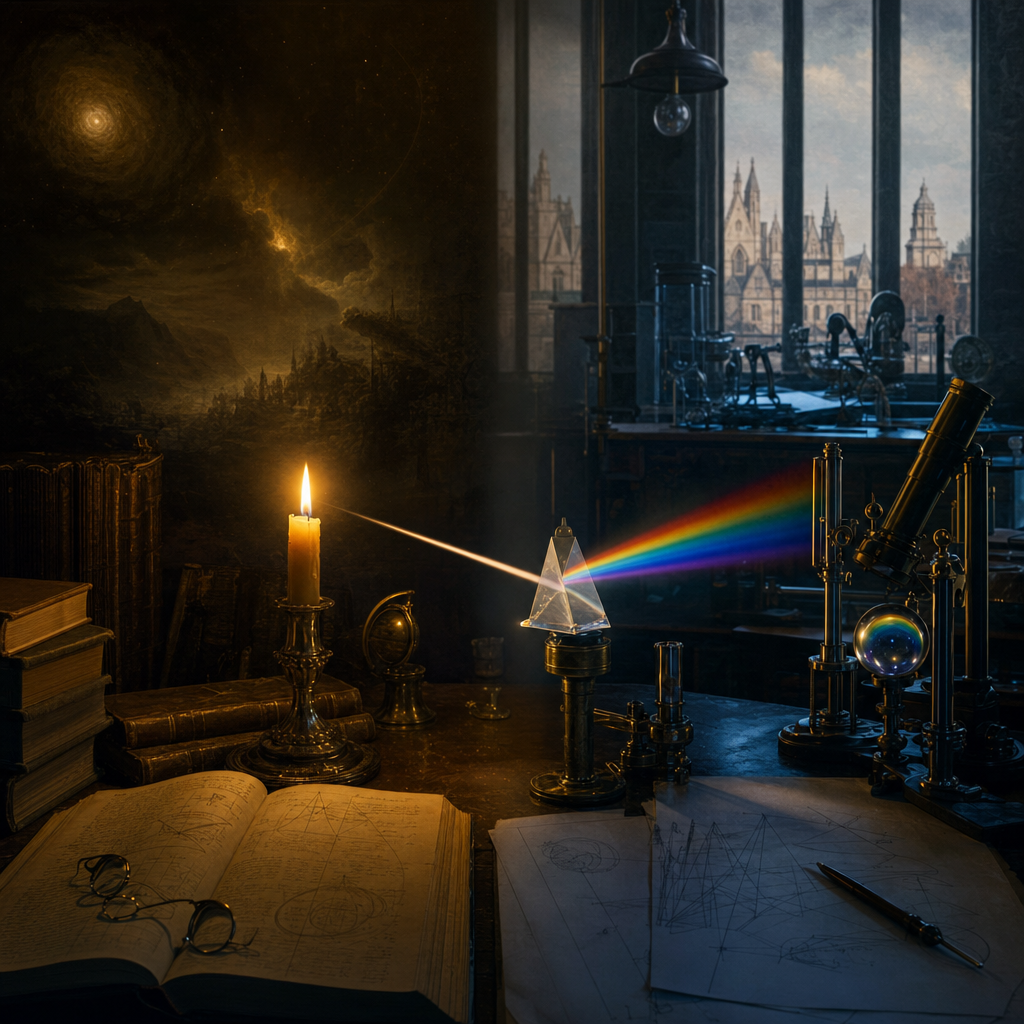
Russell does not advocate a purely cold, disenchanted science. He argues that the best philosophy combines the mystic's sense of the grandeur of the universe and the insignificance of human concerns with the scientist's insistence on method, evidence, and argument. Wonder at the cosmos and rigorous method are not enemies; they are complements. The essay closes with a vision of intellectual life that is simultaneously deeply moved by the mystery of existence and rigorously committed to honest inquiry — a combination Russell considered the highest form of human consciousness.
The title essay was published as "Mysticism and Logic" in the Hibbert Journal in 1914 and collected in this volume in 1918. It draws on and responds to the Bergson-influenced irrationalism Russell saw as increasingly fashionable in Edwardian intellectual life.
Related Concepts