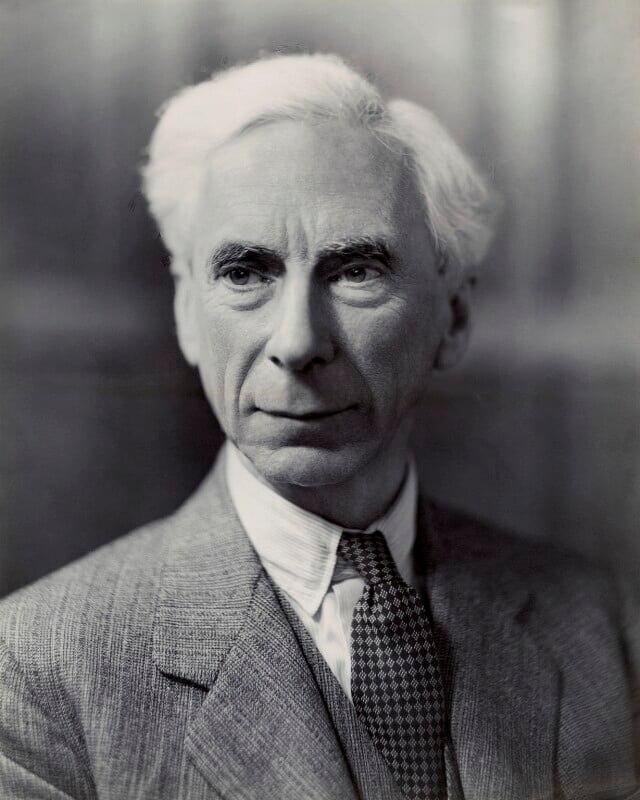
Philosophy as Liberation
In "The Value of Philosophy" — one of the most celebrated passages in The Problems of Philosophy, a companion text to this collection — Russell argues that philosophy's value lies not in the definite answers it provides but in the questions it opens. The person who has never philosophised lives in a prison of familiar objects and conventional opinions; philosophy breaks open this prison by showing that even the most familiar things are more complex, more uncertain, and more interesting than ordinary life assumes. The philosophical mind is liberated from the smallness of its private concerns by contact with the largest questions — questions about the nature of the universe, the grounds of knowledge, the basis of value.
Inquiry Without Utility
Russell is suspicious of the demand that inquiry justify itself by practical results. The sciences that have proved most useful — electromagnetism, atomic physics — were pursued for purely theoretical reasons by people who had no interest in applications. Useful results follow from free inquiry in ways that cannot be predicted in advance; inquiry constrained by practical requirements tends to solve only the problems it already knows about. More fundamentally, the subordination of intellectual life to practical ends is a corruption of the intellect: it makes the mind the servant of the body, when the body's purpose is to sustain the mind. This aristocratic defence of pure inquiry runs throughout Russell's popular essays.
Mathematics as Freedom
Russell's most sustained illustration of the free life of the intellect is his account of mathematics. In "The Study of Mathematics", he argues that mathematics provides a vision of eternal, necessary truth that liberates the mind from the contingent, the ephemeral, and the merely human. The mathematician, in grasping a mathematical necessity, is for that moment in contact with something that would have been true even if humans had never existed — something unconstrained by the accidents of history, biology, or social convention. This Platonic strand in Russell's thinking sits in tension with his empiricism, and he never fully resolved the tension — but it gives his account of intellectual life an unusual depth.
The essays in Mysticism and Logic (1918) were written between 1901 and 1914. "The Value of Philosophy" is the final chapter of The Problems of Philosophy (1912). Russell's educational writings, especially On Education (1926), develop the political dimensions of the free intellect theme.
Related Concepts