The Natural Sciences: Nature Explained
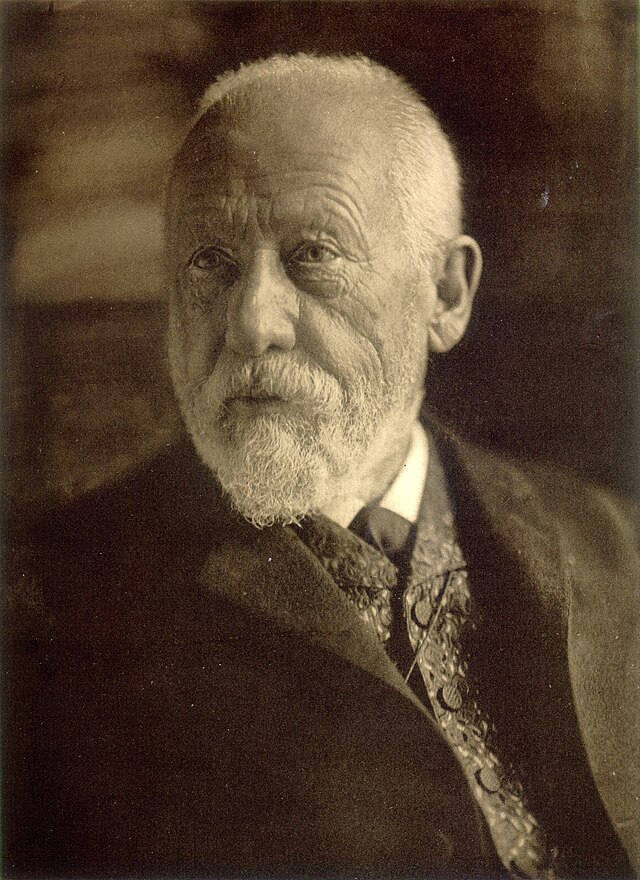
The natural sciences — physics, chemistry, biology — explain their objects by discovering the causal laws that govern them and subsisting particular events under those laws. An eclipse is explained by the laws of celestial mechanics; a chemical reaction by the principles of molecular interaction. The explanatory model is hypothetico-deductive: we form general laws, deduce predictions, and test them against observation. The objects of natural science are external to the investigating mind: they do not mean anything; they do not express anything; they are simply there, governed by laws they neither know nor obey voluntarily. This mode of knowledge was brilliantly founded by Descartes, Galileo, and Newton and given its epistemological justification by Kant — but Dilthey argues that it cannot be extended without distortion to the domain of human life.
The Human Sciences: Life Understood
History, society, culture, language, law, religion, art — these are objects of a fundamentally different kind. They are expressions of inner human experience: they mean something, they were intended, they carry significance. To study them is not to discover causal laws that govern them from outside but to understand the experiences they express from within. The historian who reads a political treatise or a diplomatic letter is not subsuming events under laws but reconstructing the intentions, beliefs, and values of the human beings who produced them. This is possible because the historian, as a human being with inner experience, has access to the same general structures of inner life — emotion, volition, thought — that the historical actor expressed in the document.
Life Cannot Be Explained, Only Understood
Dilthey's deepest claim is that the attempt to explain human life naturalistically — to reduce it to biological drives, economic forces, or social mechanisms operating causally from outside — distorts what it is trying to understand. Human action is not merely caused; it is motivated, intended, and meaningful. A purely causal account leaves out precisely what is most characteristic of human reality: that human beings are the kind of beings for whom their own existence has meaning, and whose actions are expressions of that meaning. The human sciences are not a poor cousin of the natural sciences, lacking in rigour; they have a rigour proper to their subject matter, the rigour of interpretive adequacy and fidelity to the inner life of historical persons.
The Erklären/Verstehen distinction is introduced in Introduction to the Human Sciences (1883) and developed throughout Dilthey's work. It became the founding distinction of twentieth-century philosophy of the social sciences, influencing Max Weber's interpretive sociology, Heinrich Rickert's neo-Kantian philosophy of history, and (critically) the positivist "unity of science" movement.
Related Concepts