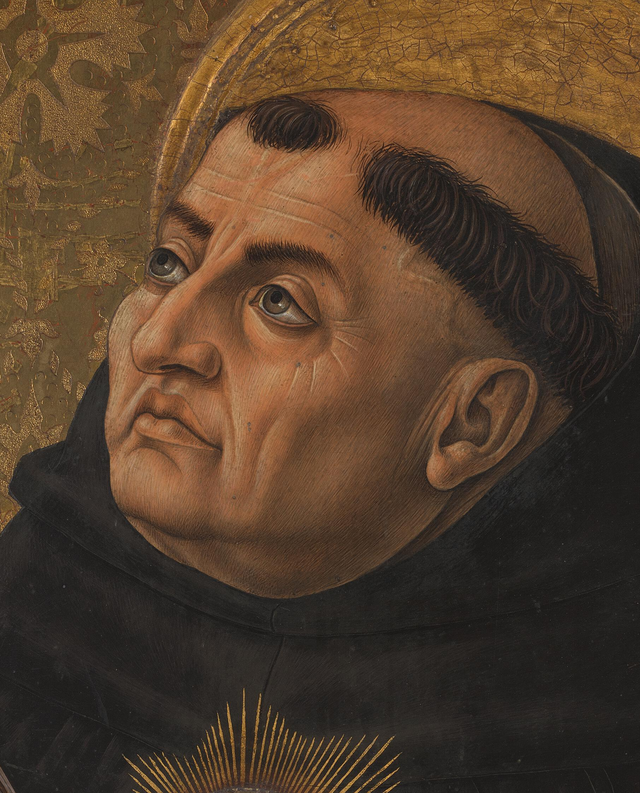
Essence: The What of a Thing
Essence is what is expressed in a thing's definition — the intelligible structure that makes something the kind of thing it is. Aquinas follows Aristotle in identifying essence primarily with form, the organising principle that makes matter into a determinate kind of being. In composite substances (like human beings), essence comprises both form and matter; in purely intellectual beings like angels, essence is form alone. Essence is what answers the question 'What is it?' — the intelligible content grasped by definition.
Existence as Act
Existence is not a further property of an essence — it is the act by which an essence is. Aquinas calls existence (esse) the most perfect of all perfections, the actuality of all acts, because without it nothing has any determinate reality at all. An essence abstracted from existence is merely possible — it can be thought, defined, understood, but it has no being outside the mind. The real existence of a thing is not contained in its essence; it is something added to essence from outside, which is to say, caused by another. Only the being whose essence is identical with existence — God — is not caused by another.
The Metaphysical Foundation of Creation
The real distinction between essence and existence explains why all finite being is contingent — why the universe might not have existed and why its existence is a gift rather than a necessity. It also explains the causal dependence of all creatures on God: whatever has existence by participation in existence requires a cause that is existence itself. The hierarchy of being, from God through angels to material creatures, is a hierarchy of greater and lesser participation in the fullness of being that God simply is. Creation is not the manipulation of pre-existing matter but the giving of existence to what of itself has only essence.
The argument of On Being and Essence is developed further throughout Aquinas's career, especially in Summa Theologiae I Q.3–4 and Disputed Questions on the Power of God Q.7. The influence of Avicenna's distinction between essence and existence is explicit and acknowledged.
Related Concepts