The Eternal Generation of the Son
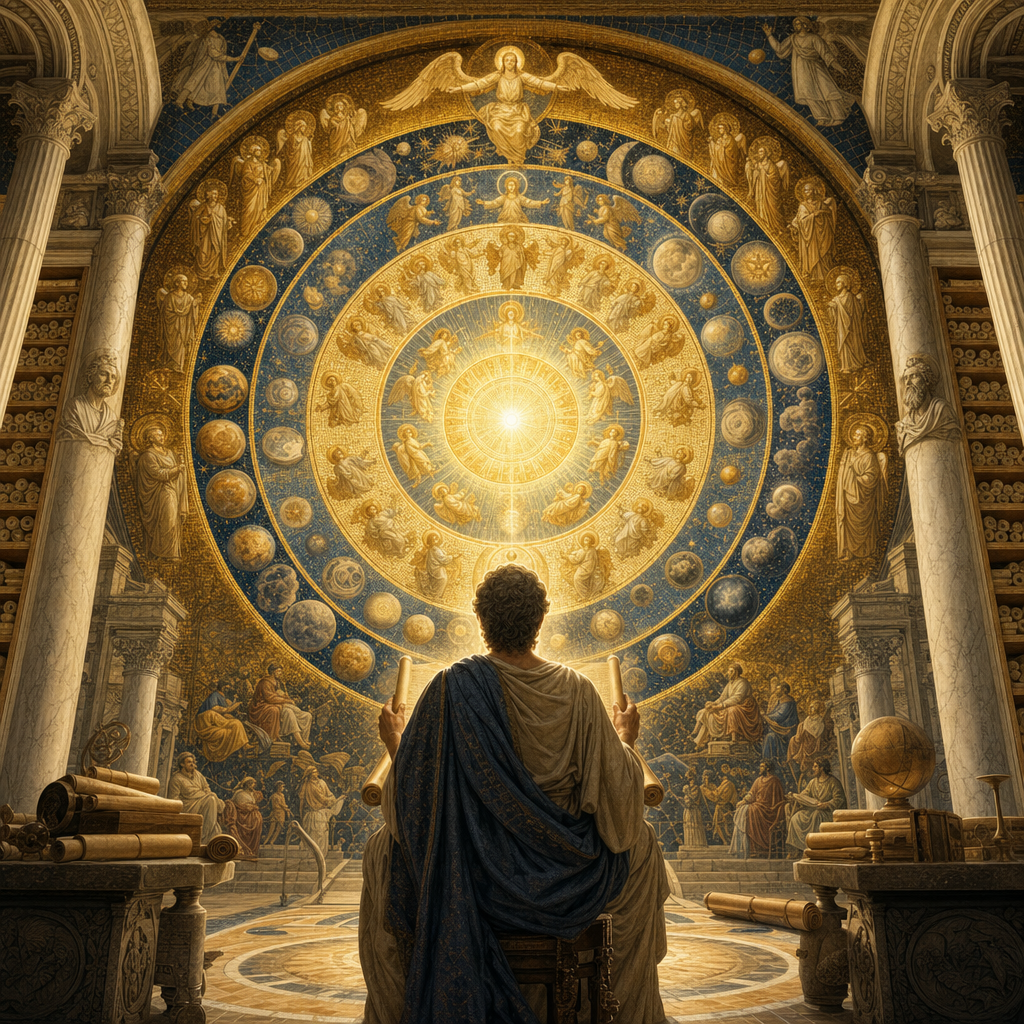
For Origen, the Son is not created but eternally generated by the Father — not at a moment in time but in an eternal act of divine self-communication. This is Origen's solution to the challenge of explaining how the divine Word, through whom everything was made (John 1:3), can be both truly divine and genuinely distinct from the Father. The generation of the Son is like the generation of light from the sun: the light is always being generated, fully present wherever the sun is, yet genuinely distinct from the sun that generates it. This eternal relational distinction within the Godhead is the foundation of Christian Trinitarian theology.
The Logos as Mediator
The Logos serves multiple functions in Origen's theology. Metaphysically, it is the image of the Father through whom creation is ordered: all the divine ideas — the patterns and principles of created things — subsist in the Logos. Soteriologically, it is the mediator between the perfect divine simplicity of the Father and the radical multiplicity and imperfection of fallen creation: the Logos accommodates itself to the level of the creature, using the created world as a text through which God communicates. Epistemologically, the Logos is the source of all rational illumination: every instance of genuine understanding is a participation in the divine Logos.
Subordinationism and Its Legacy
Origen's account of the Trinity has a subordinationist tendency: the Son is eternal but ontologically subordinate to the Father, a second God (deuteros theos). This formulation created difficulties for later orthodoxy and was partly the basis for the Arian controversy in the fourth century, in which Arius argued (against Origen's intention) that the Son was a created being. The Nicene settlement — the Son is of the same substance (homoousios) as the Father — attempted to preserve Origen's eternal generation while eliminating the subordinationism. Origen's Trinitarian theology is the matrix within which both Nicene orthodoxy and the heresies it opposed took shape.
Origen's Logos theology is developed in Book I of On First Principles, especially chapters 2–3, and in the Commentary on John. The concept of eternal generation became central to the Nicene tradition; the subordinationist tendency was condemned in the aftermath of the Council of Nicaea (325 CE) and in the condemnations of Origenism at the Fifth Council (553 CE).
Related Concepts