The Question "What Is the Number One?"
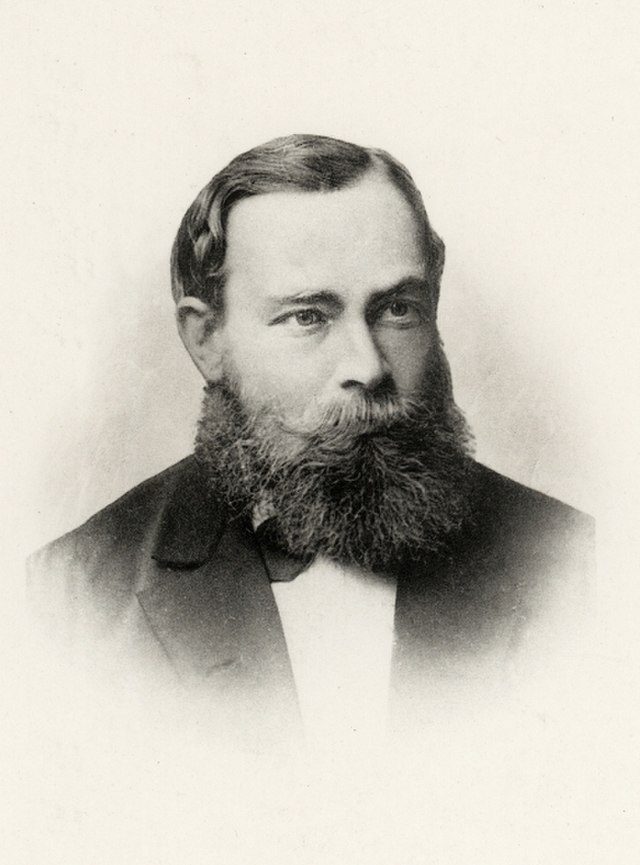
Frege begins by asking a simple but surprisingly difficult question: what is the number one? Previous answers — that numbers are mental ideas, that they are properties of physical things, that they are sets of units — all fail under examination. Numbers do not seem to be mental, because arithmetic is objective. They are not properties of things in the ordinary sense: a deck of cards is one deck and fifty-two cards simultaneously.
Concepts and Extensions
Frege's solution is to analyse number statements as second-order predications: to say "there are four moons of Jupiter" is to say that the concept "moon of Jupiter" has the property of having four instances falling under it. Numbers are thus logical objects — the extensions of second-order concepts. The number four is the extension of the concept "equinumerous with the concept 'moon of Jupiter'": the class of all concepts that have exactly the same number of instances.
The Consequence for Foundations
This analysis has a significant payoff: it makes numbers definable in purely logical terms. "Equinumerosity" is itself definable without appeal to numbers, using only the logical notion of a one-one correspondence. From this, Frege can define zero (the number of concepts under which nothing falls), one, and all subsequent numbers using logical resources alone — realising the logicist programme.
The analysis of number as a property of concepts is the central positive contribution of Foundations of Arithmetic, developed in sections 45–69. It is anticipated by Leibniz's suggestion that the numbers are logical objects and resisted by Mill's empiricist account of number.
Related Concepts