In God but Not God
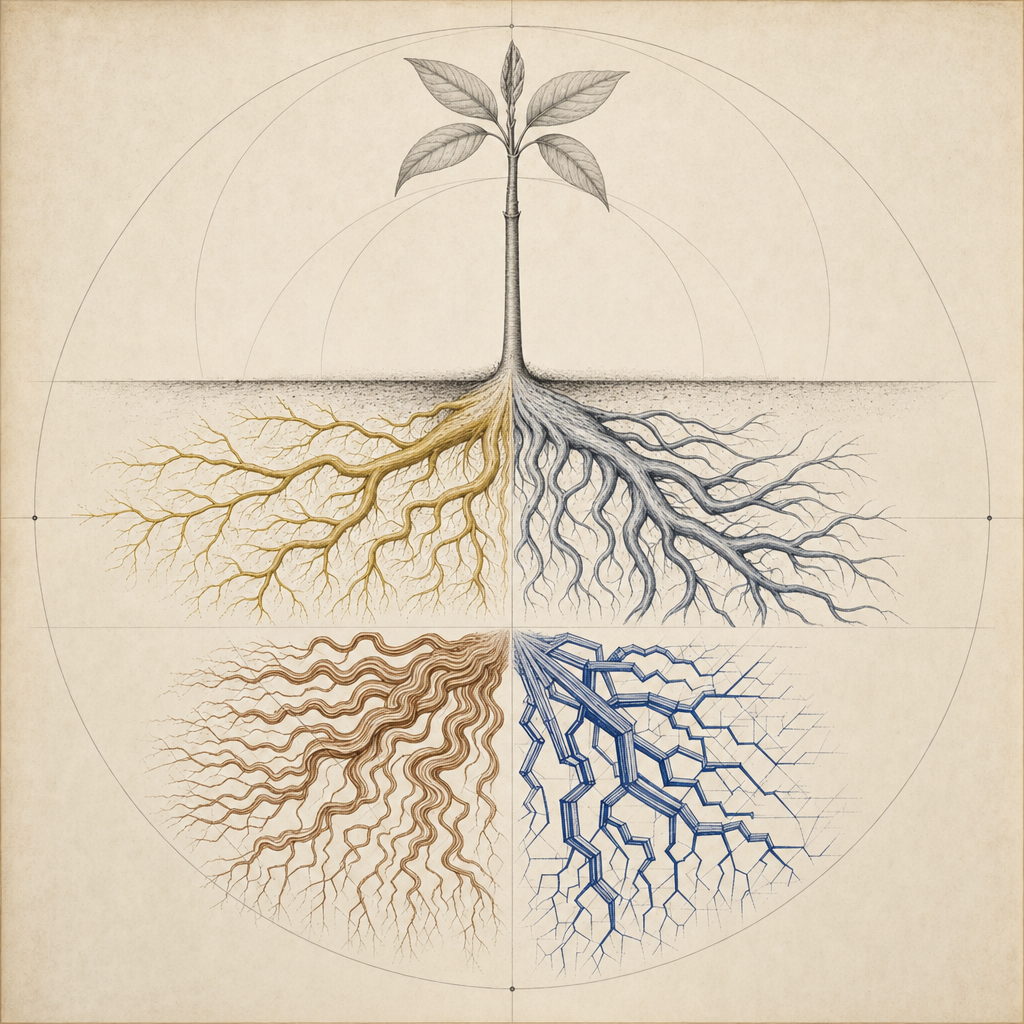
Schelling formulates the distinction carefully: the ground of existence is in God — it is not external to God or a principle outside God — but it is not God properly speaking. God's existence, the divine self-disclosure in light and love, rests on a prior ground that is dark, self-contracting, and irrational. Think of it as the "that it is" of God as distinct from the "what it is": the sheer facticity of divine existence as distinct from the nature that facticity supports.
The Ontological Significance
This distinction marks Schelling's decisive break from rationalist idealism. For Hegel, the Absolute is fully rational and fully self-transparent — there is no remainder, no dark underside, no brute facticity that resists conceptual comprehension. For Schelling, there is always an irreducible element of sheer existence that precedes and exceeds rational comprehension. This is what he later calls the "positive" element of philosophy — the that which is, in contrast to the what that rational analysis can reconstruct. The ground is real in a way that precedes its being understood.
Heidegger's Interpretation
Heidegger devoted a full lecture course to the Freedom essay, reading it as an anticipation of his own distinction between Being and beings. The ground, in Heidegger's reading, is analogous to Being as the condition of possibility for all that is — always already operative but never itself an entity among entities. Whether this reading captures Schelling's intent or imports Heideggerian categories is contested, but it has been enormously influential in establishing the Freedom essay as a key text in the Continental tradition.
Heidegger's 1936 lecture course Schelling's Treatise on the Essence of Human Freedom is the most extended philosophical engagement with the 1809 text and shaped much of its twentieth-century reception.
Related Concepts