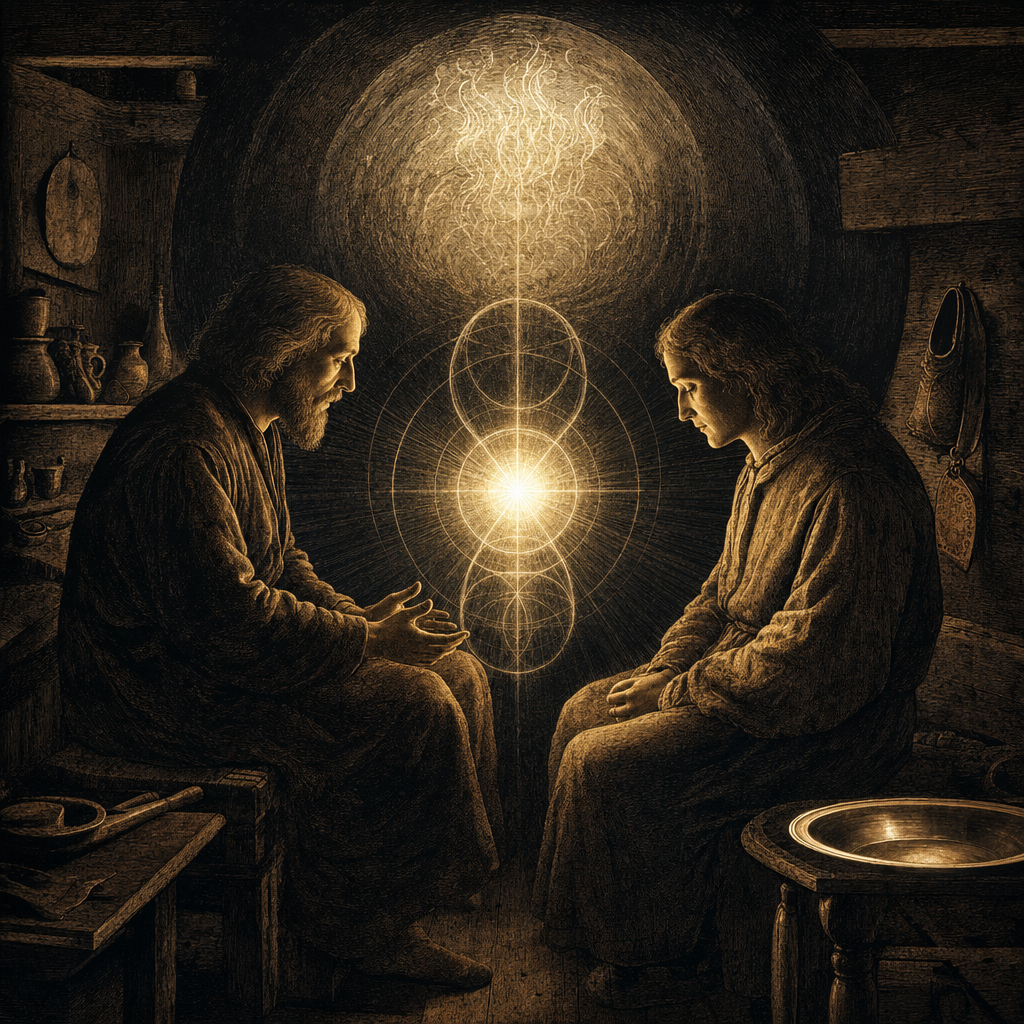
Against Spiritual Restlessness
A common mistake in religious life is to pursue the feeling of devotion rather than the reality of union. Friars come to Eckhart anxious that they cannot pray with concentration, or that they feel no fervour, or that their thoughts wander. His response is consistent: do not seek feelings. The soul that is genuinely recollected does not need to feel recollected; the soul that truly loves God does not need the emotional warmth of that love to be present at every moment.
The Equal Heart
Eckhart praises what he calls the gleich gemüete — the equal-hearted or equable spirit. This is the soul that is neither elated by consolation nor depressed by desolation, that receives sickness and health, praise and criticism, with the same inner stability. The equal heart is not stoic indifference but something more dynamic: it is stable because it is grounded in what does not change, and therefore it can engage fully with change without being destabilised by it.
Preparation Over Achievement
The most the soul can do is prepare itself — empty itself of obstruction — and then wait. Union with God is not an achievement the soul can produce by effort; it is something God does in the prepared soul. This shifts the entire orientation of spiritual practice away from merit and toward receptivity. The friar's task is not to climb toward God but to remove the barriers that prevent God from dwelling where God already wishes to be.
The theme of the prepared and equal-hearted soul appears throughout the Talks and recurs in the German Sermons. Eckhart's concept of Gelassenheit — releasement or letting-go — is closely related and would be taken up extensively by his disciple John Tauler.
Related Concepts