Religion and Political Unity
Rousseau surveys the history of religion and politics, finding that pagan antiquity had an advantage: every city-state had its own gods, and the sacred and the civic were unified. The rise of Christianity split the two realms, creating the perennial conflict between religious and civil authority. A Christian society, which worships a universal God and prizes the next world over this one, cannot produce the patriotism and civic devotion that free republican life demands.
The Articles of Civil Faith
Rousseau's solution is not to suppress religion but to establish a minimal civic creed — not a theology, but a set of social sentiments. These include belief in a providential God, the immortality of the soul, the happiness of the just and the punishment of the wicked, and above all the sanctity of the social contract and the laws.
The dogmas of civil religion ought to be few, simple, and exactly worded, without explanation or commentary. The existence of a mighty, intelligent and beneficent Divinity, possessed of foresight and providence, the life to come, the happiness of the just, the punishment of the wicked, the sanctity of the social contract and the laws: these are its positive dogmas.
Tolerance and Exclusion
Rousseau distinguishes between theological and civil toleration. The state cannot compel belief, but it can banish those whose beliefs make them incapable of civic life. And it must practice toleration — the civil creed has one negative dogma: intolerance itself is forbidden. Whoever insists that there is no salvation outside their church, and therefore treats other citizens as damned, cannot be a good citizen and may be expelled.
There is therefore a purely civil profession of faith of which the Sovereign should fix the articles, not exactly as religious dogmas, but as social sentiments without which a man cannot be a good citizen or a faithful subject.
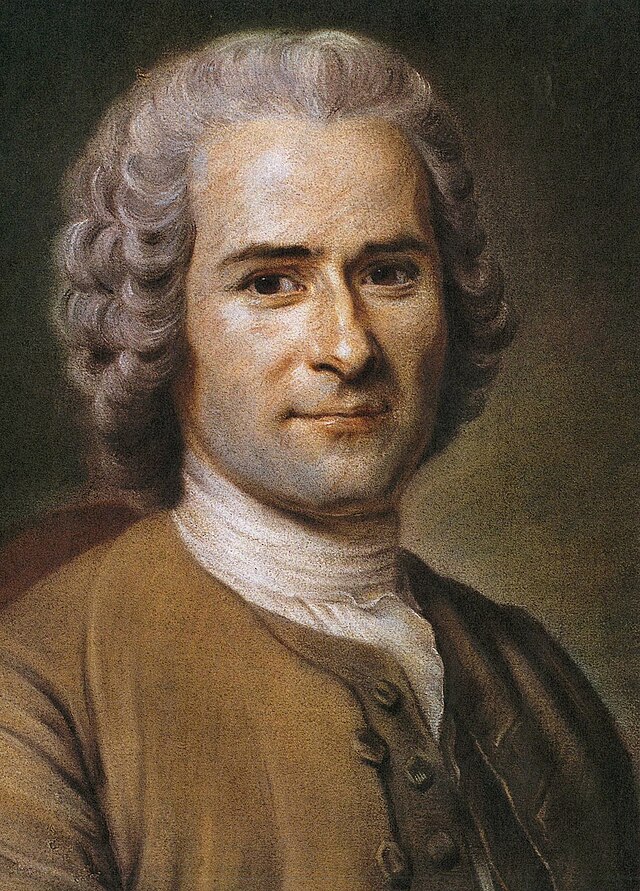
Civil religion is the subject of Book IV, Chapter VIII of The Social Contract (1762). G.D.H. Cole translation, 1913.
Related Concepts