Al-Ghazali's Attack
Al-Ghazali argued that the philosophers' position was both internally incoherent and religiously inadmissible. If the world is eternal, then God did not create it — there was no moment at which nothing existed and then something came to be. And if there was no such moment, then God is not the creator in any meaningful sense; the world is simply co-eternal with God, a consequence of divine nature rather than a free divine choice. Al-Ghazali pressed the philosophers on what could have changed to bring about the world after eternal inaction, and concluded that no coherent answer was possible.
Averroes's Defence
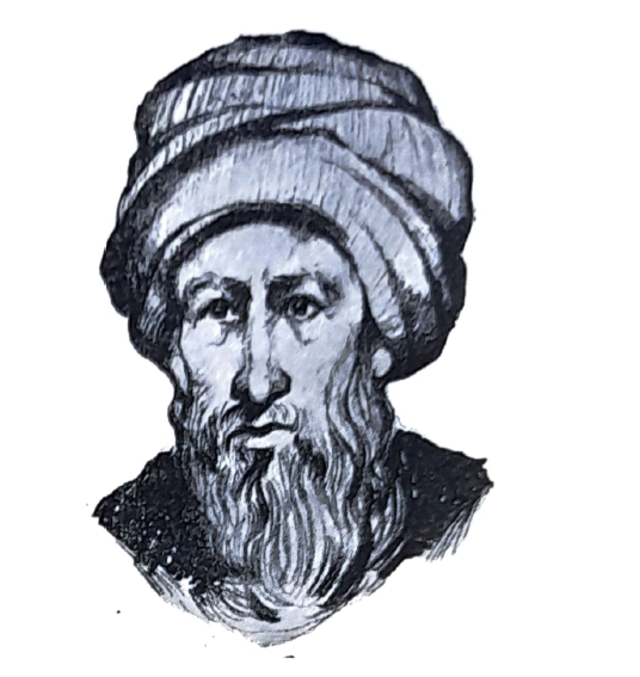
Averroes's response distinguishes carefully between the question of temporal origination and the question of existential dependence. For Aristotle, the world is eternal — there was no first moment of its existence — but it is not self-sufficient: its eternal existence depends at every moment on the unmoved mover, on God as the ultimate cause of motion and being. Creation in time, Averroes argues, is not necessary for genuine creation; the relationship of complete dependence on God is what matters, not whether that relationship had a beginning. A river that has always flowed from its source is no less dependent on the source than one that began to flow at a specific moment.
The Limits of Theological Inference
Averroes also challenges al-Ghazali's claim that temporal creation is required by Islamic theology. The Quran speaks of God creating the heavens and the earth, but Averroes argues that the language of creation does not require temporal origination — it can be interpreted as indicating ontological dependence. More fundamentally, Averroes contests al-Ghazali's right to condemn the philosophers as unbelievers: the question of the world's eternity is one on which demonstrative philosophy must be authoritative, and on which theologians who lack the relevant philosophical training are not qualified to pronounce.
The dispute over the eternity of the world was the central controversy of medieval Islamicate philosophy. Averroes's defence in the Incoherence of the Incoherence became the standard Peripatetic position and was extensively discussed in the Latin Scholastic tradition after the translation of the work in the thirteenth century.
Related Concepts