Adaequatio Intellectus et Rei
The formula for truth — adaequatio intellectus et rei, the equation of intellect and thing — originates with Isaac Israeli but is taken up and transformed by Aquinas. Truth is not a property of things in themselves but of the relationship between a knowing mind and the things it knows. A judgement is true when what the mind asserts corresponds to what is the case. Falsity is not an error of the senses but of the intellect's second operation — composition and division, the affirmation or denial that this is so.
Things as True
Things themselves can be called true in a derivative sense: a thing is true insofar as it conforms to the intellect that knows it. Primarily, this means the divine intellect — things are true insofar as they are what God made them to be and knows them to be. Secondarily, a thing can be called true in relation to a human intellect: a true friend is one who is what he shows himself to be. The ontological truth of things — their being genuinely what they are — is the condition that makes epistemic truth possible.
Knowledge by Abstraction
For Aquinas, human beings know through abstraction: the intellect draws the universal form of a thing from the particular sensory images presented to it, producing an immaterial likeness of the thing's essence. This abstracted form — the intelligible species — is not what the intellect knows but that by which it knows the thing itself. The mind is directed outward, to the thing, not inward to its own mental content. Knowledge is therefore genuinely realist: the mind that succeeds in knowing a thing has the same form as the thing, not numerically but intentionally — in the mode of knowing rather than in the mode of being.
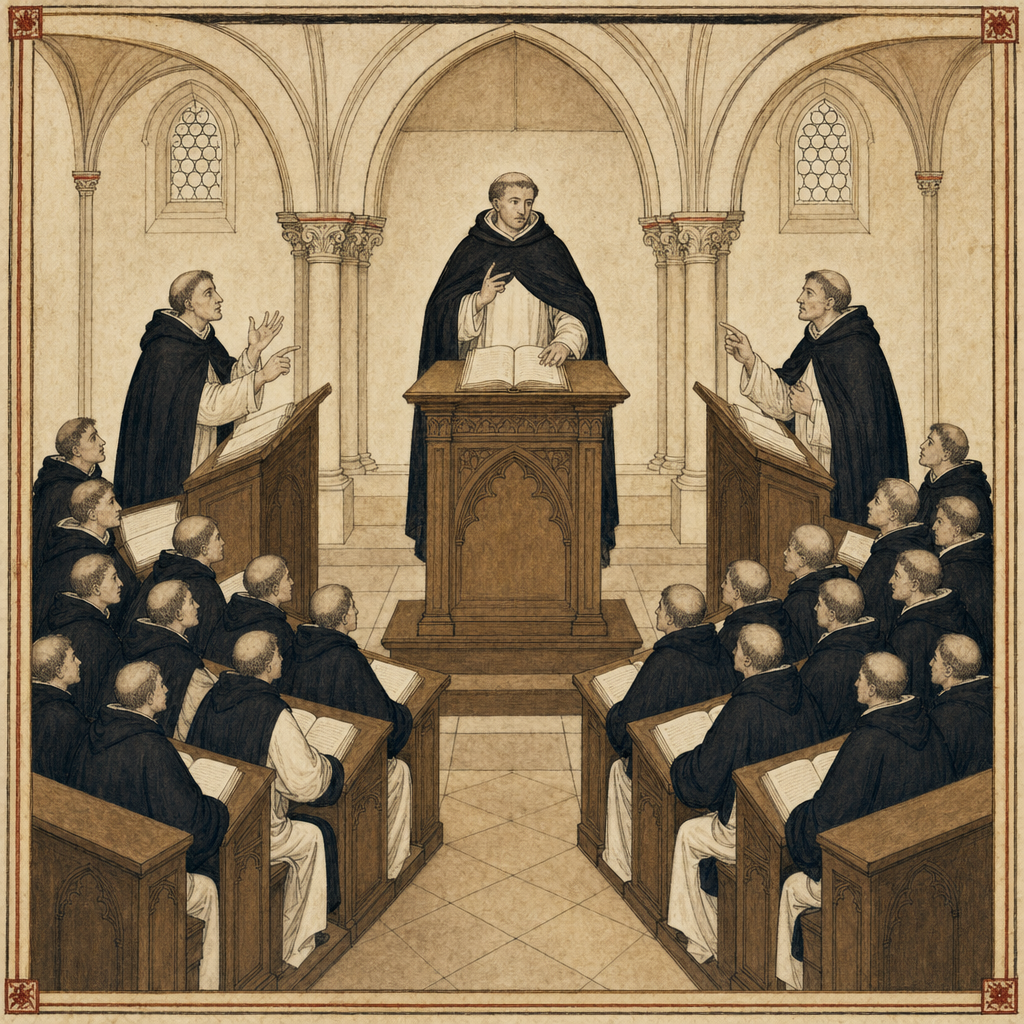
The definition and analysis of truth occupies the first of the twenty-nine Disputed Questions on Truth. Aquinas engages Anselm, Avicenna, and Augustine throughout, weaving together theological and philosophical sources in the characteristic scholastic manner.
Related Concepts