When Government Dissolves Itself
Locke distinguishes between the dissolution of government and the dissolution of society. Society — the basic compact of individuals to live together under common law — persists through changes of government. But government itself can be dissolved: when the legislature is altered or constrained by the executive, when rulers act contrary to the trust reposed in them, when the prince prevents the legislature from assembling or functioning — in all these cases, the government has broken the constitutional compact and returned the people to a state of nature with respect to political authority. The people are then free to constitute a new government on whatever basis seems good to them.
The Right of Resistance
This analysis generates a right of resistance: when the government systematically violates natural rights — seizing property without consent, governing without law, making itself absolute — the people may resist. Locke is careful to insist that this right is not a licence for every individual to resist every perceived injustice: isolated maladministration does not justify revolution. But when there is a manifest and persistent pattern of arbitrary government — when it becomes clear that the government's design is to reduce the people to slavery — resistance becomes not merely permissible but a duty. The appeal is to Heaven — to the judgment of God and posterity — since there is no earthly arbiter between a tyrannical government and its people.
Influence on the American Revolution
The influence of this argument on the American Revolution was direct and acknowledged. Jefferson's Declaration of Independence closely follows Locke's structure: governments are instituted to secure natural rights, they derive their just powers from the consent of the governed, and whenever any government becomes destructive of these ends, it is the right of the people to alter or to abolish it. The list of grievances against George III mirrors Locke's catalogue of tyrannical acts. The Declaration is, in significant part, an application of Locke's theory of revolution to a specific historical case, framed as a demonstration that all the conditions justifying revolution have been met.
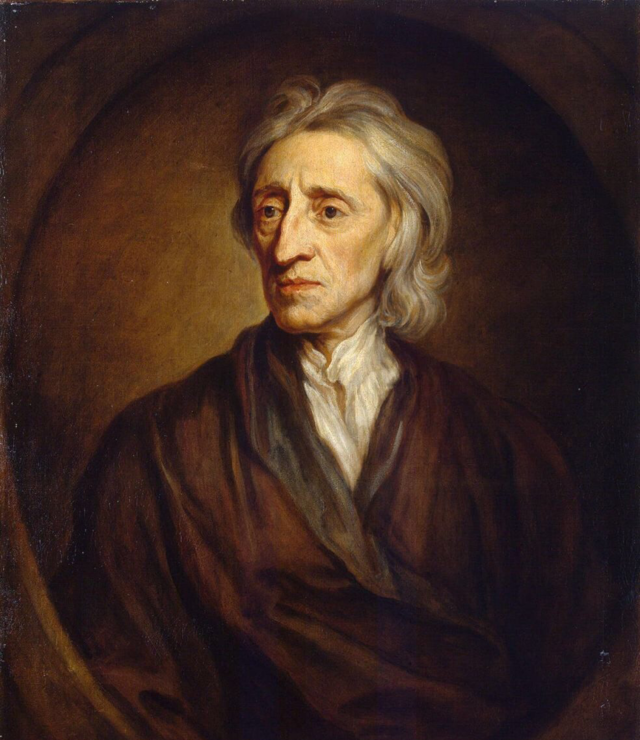
The right of revolution is developed in Chapters XVIII–XIX of the Second Treatise. Locke's treatment of the topic was sufficiently explosive that even the 1689 published edition was anonymous, and the authorship was not publicly acknowledged until after his death. James Madison and Thomas Jefferson both read and annotated the Second Treatise; it was on the reading lists of every educated American revolutionary.
Related Concepts