The Classical Tradition and Bruno's Transformation
The classical art of memory — codified in the Ad Herennium and practised by orators like Cicero — involved placing vivid images in the rooms of an imaginary building (the memory palace), then mentally walking through the building to retrieve them in order. Bruno inherited this tradition but transformed it: his memory systems are not architectural but astronomical and magical. The images placed in the memory are not arbitrary mnemonic hooks but cosmic symbols — signs that correspond to real natural forces and can, when held in the imagination with sufficient intensity, activate those forces.
Shadows as Instruments
The "shadows of ideas" are images that stand in a determinate relationship to the eternal forms of the divine intellect. They are shadows not in the Platonic sense of mere copies but in the sense of projections: just as a physical shadow bears a structural relationship to the object that casts it, the shadow-images of Bruno's art bear a structural relationship to the cosmic realities they represent. The trained practitioner who grasps this structural relationship can use the image as an instrument — a tool for affecting the natural world through the sympathetic connections that Hermeticism posits between earthly images and celestial realities.
The Philosopher as Magus
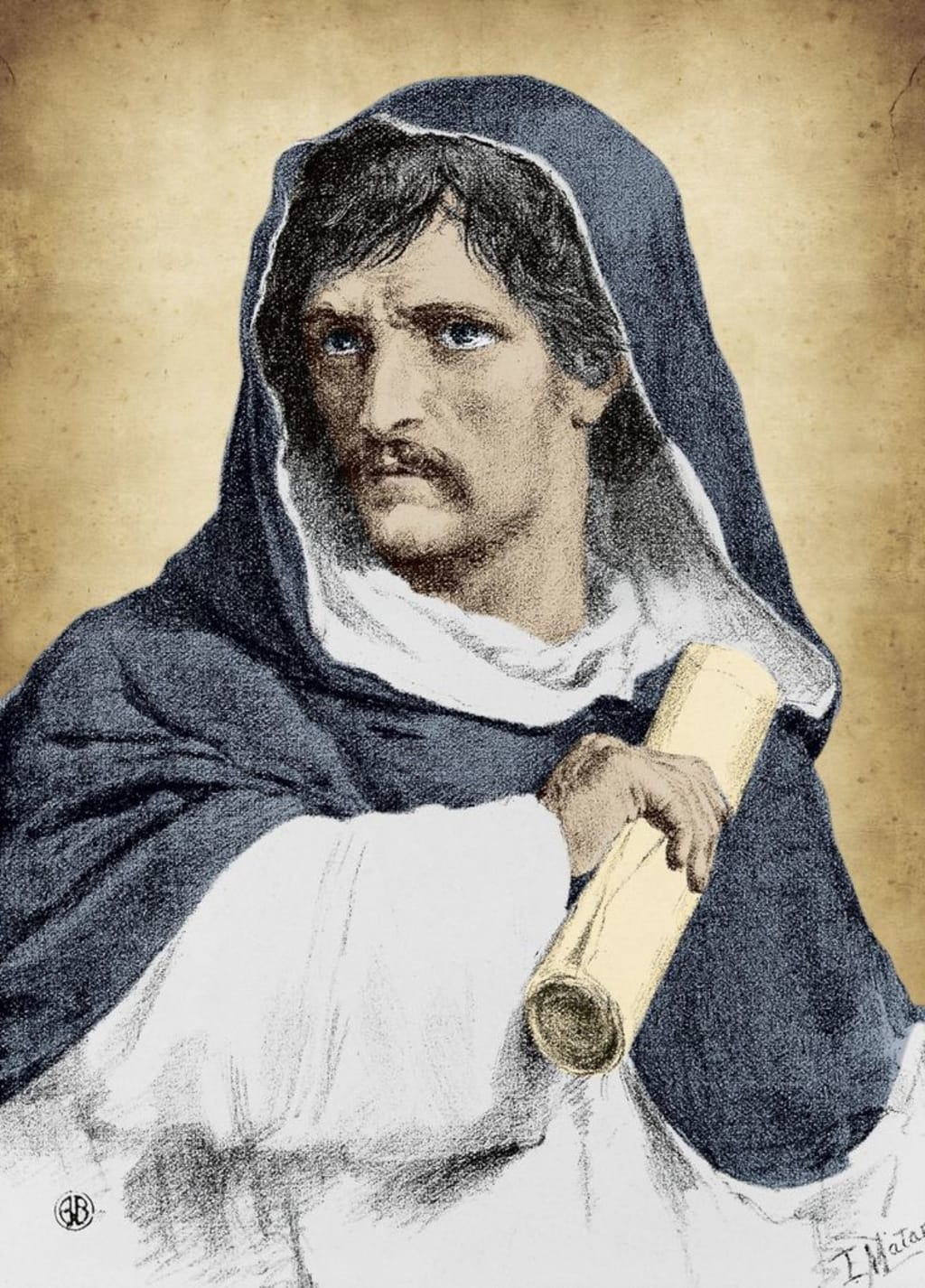
Bruno's ideal philosopher is a magus: a person who has mastered the art of memory and through it has aligned himself with the structure of the cosmos, so that his intentions and actions work in concert with natural forces rather than against them. This is not supernatural intervention but the full use of the mind's capacity to resonate with the world it is part of. The magus is not above nature but its most conscious expression — a human being who has realised what all of nature is implicitly striving toward: the full self-consciousness of the World-Soul in an individual person.
On the Shadows of Ideas (De umbris idearum) was published in Paris in 1582 and dedicated to Henry III of France. It established Bruno's European reputation as a memory master. Frances Yates's The Art of Memory (1966) remains the definitive account of the classical and Renaissance traditions Bruno drew on.
Related Concepts