Examples Are Not Definitions
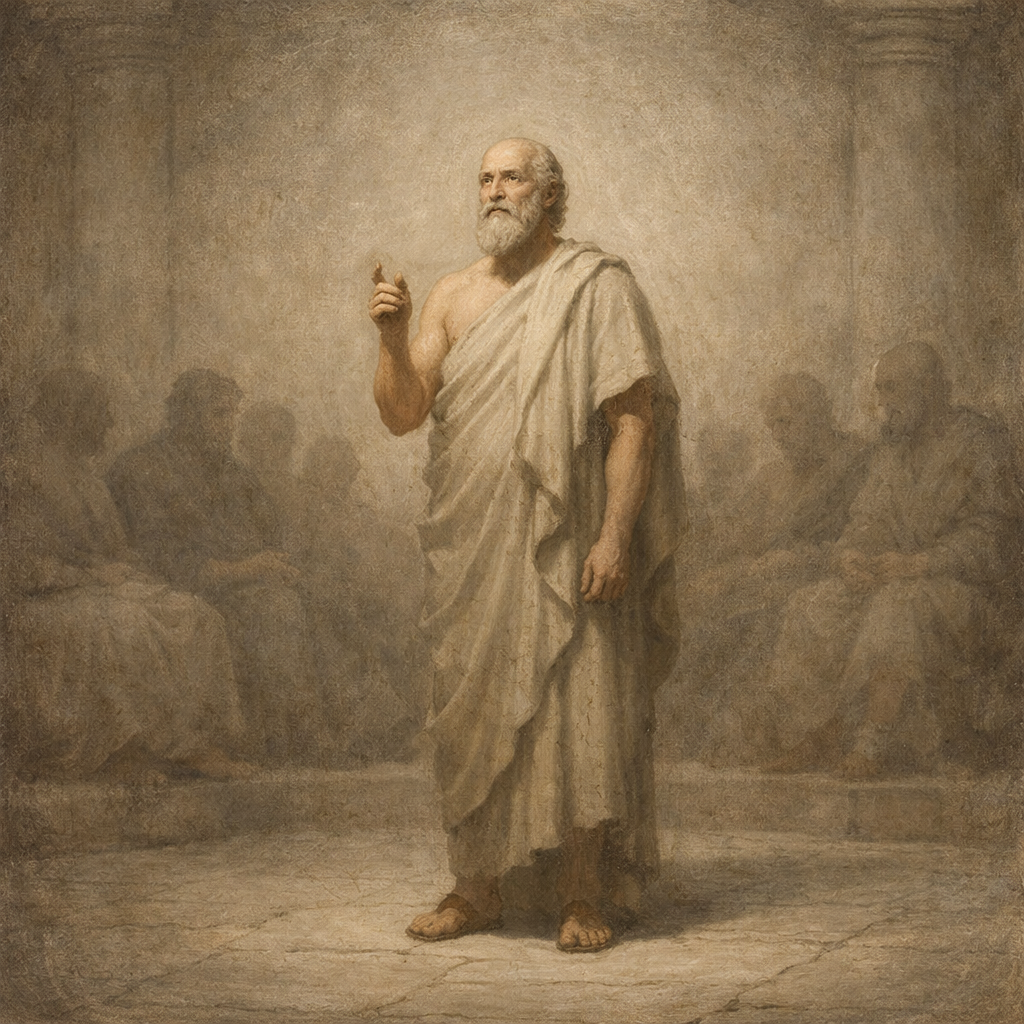
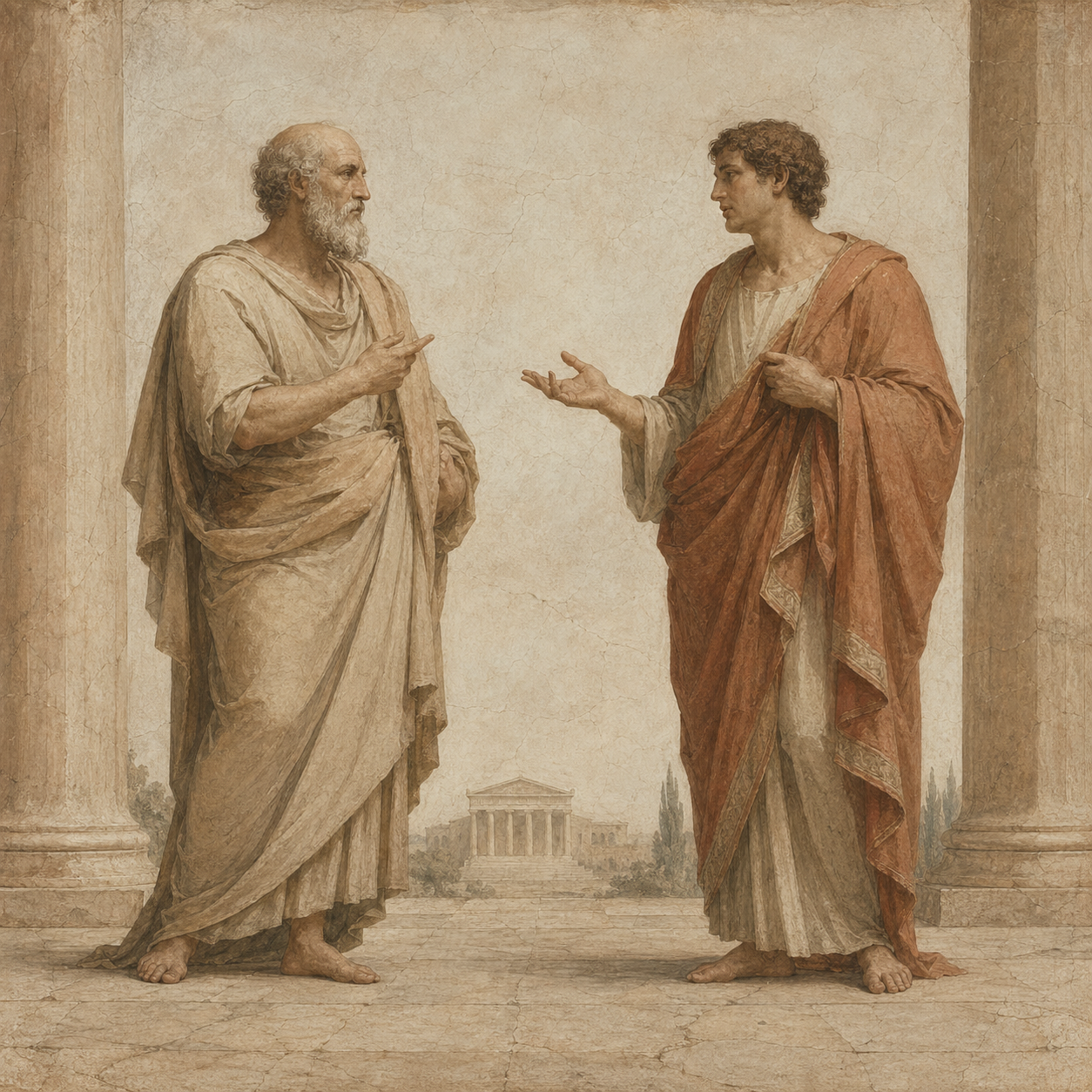
When Socrates asks Euthyphro what piety is, Euthyphro gives what most people would consider a perfectly good answer: piety is what I am doing now — prosecuting a wrongdoer, even if he is my father. Socrates rejects this immediately. An example is not a definition. What Socrates wants is not an instance of piety but the form (eidos) that makes any instance pious — the thing by reference to which we could judge whether any action is or is not pious. One example, however correct, cannot serve this purpose.
The Form Behind the Instances
Socrates is asking for something more abstract and more fundamental than any particular pious act: he wants what we might call the essence or criterion of piety. This is the beginning of what Plato would develop into the theory of Forms — the idea that behind the multiplicity of particular beautiful things, just acts, or pious deeds, there is a single Form (Beauty, Justice, Piety) that all of them participate in and that accounts for their being what they are. The demand for definition is the philosophical demand to identify that Form.
Why Definitions Collapse
What the Euthyphro dramatises is how difficult it is to meet Socrates's demand. Each definition Euthyphro offers either proves circular (piety is what the gods love — but we need to know what the gods love in order to know what is pious), too narrow (covering only some cases of piety), or generates the Euthyphro dilemma itself. The dialogue ends in aporia — perplexity — without a definition. But this failure is itself philosophically productive: it has shown what conditions a genuine definition must meet, even if it has not yet met them.
The Socratic demand for definition — the "What is X?" question — is sometimes called the Socratic fallacy by critics who argue that you must already know what X is in order to recognise instances of it. This is closely related to the paradox of inquiry that Meno raises: if you can identify examples of X, you already know enough about X to evaluate proposed definitions. The paradox is addressed in the Meno through the theory of recollection.
Related Concepts