The End of Geocentric Uniqueness
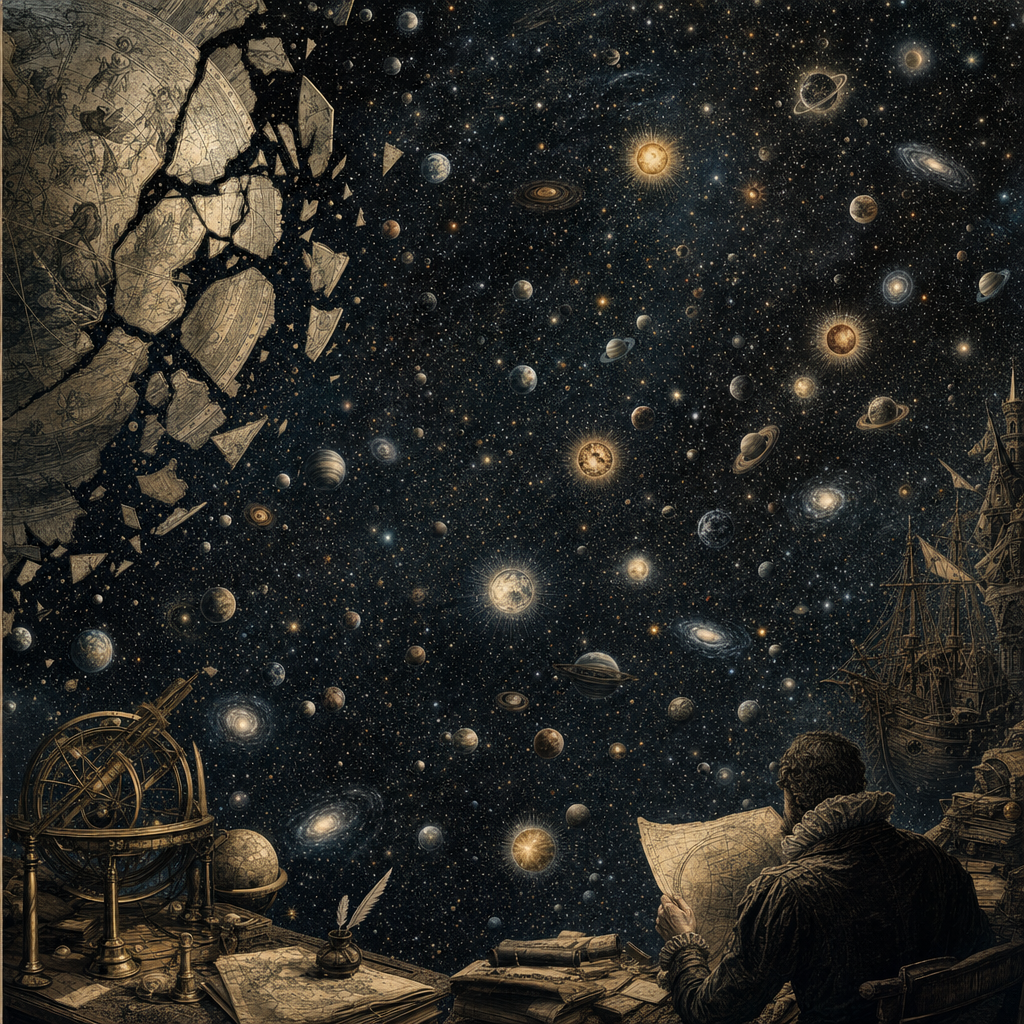
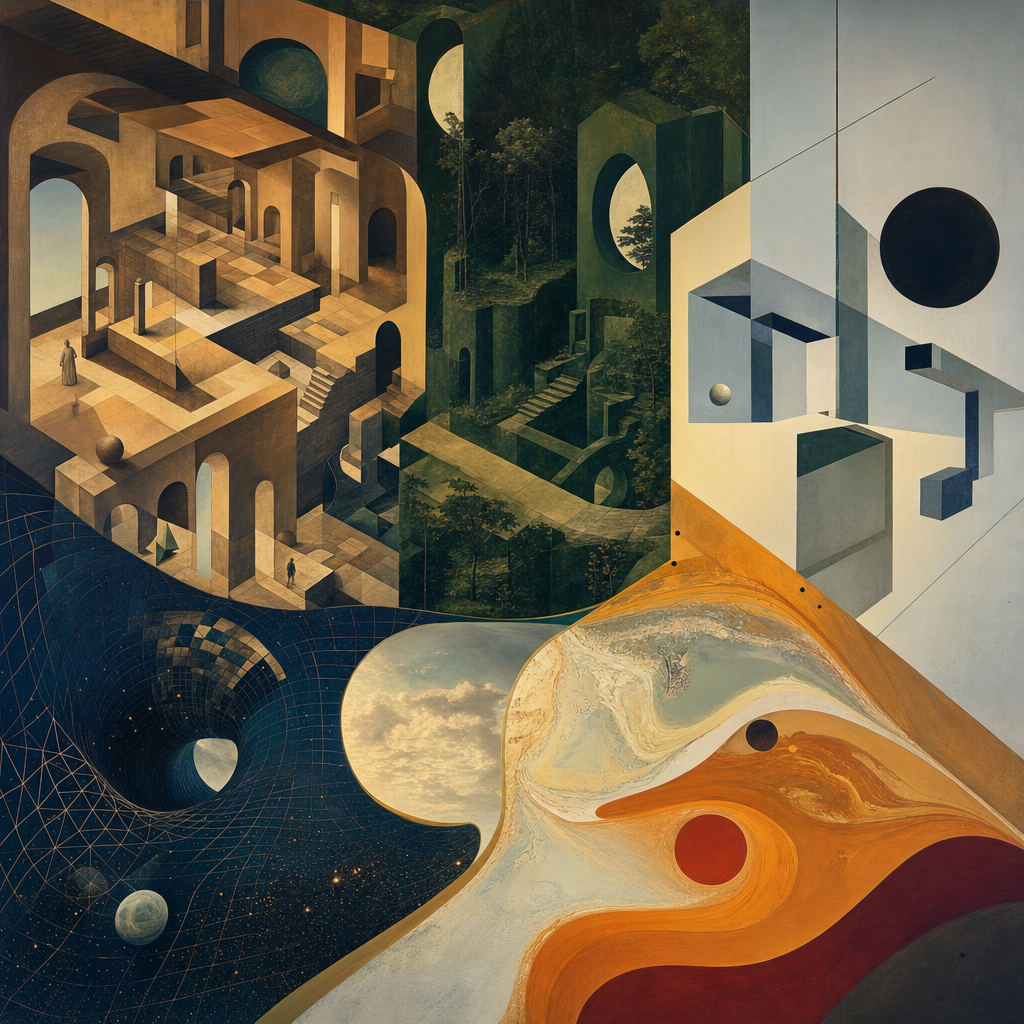
Copernicus displaced the Earth from the centre but retained the outer sphere of fixed stars as a boundary. Bruno took the next step: if the Earth is not central and the stars are not a fixed boundary, then each star is a sun like our own, with worlds around it. The stars are not ornaments on a celestial sphere but individual suns — each as significant, or as insignificant, as our own. The special status of the Earth evaporates completely: it is simply one planet among infinitely many.
The Question of Other Minds
If infinitely many worlds exist, many of them are presumably inhabited. Bruno did not shrink from this implication: he affirmed the existence of other rational beings in the universe and regarded this as evidence of God's infinite creative generosity rather than a theological problem. But the theological problems were real: if there are other rational creatures, did Christ become Incarnate for them too? Is there one salvation or infinitely many? Bruno's inquisitors were aware of these implications and interrogated him on them.
Cosmic Democracy
Underlying Bruno's plurality of worlds is a kind of cosmic democracy: no place in the universe is privileged, no being uniquely central. The same natural laws govern everywhere; the same potential for life and intelligence is distributed throughout the cosmos. This democratisation of the cosmos has deep implications for the relationship between religion and science: if the Earth is not the centre of creation and humanity is not its sole intelligent inhabitant, the authority structures of the Church that claimed to mediate between the uniquely central Earth and its uniquely interested God are undermined at their cosmological foundation.
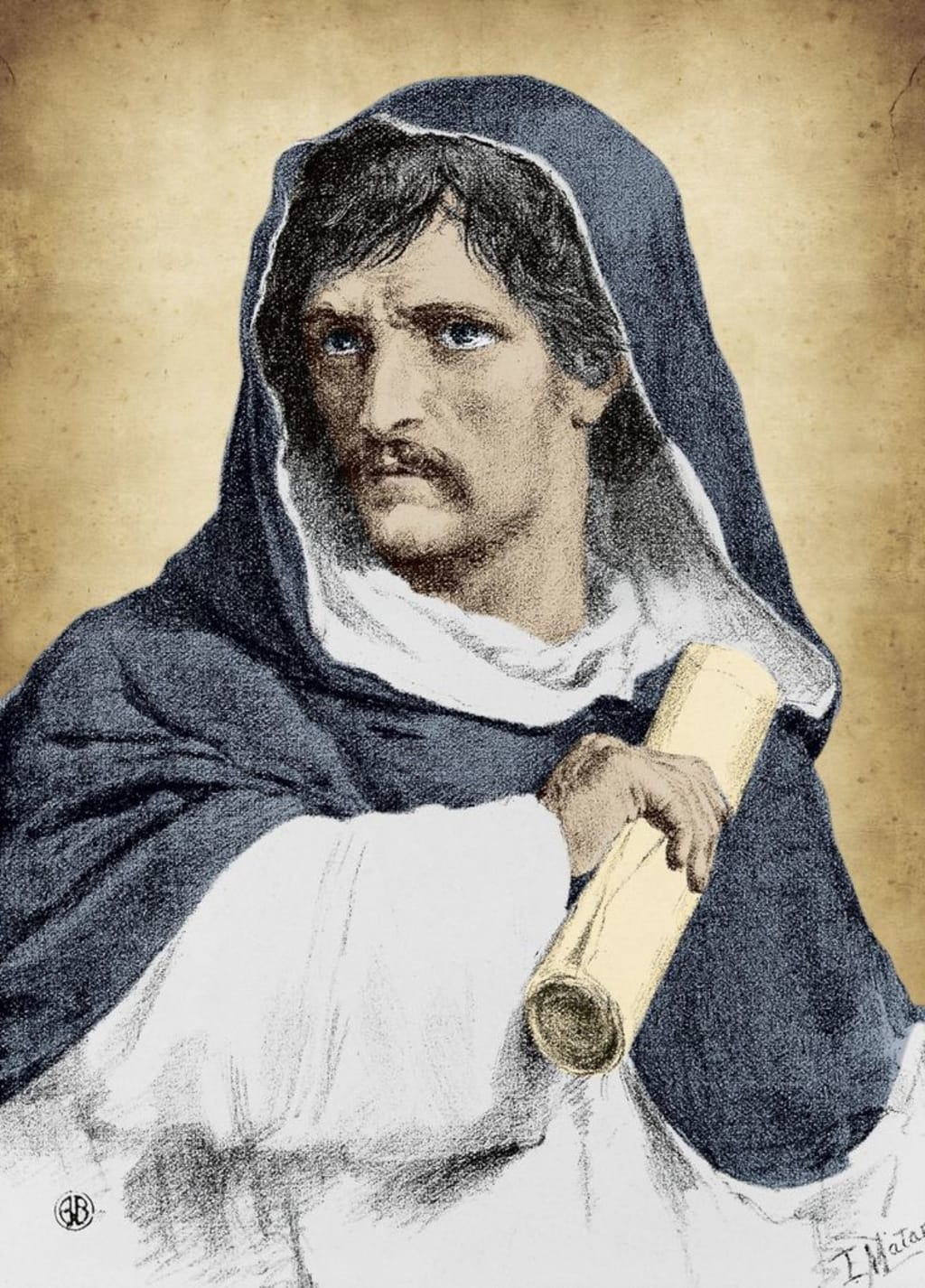
The plurality of worlds was among the propositions examined at Bruno's trial. Whether his execution was specifically for this doctrine or for others (his denial of the Trinity, his views on the soul) remains debated. See Frances Yates, Giordano Bruno and the Hermetic Tradition (1964).
Related Concepts