The Transcendental of a World
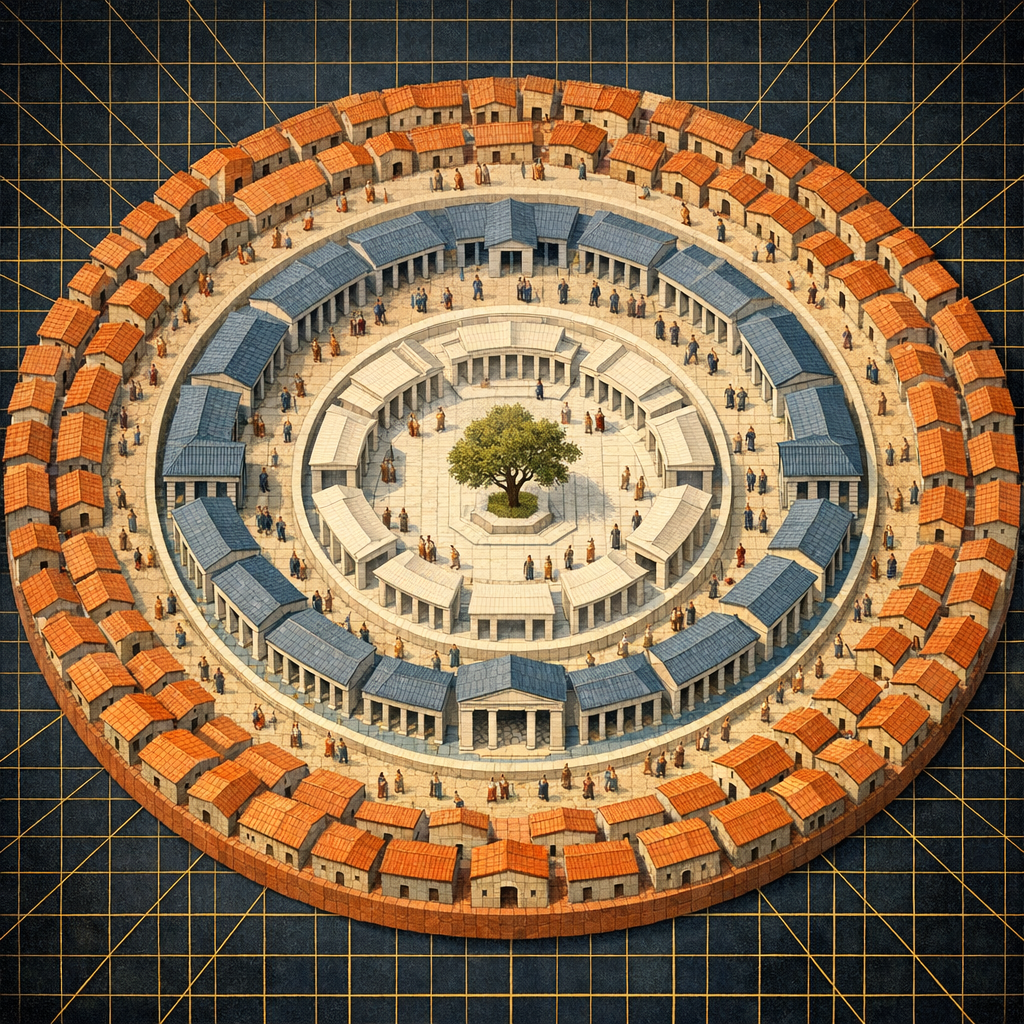
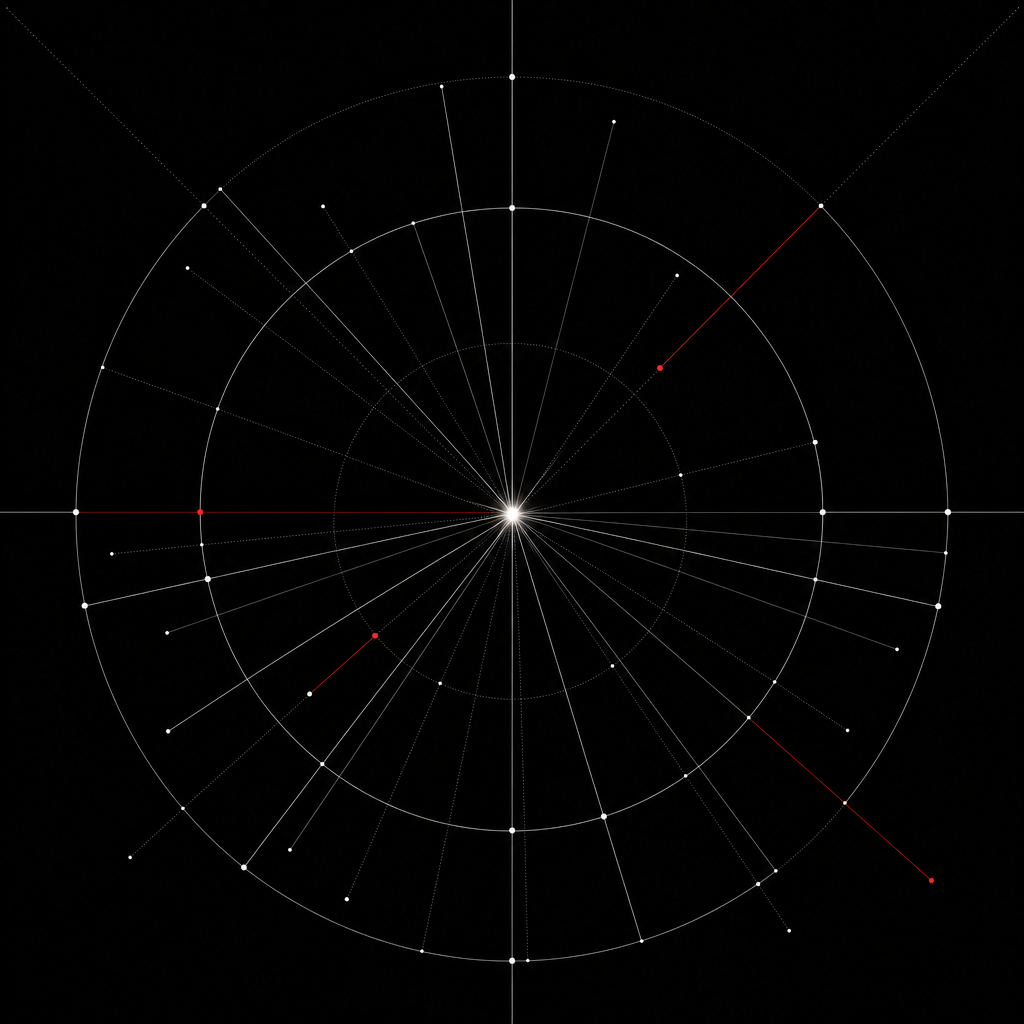
Every world has a transcendental: a complete Heyting algebra (a structure of intensities ordered by an implication relation) that functions as the logic of the world. The transcendental determines the degree of appearance of each being in the world — how much a being counts, how strongly it figures, how visible it is within the ordering of that world. A human being who is socially recognised, politically active, economically enfranchised appears with high intensity in a given world; a refugee whose existence is systematically unrecognised appears with minimal intensity — they are in the world but barely appear in it. The transcendental is Badiou's formal account of what Husserl would call the lived world and Foucault the episteme: the logic of a concrete historical situation.
Bodies and Truths in Worlds
In Logics of Worlds, truth procedures are analysed not just in terms of set-theoretic genericity but in terms of the bodies through which they operate in worlds. A truth has a body — a material, worldly existence — that supports the work of fidelity. The revolutionary organisation is the body of a political truth; the mathematical community is the body of a mathematical truth; the couple is the body of a love-truth. The body of a truth is what appears in the world as the bearer of the new: it is organised according to a logic that differs from the transcendental of the existing world, pointing towards a new world that the truth procedure is in the process of creating.
Democratic Materialism and the Materialist Dialectic
Logics of Worlds opens with a polemical contrast between two ideological axioms. Democratic materialism asserts: "There are only bodies and languages." It is the ideology of liberal democracy and biopolitics: everything reduces to living bodies and the discourses through which they are managed. The materialist dialectic of Badiou's philosophy asserts: "There are only bodies and languages, except that there are also truths." This exception is everything. Truths are not bodies (they are generic, not particular) and not languages (they are not merely discursive constructs); they are real interruptions of the body-language continuum, produced by events and carried by subjects. The philosophy of worlds is a defence of this exception against its reduction.
Logics of Worlds (2006) uses the mathematics of topos theory and Heyting algebras to formalise the theory of appearance and worlds. The political applications — the theory of the reactive and obscure subjects — are developed in Book VI and in the concluding Epilogue on "The Subject of Art."
Related Concepts