The Trainer Analogy
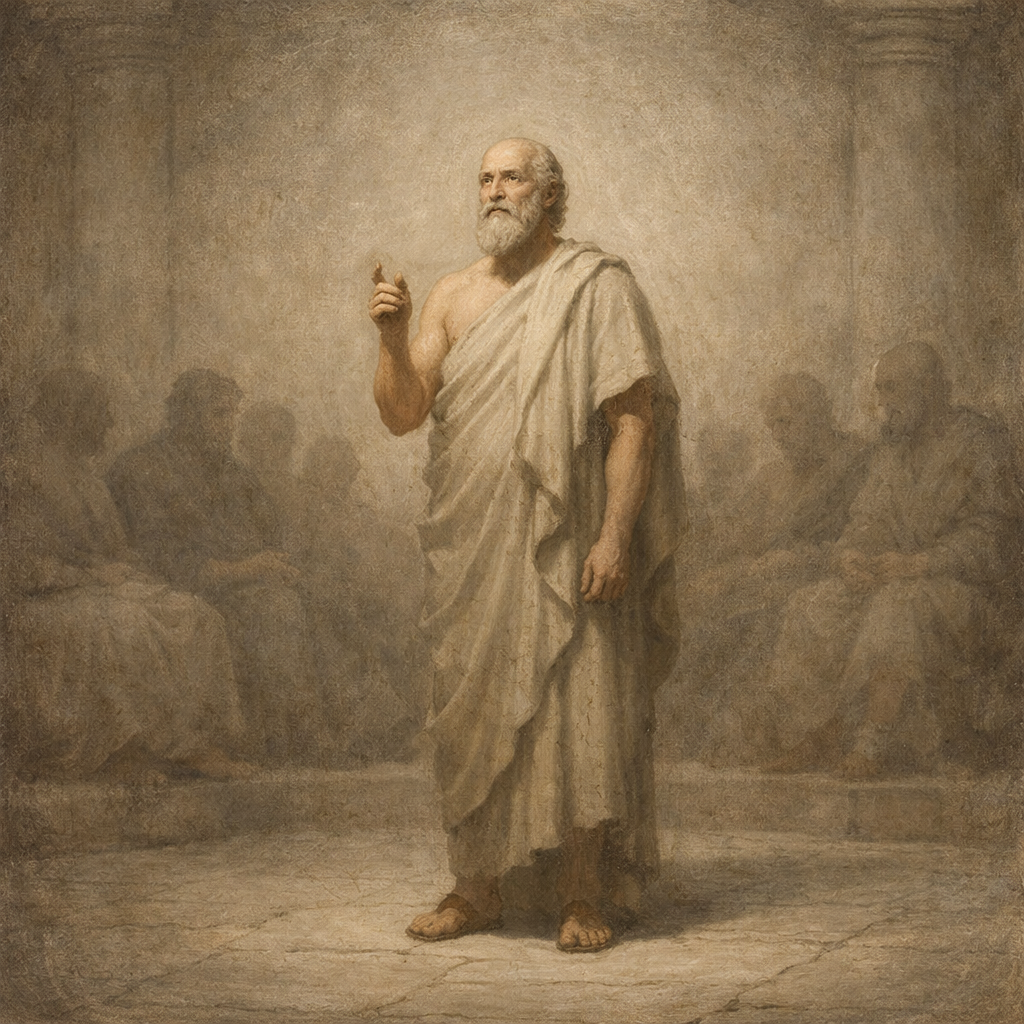
Socrates constructs an analogy. Suppose someone is training for athletic competition. Should he follow the advice of the many, or only the advice of the one person — the trainer, the physician — who actually knows about physical health and fitness? The answer is obvious: the many's praise or blame is irrelevant to physical training; only the expert's opinion matters. And following the wrong advice — praising the untrained body, exercising without guidance — will damage the body that the training is meant to improve.
The Transfer to Ethics
Socrates applies the same logic to ethics. Just as the body can be damaged by following the opinion of those who don't know about health, the soul can be damaged by following the opinion of those who don't know about justice and virtue. But the damage to the soul is worse than any bodily damage — and so the risk of following the many's opinion on ethical matters is more serious than the corresponding risk in physical training. We need the expert's opinion, not popular approval.
The Problem of Moral Expertise
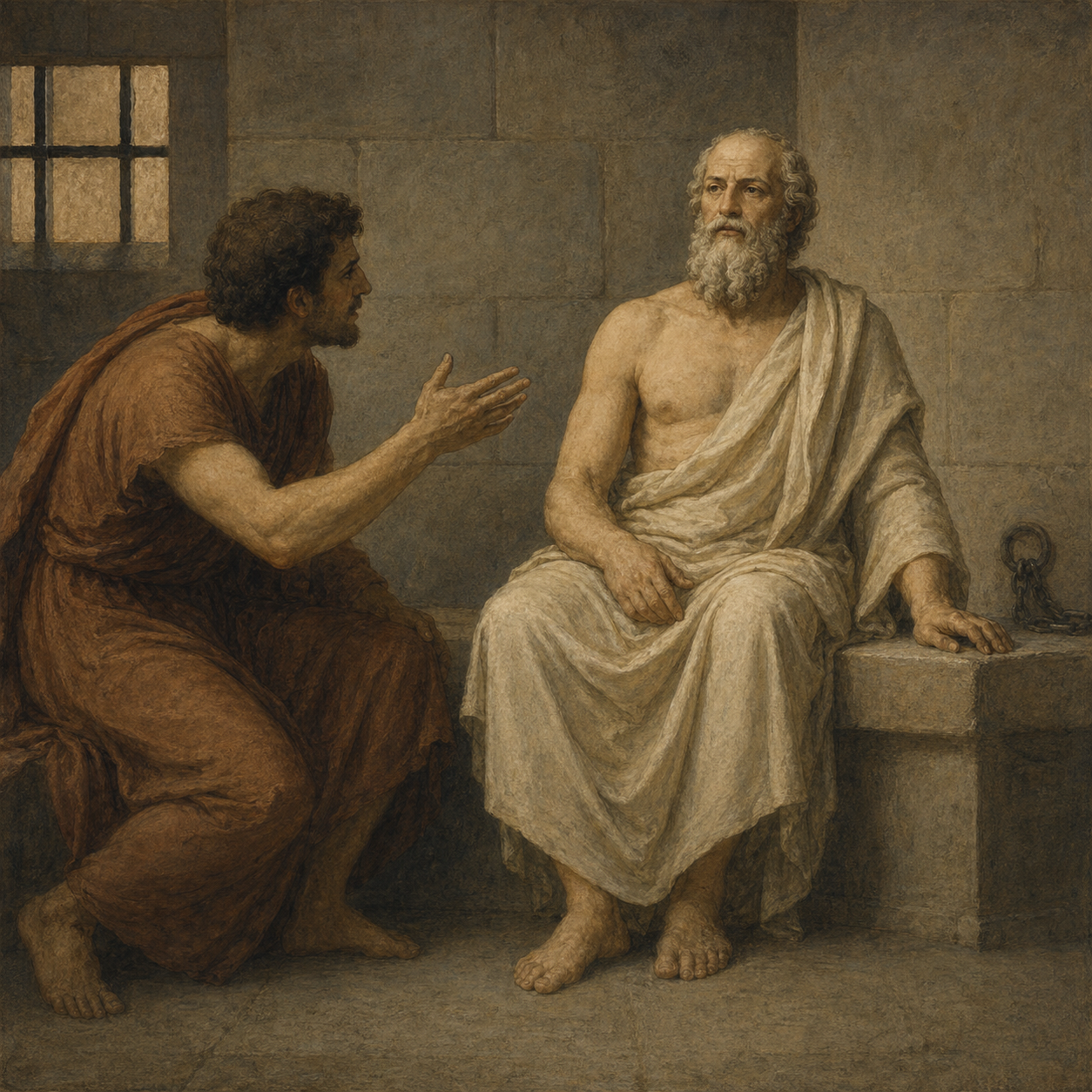
The analogy is illuminating but also raises a difficulty that the Crito does not resolve: who is the expert in justice? In the case of physical training, we know what expertise looks like and how to identify those who have it. But Socrates's entire philosophical career is premised on the claim that no one, including himself, has the kind of knowledge of justice that would qualify as genuine expertise. If there is no expert, the analogy seems to leave us with no one to follow — which is precisely the position of the examined life: perpetually enquiring, never resting in settled opinion.
The argument in the Crito against following popular opinion anticipates Socrates's distinction in the Meno and Republic between knowledge (episteme) and opinion (doxa). The many can have true opinions about justice, and those opinions may guide correct action — but without knowledge, they are unreliable and unteachable. This makes democratic moral authority fundamentally suspect in Socratic (and especially Platonic) thought.
Related Concepts