Why Negation?
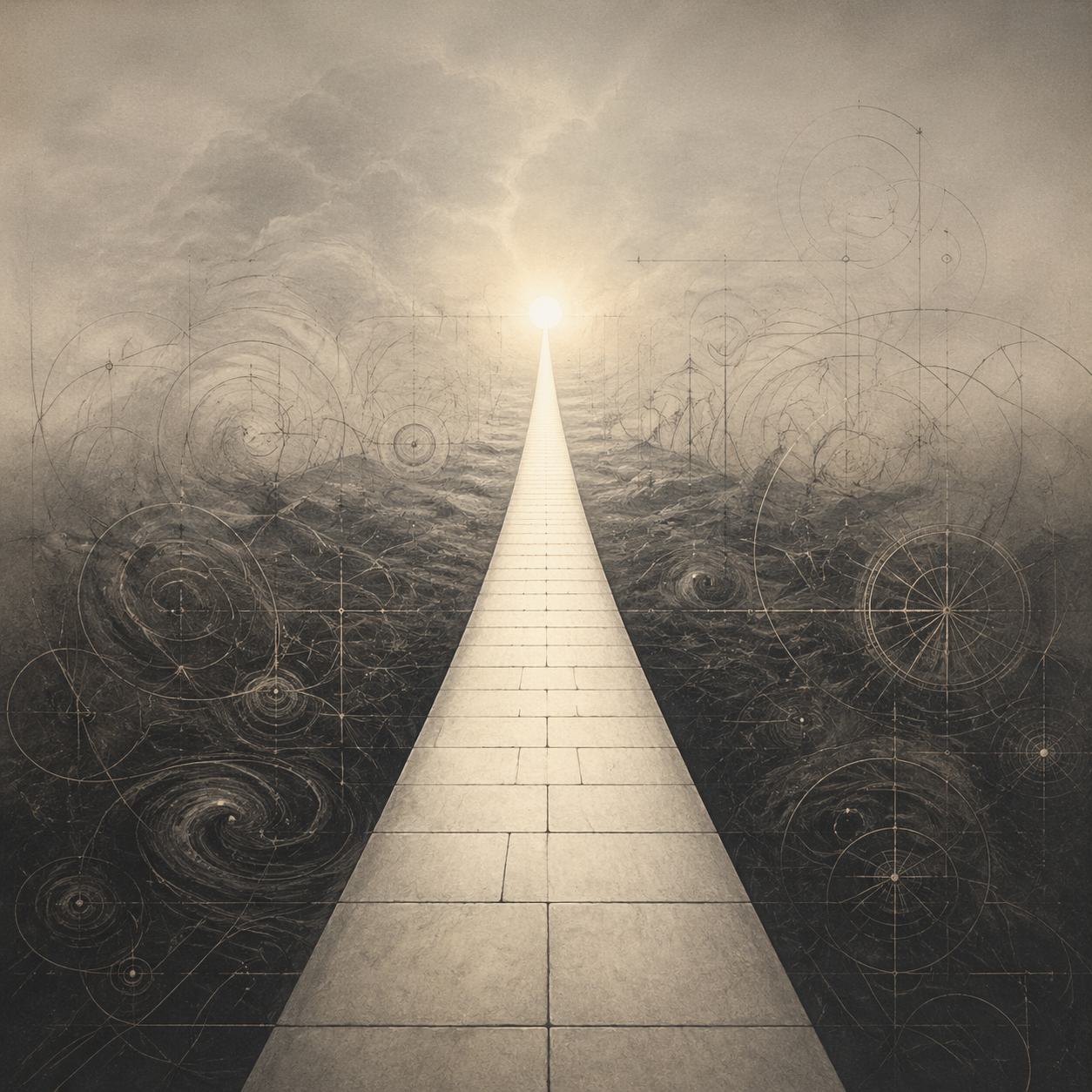
All positive descriptions of Brahman risk a fundamental category mistake. To say "Brahman is large" invites the question: larger than what? To say "Brahman is good" invites the question: better than what? Every positive predicate relates the thing described to other things — it locates it in a system of comparisons. But Brahman, as the non-dual ground of all existence, cannot be located in any such system, since the system itself is within Brahman. The only way to avoid this error is to say not what Brahman is but what it is not: not this finite thing, not that mental state, not any object of experience, not the body, not the mind, not space, not time — not this, not this. What remains when all qualifications have been negated is not nothing but the unqualified consciousness that was always the ground of the negations.
The Logic of Disidentification
Shankara gives the neti neti method a precise epistemological structure in his commentary on the Brihadaranyaka and in the Ātma Bodha. The meditator is to take each candidate for selfhood — the gross body, the vital breath, the mind, the intellect, the sense of individual ego — and explicitly recognise it as an object of awareness rather than awareness itself. Whatever I can observe, I cannot be: the one who sees the body is not the body, the one who notices the thought is not the thought, the one aware of the ego-sense is not the ego. Proceeding through every layer of the personality by this method of systematic disidentification — the technique known as viveka, discriminative discernment — the meditator arrives at the residue that cannot be disidentified: the pure consciousness that is doing the disidentifying, which cannot itself be objectified because it is the very subjectivity in which all objects appear.
Negation and Affirmation
The neti neti method is ultimately in service of a positive recognition, not an endless regress of negation. Having negated every finite description, Shankara does not conclude that Brahman is simply unknowable or absent. He concludes that Brahman is the pure self-luminous awareness that was present throughout the negation, conducting the negation, and which was never the target of any negation — since it is consciousness itself, not an object within consciousness. The ancient Upanishadic formula then applies: this self — this pure awareness — is Brahman. The negation was not an end in itself but a method for clearing the conceptual space in which direct recognition could occur. Having negated what Brahman is not, one finds what remains is not nothing but the fullness of being-consciousness-bliss.
The neti neti formula appears in the Brihadaranyaka Upanishad (2.3.6, 3.9.26, 4.2.4, 4.4.22, 4.5.15). The negative theology Shankara derives from it has parallels in the apophatic traditions of Christian mysticism (Pseudo-Dionysius, Meister Eckhart) and in the Taoist tradition (the Tao that cannot be named). Scholars have noted the comparison to Plotinus's via negativa as a path toward the ineffable One.
Related Concepts