Love as the Tragic Centre of Life
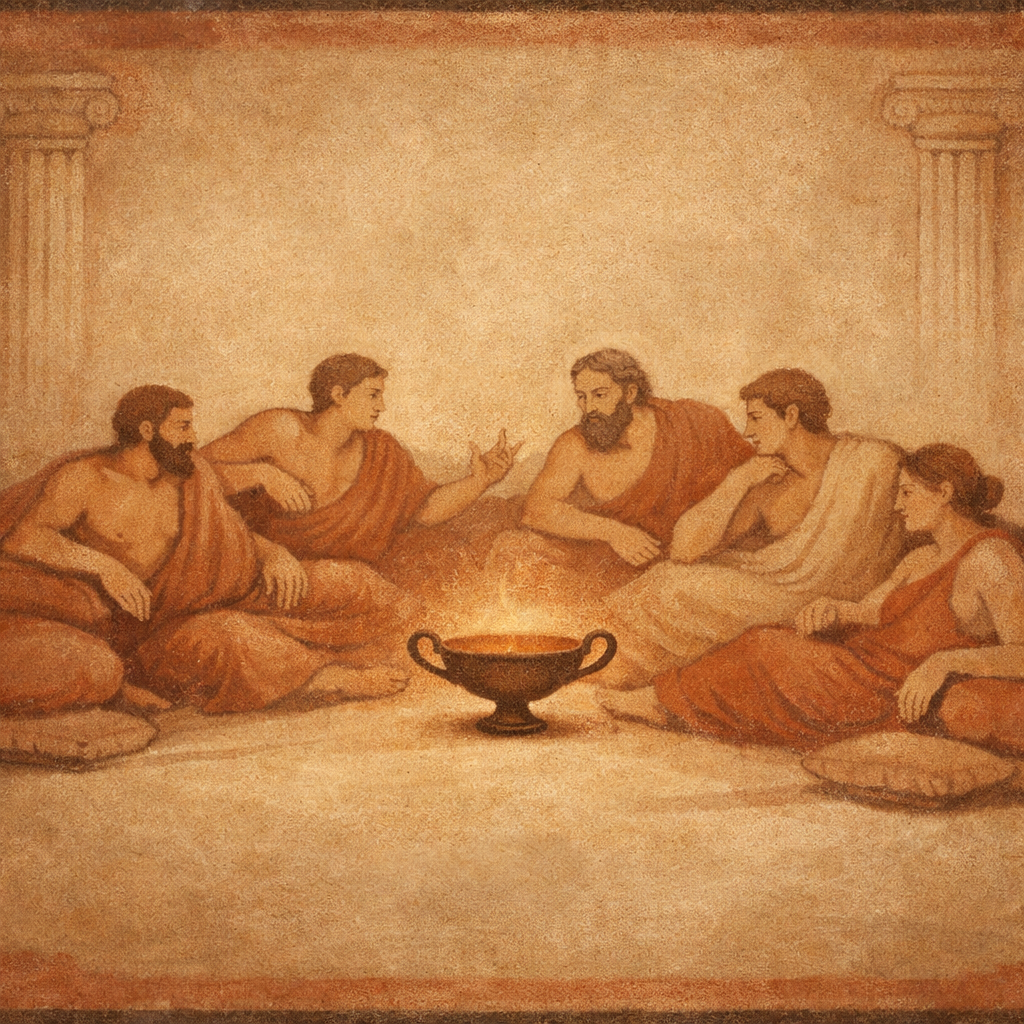
Unamuno's account of love begins with a paradox: love is the only medicine against death, and it is death's closest companion. Because love seeks permanence — the perpetuation of the beloved, and through the beloved the perpetuation of the lover — it inevitably confronts the fact that both must die. Sexual love, the love that creates new life, is the most obvious form of this structure, but all love shares it. Every love is an attempt to cheat mortality, and every love fails.
The most tragic thing in the world and in life, readers and brothers of mine, is love. Love is the child of illusion and the parent of disillusion; love is consolation in desolation; it is the sole medicine against death, for it is death's brother.
Pity as the Engine of Personhood
From love Unamuno derives pity, and from pity he derives personality. To pity another person is to suffer with them, to feel their suffering as if it were one's own — and in doing so to recognise them as a centre of consciousness, a person in the full sense, not merely a social function or a biological organism. Pity, for Unamuno, is not a sentimental emotion; it is the primary act of moral cognition. It is how we perceive the other as real.
God as the Personalization of the Universe
This argument about love and pity then generates Unamuno's account of God. If pity is the faculty by which we recognize persons, and if the universe itself is to be experienced as something we can love and be loved by, then the universe must be personalized — given a face, a consciousness, a will. This is what God is: not a logical necessity or a cosmological hypothesis, but the universe experienced as a person, capable of pity, capable of being pitied. The hunger for God is the hunger for a universe that cares.
Chapter VII ('Love, Suffering, Pity, and Personality') contains Unamuno's most direct engagement with the phenomenology of love. The account of pity as the personalizing faculty influenced both Ortega y Gasset and later Latin American philosophy.
Related Concepts