The Development of the God-Concept
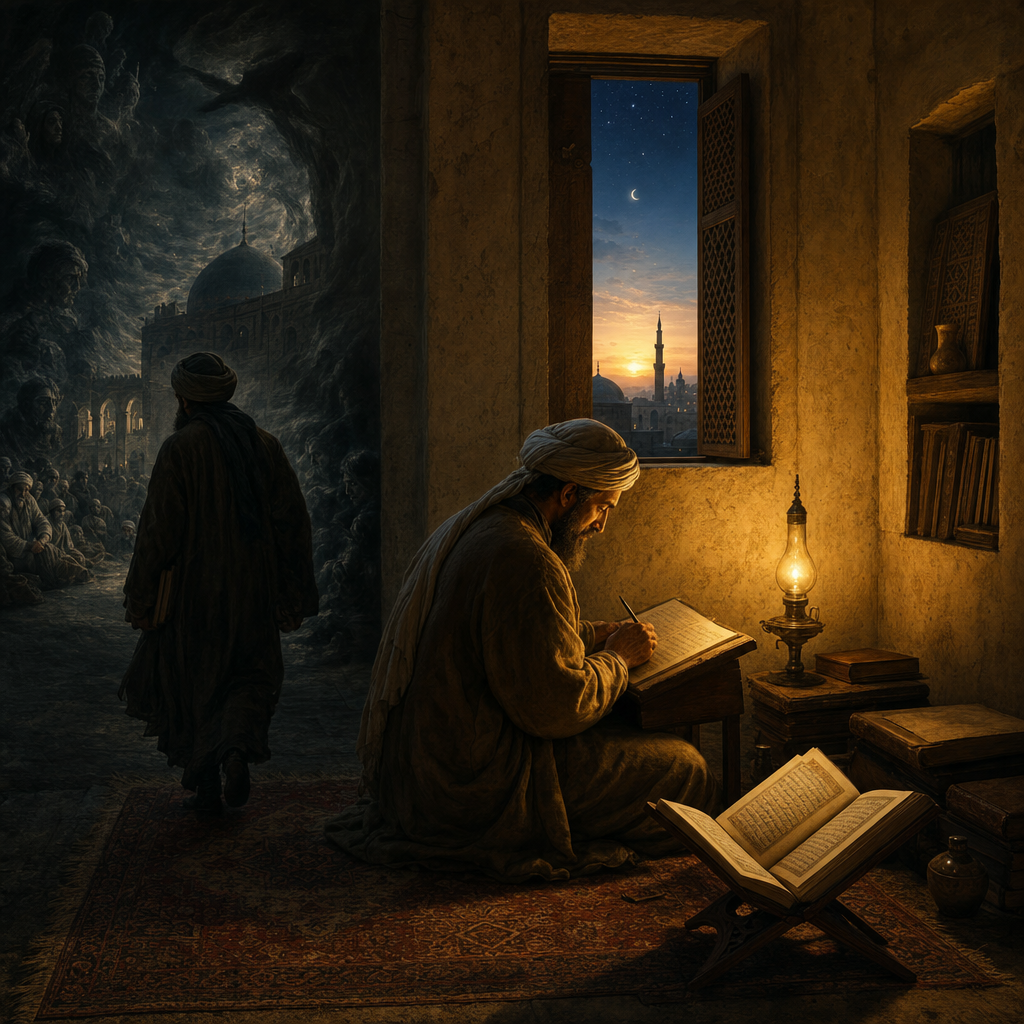
Fromm traces a development in Western religious thought from a tribal, masculine God of power and jealousy toward a more universal, maternal concept of divinity grounded in love. This development reaches its apex in the mystics — Eckhart, Spinoza — for whom God is not a being outside the world but the ground of being itself: to love God is to love life and being in its entirety.
Mature vs Immature Religion
Fromm distinguishes authoritarian from humanistic religion. Authoritarian religion projects omnipotence onto God and demands submission; it is the religious form of the escape from freedom. Humanistic religion — Fromm's ideal — experiences the divine as the fullest expression of human power and love, not its alienation. To love God in the humanistic sense is to become, not to surrender.
God Without Dogma
Fromm's own position is essentially non-theistic: he thinks the great mystics were closest to the truth, but that their truth is better stated without the concept of a personal God. What they discovered was not a being but a quality of experience — the experience of union, of the dissolution of the isolated ego, of love as a force that transcends the individual. This experience is real and transformative regardless of its metaphysical interpretation.
Fromm's account of the love of God appears in chapter 3 of The Art of Loving; his fuller treatment of humanistic vs authoritarian religion is in Psychoanalysis and Religion (1950).
Related Concepts