The Problem of Love
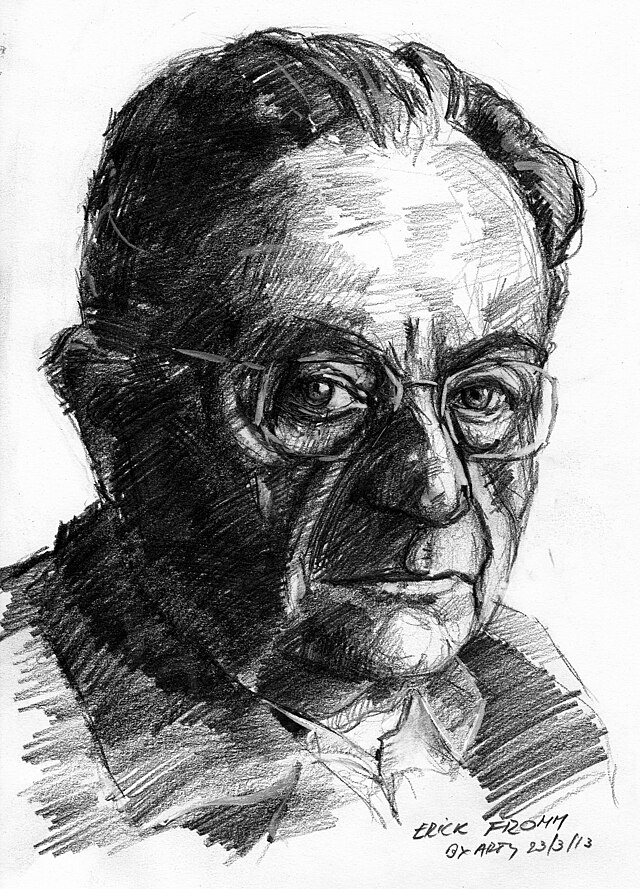
Most people approach love as a problem of being loved rather than of loving — of being attractive, desirable, worthy of love, rather than of developing their own capacity to give it. This fundamental inversion, Fromm argues, explains why people devote so much energy to becoming attractive and so little to learning to love. The market orientation of modern society reinforces this: we seek to be a desirable "package," not to develop genuine feeling.
The Elements of the Art
Like any art, love requires theory and practice. The theoretical element requires understanding what love is: not a feeling but an activity, not something that happens but something one does. The practical element requires discipline — the willingness to devote oneself seriously to the development of the capacity — as well as concentration, patience, and a supreme concern for the mastery of the art.
Active Love vs Passive Feeling
Fromm distinguishes love as an activity from love as a passive experience. Active love is characterised by four elements that recur in all its forms: care (active concern for the life and growth of what one loves), responsibility (readiness to respond to the needs of the other), respect (the ability to see the other as they are without distortion), and knowledge (understanding the other from within rather than from without). Without these, "love" is merely possession or need.
The Art of Loving (1956) became an international bestseller, selling over 25 million copies. Fromm drew on Karen Horney's analysis of neurotic love and on Meister Eckhart's concept of active love.
Related Concepts