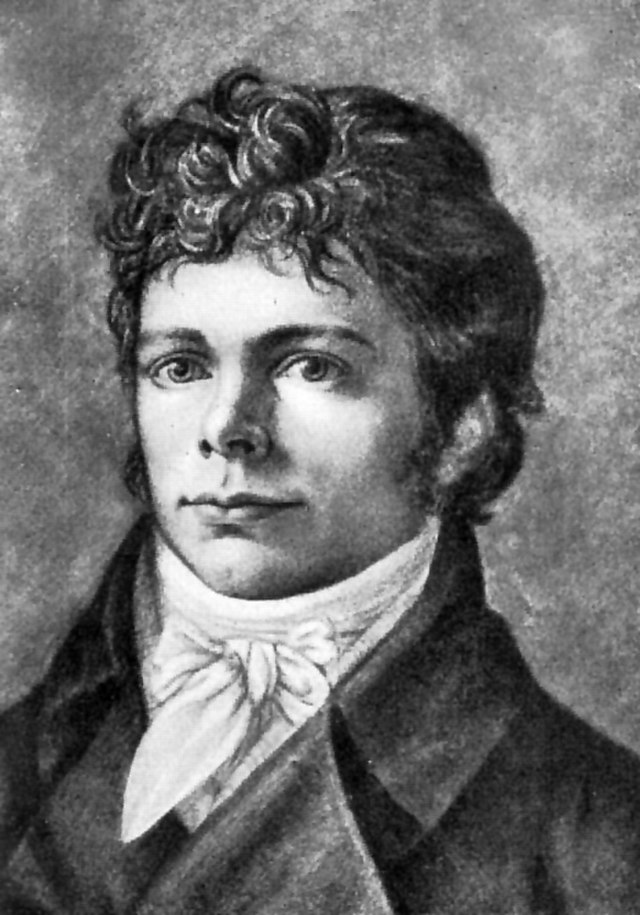
Against the Rationalist Account
For the rationalist tradition from Leibniz through Hegel, freedom at its highest means acting in accordance with reason — the fully rational being is free because it is self-determined by its own essential nature. Schelling finds this account flattering but false: it makes evil simply a deficiency of understanding, and it makes genuine freedom impossible because the fully rational being could only ever do one thing. A freedom that could never err is a freedom with only one real option.
The Two Principles in the Human Being
Schelling locates freedom in the specific structure of the human being as the point where the dark ground of selfhood (the creaturely principle) and the universal principle of love and light (the divine principle) are both genuinely present and genuinely separable. In God, these two principles are inseparably unified; in the human being, they can be placed in the wrong relation — with the dark principle elevated to the position of the universal, and the universal reduced to a means. This is the formal possibility of evil; acting on it is the reality of evil.
Why Freedom Matters
This account makes freedom genuinely costly. It is not a neutral capacity for self-determination but a burden: the capacity to participate in the cosmic drama of good and evil, to be genuinely responsible for the shape one's existence takes in relation to the moral structure of the universe. Schelling anticipates Kierkegaard's account of anxiety — the dizzying openness before genuine choice — and Heidegger's account of the human being as thrown into a responsibility it cannot fully grasp or discharge.
The account of freedom in the 1809 treatise is Schelling's most sustained contribution to moral philosophy. Its influence on Kierkegaard, who attended Schelling's Berlin lectures, and on Heidegger, who wrote extensively on the treatise, was decisive.
Related Concepts