The Stoic Definition
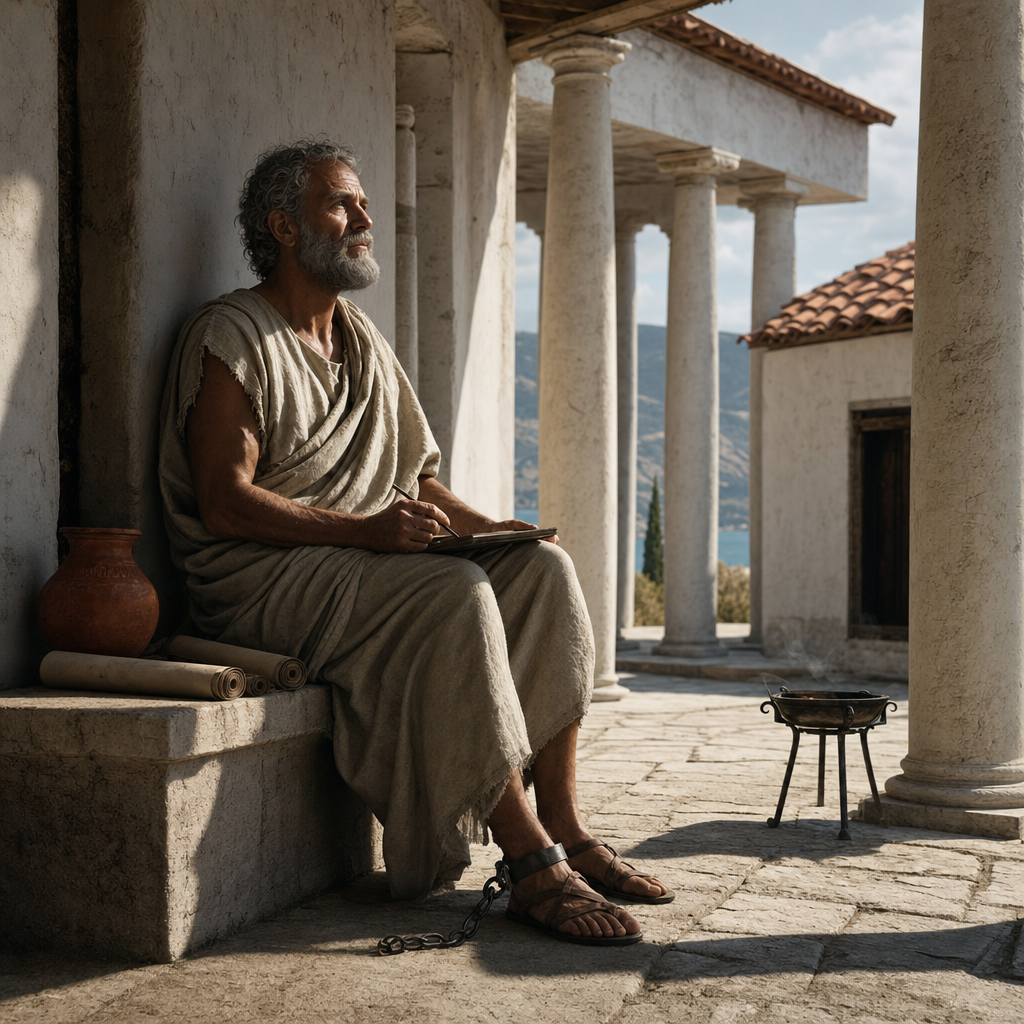
Freedom, for Epictetus, is not freedom from external constraint — not the absence of rulers, chains, or obligations — but freedom from the tyranny of one's own misguided desires and fears. The person who desires what they do not control is already enslaved, however comfortable their circumstances. The person who has learned to desire only what is genuinely in their power cannot be enslaved by anyone.
He is free who lives as he wishes to live; who is neither subject to compulsion nor to hindrance, nor to force; whose movements to action are not impeded, whose desires attain their purpose, and who does not fall into that which he would avoid.
The Paradox of Wealth and Power
The most powerful person in the room is often the least free. The consul who needs to be seen as consul, the emperor who cannot sleep for fear of conspiracy, the rich man who cannot travel without armed guards — these are people whose desires have made them dependent on conditions they cannot fully control. The philosopher who has stripped desire down to what is genuinely his own moves freely, because nothing outside him is required for his wellbeing.
Epictetus is not romanticising poverty or powerlessness. He does not say that wealth and power cannot be had. He says that neither wealth nor power can give what they appear to promise, because what they appear to promise — security, satisfaction, freedom from anxiety — depends entirely on how one relates to them internally. The same gold can imprison one man and leave another untouched.
Freedom as Achievement
True freedom is not given; it is achieved through philosophical practice. Epictetus describes at length in the discourses the daily discipline required: examining impressions, practising restraint of desire, maintaining equanimity in the face of hardship. The free person is not someone who has been lucky enough to avoid constraint. They are someone who has worked hard enough to understand what constraint actually is — and found that it was never the chains.
This discourse appears in Chapter 3 of the Discourses, in the section 'About Freedom.' The argument runs from Epictetus's personal experience of slavery to a general theory of inner freedom that influenced later Stoic writers and, through them, the philosophy of freedom in early modern Europe.
Related Concepts